
22 October 2026 · TJ Smile Studio
Invisalign Tracking: What It Means and How to Improve It
Is your Invisalign tracking? Learn how to check aligner fit, why teeth fall behind the plan, what you can do at home, and when to call your dentist.
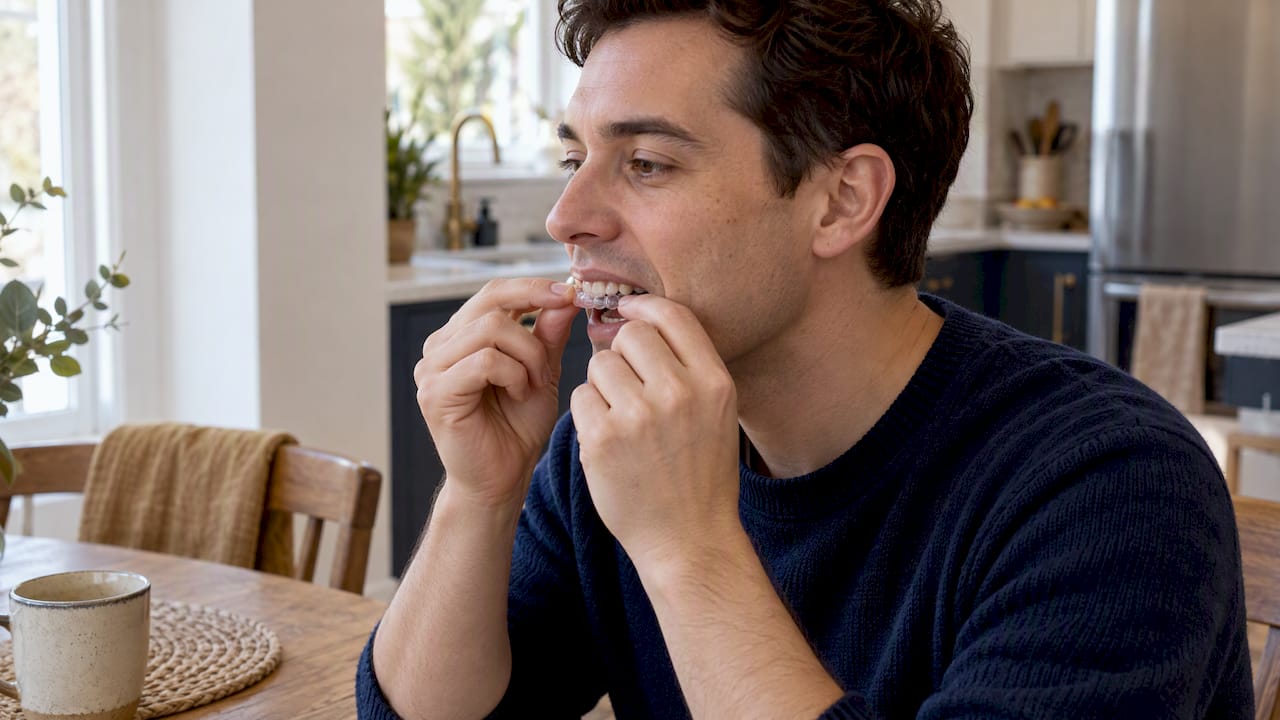
Invisalign tracking means your teeth are moving in step with the digital plan, so each new aligner sits snugly against them. If a tray has a visible gap, will not click into place or feels loose around one tooth, your teeth are lagging behind. That is common, usually fixable, and best dealt with early. Below you will find how to check, what usually causes it, how to improve it, and when it is time to contact your clinician.
TL;DR
- Tracking means each aligner fits closely to your teeth at its stage of the plan. A small, persistent gap at a tooth edge or a tray that will not seat fully means the teeth are behind.
- The most common cause is wear time. Aligners only work while they are in your mouth, so the first fix is to wear them as prescribed.
- Do not jump ahead to the next tray to “catch up”. Tell your dentist, who may ask you to stay on the current aligner longer or may plan a refinement.
- If a fit problem lasts more than a couple of days, or an attachment has come off, contact your clinic rather than waiting for the next review.
- Your dentist stays responsible for your treatment, including when parts of the monitoring happen remotely.
Table of Contents
- What “tracking” actually means
- How to tell if your Invisalign is tracking
- Why teeth fall behind the plan
- How to improve tracking at home
- When to contact your dentist
- Remote monitoring: useful, but not a substitute for a dentist
- Our perspective at TJ Smile Studio
- Keeping your result once treatment ends
- Invisalign with TJ Smile in Glasgow
- FAQ
- Sources
What “tracking” actually means
Your aligners are made from a digital plan. Each tray is shaped to where your teeth should be at one step, and each step asks for a small movement. If a tooth has moved as planned, the aligner slides on and hugs it. If not, the plastic sits slightly off the tooth.
So “not tracking” does not mean the treatment has failed. It means one or more teeth are running behind schedule. The NHS notes that Invisalign-type treatment typically runs from 6 to 30 months depending on complexity, and it also stresses that results depend heavily on wearing the aligners as prescribed. Over a course that long, minor lags are normal. What matters is that you notice them and act before they stack up.
If you are still weighing up treatment, our guide to how long Invisalign takes explains what drives the length of a case.
How to tell if your Invisalign is tracking
Check each new aligner on the first day you put it in, and again a few days later. Use good light and a mirror.
- Look at the gap. With the tray fully pressed on, look along the biting edges and near the gums. A thin, uniform fit is what you want. A visible space between a tooth and the plastic suggests that tooth has not caught up.
- Feel for the click. A new aligner should feel snug and seat with firm pressure. If it perches on top of a tooth or springs away when you release your finger, that is a warning sign.
- Check the attachments. The small tooth-coloured bumps bonded to certain teeth give the aligner its grip. If one is missing or chipped, tracking will suffer on that tooth. The British Orthodontic Society’s guidance for clear aligner patients advises watching the tooth that has lost an attachment and pausing progression if the aligner fits that tooth less well.
- Compare with the previous tray. If the old aligner fits better than the new one, you may be moving on too soon.
- Note some pressure. Mild tightness for the first few days of a new tray is expected and means the aligner is working. Sharp, ongoing pain is not the same thing; see our notes on how Invisalign soreness typically peaks.
Small gap or real problem?
A tiny gap on the first day of a new tray is often fine, particularly on a tooth that is being rotated. The aligner is designed to push the tooth into position. A gap that is still there after several days of full wear, or one that gets bigger from tray to tray, deserves a call.
Why teeth fall behind the plan
Not enough wear time
This is the leading cause. Aligners are removable, so the hours add up in a way people underestimate: a long lunch, snacking with the trays out, sipping coffee, forgetting to put them back after brushing. Commonly quoted guidance is that trays should be in for around 20 to 22 hours a day, and your own clinician will tell you the target for your case. Eating and drinking are the main reasons people leave them out, and our guide to eating with Invisalign shows how to keep meals short without cutting your diet.
Moving to the next tray too early
Switching on the date in the plan only works if the current tray has finished its job. If the present aligner is still loose, the next one will not fit better. Stay on the current tray until it is snug, and ask before you change the schedule.
Lost or damaged attachments
Attachments are the handles that let the aligner push a tooth in a particular direction. Without one, the plastic can slip over the tooth instead of moving it. Tell your dentist as soon as one comes off.
Movements that are hard for aligners
Some movements, such as rotating rounded teeth or moving teeth bodily, are harder for plastic trays than tilting. Dentists plan for this with attachments and sequencing, but some teeth still lag and need extra help.
Biology and everyday habits
People respond at different speeds. Teeth that were previously traumatised, gum health, and habits like clenching or nail biting can all influence fit. Poor hygiene can also cause gum inflammation, which the NHS orthodontic literature lists among the risks if oral hygiene is not maintained.
How to improve tracking at home
These steps are safe for most people and cost nothing. They do not replace your dentist’s advice.
- Wear the trays all day. Set phone reminders for putting them back in after meals. Many people find a fixed routine (out for breakfast, lunch and dinner, in straight after brushing) the simplest.
- Use chewies as instructed. Chewies are small firm foam or plastic cylinders that you bite on to seat the aligner fully against the teeth. Ask your clinician how long and how often to use them with a new tray.
- Drink only water with trays in. Sugary or hot drinks under the plastic harm your teeth and warp the tray.
- Clean the aligners and your teeth properly. Food trapped under the plastic can stop the tray seating.
- Keep the previous tray. It is a useful backup if you lose or break the current one, and your dentist may want you to go back to it.
- Stay on the current tray a little longer if told to. Extra days in a tray that is nearly snug often fix a small lag.
- Take clear photos. Front, left and right with the aligner in, plus a close-up of the problem area. They make a phone or email consultation far more useful.
What not to do
- Do not skip to the next aligner to “fast track” treatment. Moving teeth faster than they can respond tends to make the fit worse, not better.
- Do not file, trim or bend the plastic.
- Do not try to re-stick an attachment yourself.
- Do not stop wearing the trays because they do not fit. Teeth can begin to drift back quickly, and the NHS information on retainers notes that teeth will relapse if aligners or retainers are not worn as directed.
When to contact your dentist
Contact your clinic promptly if any of these apply:
- A gap has persisted for several days of full wear and chewies.
- The new aligner will not seat at all.
- An attachment has fallen off or broken.
- You have lost a tray or cracked one.
- You have pain that is sharp, worsening or lasting longer than the usual few days after a change of aligner.
- Your gums are bleeding, swollen or sore around the tray.
We have a separate page on the 48-hour window in which UK patients should act on a poorly fitting aligner, which sets out what to do and when.
What your dentist can do
Depending on what they find, the options usually include:
- Asking you to wear the current tray longer, or to go back one tray.
- Replacing or adding attachments.
- Adjusting the sequence, or making small changes with interproximal reduction where the plan allows.
- Taking new scans and ordering a refinement, which is a fresh set of aligners designed from where your teeth are now. See our page on Invisalign refinements for how and when these are used.
Refinements are a normal part of aligner treatment, not a sign that something went wrong. They are the planned way of closing the gap between the plan and reality.
Remote monitoring: useful, but not a substitute for a dentist
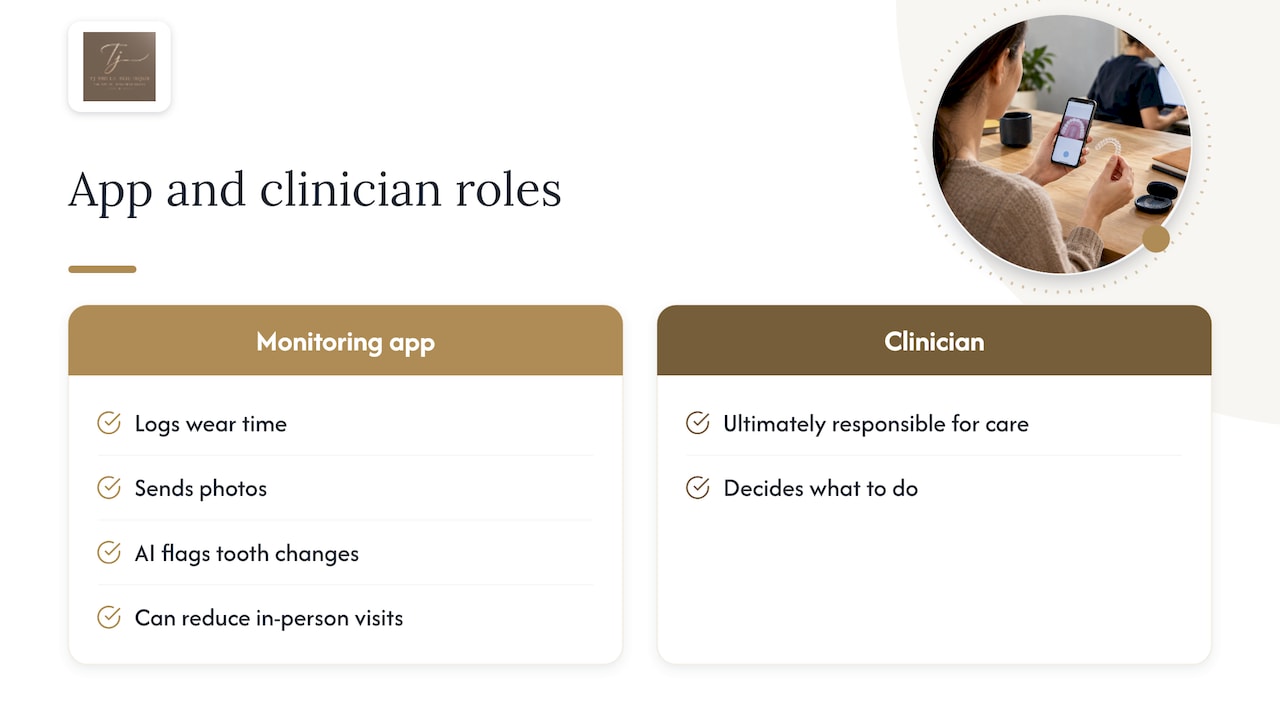
Phone apps and photo-based monitoring can help you log wear time and send pictures between visits. Invisalign provides its own patient tools, and several third-party systems use AI to flag changes in tooth position. These can reduce the number of in-person visits.
The important point is responsibility. The British Orthodontic Society’s supervision guidelines say that when technology is used for remote monitoring, the supervising dentist remains ultimately responsible for the treatment and the patient’s overall care. Its teledentistry guidance also describes photos, videos and messages exchanged for review by a dental professional as a recognised form of remote interaction. So an app can tell you that you are behind, but a clinician decides what to do about it.
Our perspective at TJ Smile Studio
In our experience the difference between a smooth Invisalign course and a frustrating one is rarely the aligners themselves. It is whether small problems are spotted early, and whether the person planning your treatment is the person who sees you throughout.
At TJ Smile, every treatment is personally led by Dr Jamil, from consultation through to completion. That continuity matters for tracking, because the clinician who designed the movements is the one looking at your photos and scans when a tooth lags. We also work with a fully digital workflow, which means your plan is not a generic template: it reflects your teeth, your bite and your daily routine.
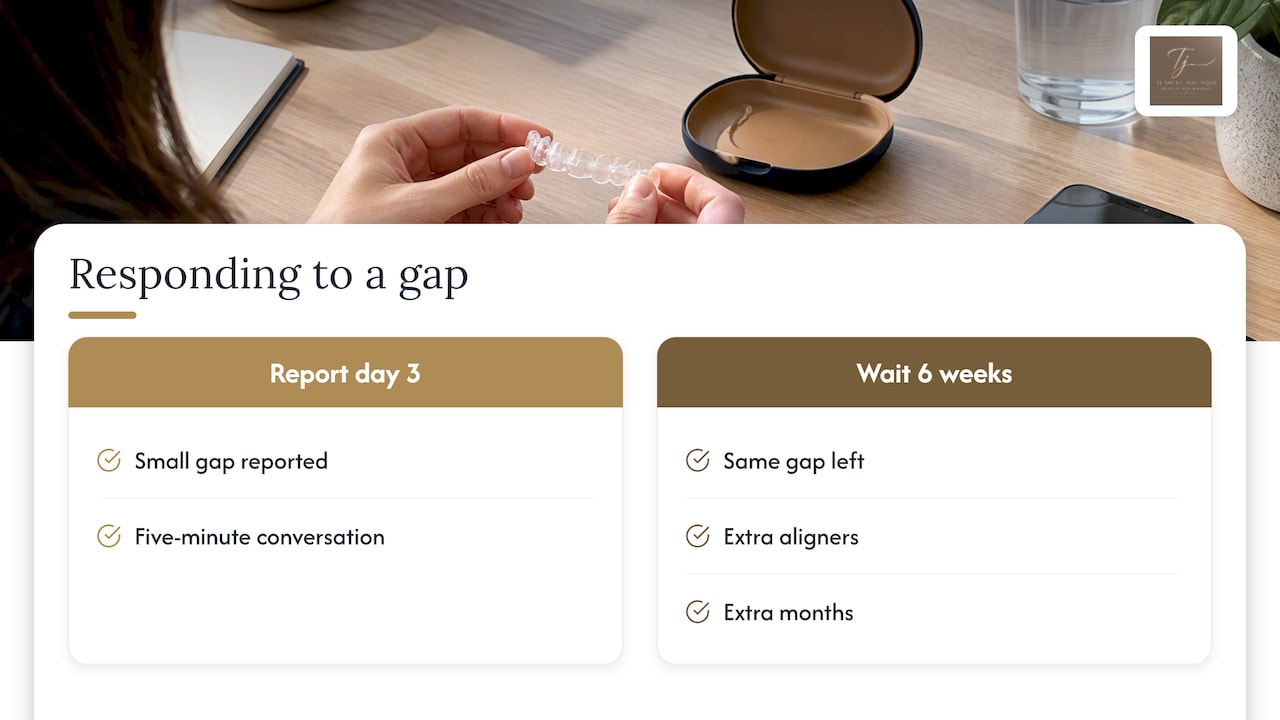
Our practical advice is simple. Treat the first week of every new tray as a check-up you carry out yourself. If something is off, tell us early. A message about a small gap on day three is a five-minute conversation. The same gap left for six weeks can mean extra aligners and extra months. We also offer flexible appointments, including evenings and weekends, so a quick fit check should not mean taking a day off work.
And please do not feel embarrassed if you have been wearing your trays less than you should. We would rather know and adjust the plan than guess.
— Dr Tashfeen Jamil BDS, MFDS RCS Ed, AssocFCGDent - GDC 286427
Keeping your result once treatment ends
Tracking does not stop mattering when the last aligner is done. Teeth naturally drift toward their old positions. NHS retainer guidance explains that retainers need to be checked regularly, with appointments less frequent than during active treatment, because small changes can be picked up early. NHS England’s orthodontic network advice goes further: orthodontists advise patients to continue using retainers for as long as they want to keep their teeth straight, and patients must monitor this themselves in the long term.
The same fit-check habit applies to a retainer. If it feels tight or will not seat, it is telling you your teeth have moved. Read more in our guide to retainers after Invisalign. If you plan whitening afterwards, our note on whitening after Invisalign covers timing.
Invisalign with TJ Smile in Glasgow
If you are considering Invisalign, or you are mid-treatment elsewhere and want a second view on the plan, we can help. Our Invisalign consultation costs £50 and covers whether aligners suit your teeth and what the plan would involve. Invisalign treatment itself starts from £1,800. A retainer review is £35. You can see everything on our pricing page, and read about the treatment on our Invisalign in Glasgow page. If you are comparing options, Invisalign vs braces sets out the pros, cons and costs. For adults specifically, see Invisalign for UK adults.
FAQ
How can I tell if my Invisalign is tracking?
The aligner should sit closely against every tooth with no visible gap and a firm click when you press it in. A small space at a tooth edge that stays after several days of full wear suggests that tooth is lagging. Check any missing attachments too, and tell your dentist if the problem persists.
Can I fast track my Invisalign?
Not safely by switching trays early. Teeth move at a biological pace, and an aligner worn before the previous one fits will not seat properly. The reliable way to keep to schedule is consistent wear time, chewies as advised and prompt contact with your dentist if teeth fall behind.
What should I do if my aligner does not fit?
Put it in with firm pressure, use your chewies, and check it again after a day or two of full wear. If it still does not seat, go back to the previous tray and contact your clinic with photos. Do not force it, trim it or keep moving forward.
Does not tracking mean I will need more aligners?
Sometimes. If a small lag is caught early, extra time in the current tray may be all you need. If teeth are well behind the plan, your dentist may order a refinement, which is a new set designed from fresh scans. This is a routine part of many aligner courses.
Sources
- NHS: orthodontic treatments
- Queen Victoria Hospital NHS: orthodontic treatment with fixed appliances
- British Orthodontic Society: clear aligner fact sheet
- British Orthodontic Society: guidelines on supervision
- British Orthodontic Society: guidance on teledentistry
- Queen Victoria Hospital NHS: care of your retainers
- NHS England: retainers questions and answers
Recommended
- Evidence Backed Invisalign Refinements
- Invisalign Midline Correction
- Invisalign Treatment Time
- Invisalign Attachment Types
This article is general information, not personal dental advice. What’s right for your teeth depends on a clinical examination — the condition of your enamel, gums, bite and any existing dental work — and no article can assess that. Outcomes vary between patients, and all treatment at TJ Smile Studio is subject to assessment and clinical suitability.
- Dr Tashfeen Jamil BDS, MFDS RCS Ed, AssocFCGDent, PGDip Restorative and Aesthetic Dentistry — GDC registration 286427
This article is general information, not personal dental advice. What's right for your teeth depends on a clinical examination — the condition of your enamel, gums, bite and any existing dental work — and no article can assess that. Outcomes vary between patients, and all treatment at TJ Smile Studio is subject to assessment and clinical suitability.
Clinically reviewed by Dr Tashfeen Jamil BDS, MFDS RCS Ed, AssocFCGDent, PGDip Restorative and Aesthetic Dentistry — GDC registration 286427, Principal Dentist at TJ Smile Studio, 1 Spiersbridge Way, Thornliebank, Glasgow G46 8NG.
If you have dental pain, swelling or an injury, call the practice on 07728 808510. Out of hours in Scotland, call NHS 24 on 111.