
20 September 2026 · TJ Smile Studio
UK patients: Wait 1–3 months before whitening after Invisalign
UK patients finishing Invisalign: book a dentist review and wait 1–3 months for gums to settle, then choose in clinic, custom trays or retainer whitening...
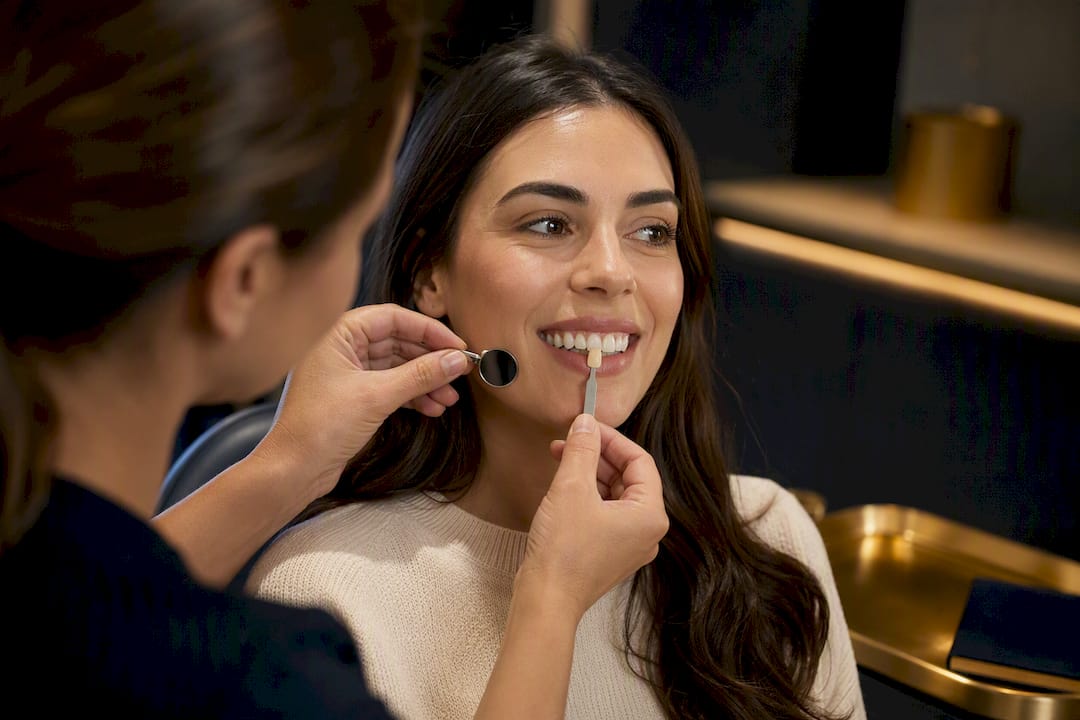
Yes, you can whiten your teeth after Invisalign, and for most patients it’s the best time to do it. Wait a minimum of one month after your final aligner or retainer fitting, though many dentists prefer a one to three month window to let gums settle and sensitivity fade. Whitening must be prescribed and supervised by a registered dentist in the UK, so book a review before buying anything.
TL;DR:
- Waiting at least one to three months after Invisalign ensures gums have healed and sensitivity has decreased for more even whitening results.
- Dentists will assess gum health, sensitivity, and any remaining adhesive or white spots before approving whitening to avoid patchy outcomes.
- In-clinic power whitening provides the fastest results in a single session, while custom trays offer a gentler, gradual approach over one to two weeks.
- Whitening with retainers is an option but requires dentist approval to prevent gel pooling and gum burns, unlike unregulated online kits, which are risky and illegal in the UK.
- Treating white spots and addressing existing restorations before whitening prevents uneven shades and preserves the final aesthetic.
Table of Contents
- When to start whitening after Invisalign and what your dentist will check
- Whitening methods suitable once your aligner treatment is settled
- Whitening during treatment versus waiting until after: pros, cons and a practical workflow
- White spots, restorations and shade planning: avoid surprises
- Managing sensitivity and side effects: dentist-recommended measures
- UK legal and safety rules: why whitening must be dentist-prescribed
- Aftercare: what to do in the first 48 hours and longer-term maintenance
- Why trust this advice: Dr Tashfeen Jamil and TJ Smile Studio’s approach
- Clinician viewpoint: typical recommendations and common mistakes
- How TJ Smile Studio can help: supervised whitening and finishing cosmetic work
- Sources
- FAQ
When to start whitening after Invisalign and what your dentist will check
Rushing straight from your last aligner into a whitening kit is the most common mistake patients make, and it’s usually the wrong call. Gum tissue that’s been under orthodontic pressure for months needs time to recover its normal colour and firmness, and teeth that have just finished moving are often more reactive to bleaching gel than they’ll be a few weeks later.
Most dentists set a minimum waiting period before starting any whitening protocol, with a few months being common depending on how your gums and enamel look at review. Cases with lingering sensitivity, visible white spot lesions, or adhesive residue left over from attachments usually sit at the longer end of that range.
At your post-treatment review, expect your dentist to check:
- Gum health and colour, since inflamed or blanched tissue can throw off how even the whitening looks
- Any remaining sensitivity from tooth movement, which whitening gel can temporarily worsen
- Leftover attachment adhesive or polishing needs on the enamel surface
- White spot lesions, which need addressing before bleaching rather than after
- Existing fillings, bonding or crowns that won’t respond to whitening gel the way natural enamel does
Timing isn’t just about comfort. It directly affects how even your result looks. Teeth that whiten before white spots are treated, or before adhesive residue is polished off, tend to bleach unevenly, leaving patchy or blotchy patches that are harder to correct later than to prevent from the start. If your case needs remineralisation work or attachment clean up, your dentist will usually build a staged plan rather than sending you straight to a whitening kit.
Whitening methods suitable once your aligner treatment is settled
Once you’re cleared for whitening, you have a few genuine options, and they differ in speed, cost, and how much control you have over the process.
In-clinic power whitening uses a higher-concentration gel activated under controlled conditions, typically completed in a single session lasting around an hour. It gives the fastest visible change and is well suited to anyone with an event or deadline in mind. TJ Smile Studio’s in-office whitening sits in this category, and the trade-off is usually a slightly higher upfront cost against the convenience of a same-visit result.
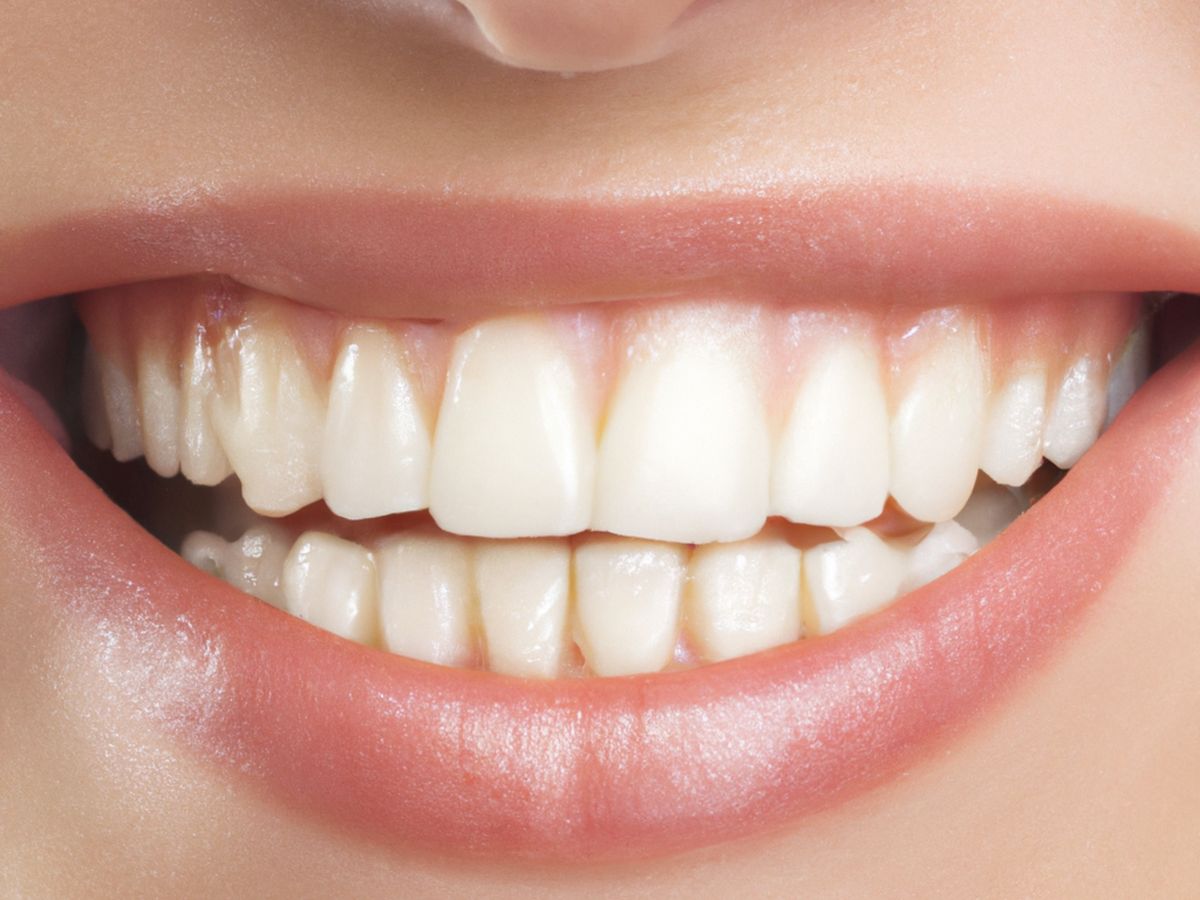
Custom take-home trays with carbamide peroxide gel are the slower, gentler alternative. You wear bespoke trays for a set period each day, usually building visible change over one to two weeks. Because the concentration is lower and use is dentist-supervised, sensitivity tends to be milder and more manageable.
Using your final retainers or bespoke whitening trays as the whitening vehicle is a practical option some dentists offer, since retainers are already a familiar, snug fit for many patients. One clinical write-up on teeth whitening with clear aligners notes this is often cost-effective, provided a dentist checks fit and approves the gel concentration first. A loose or ill-fitting retainer used as a whitening tray risks gel pooling on gums, which causes chemical burns rather than an even result.
What you should not do is order a generic whitening kit online or visit a beauty salon offering “teeth whitening” services. In the UK, tooth whitening is legally classified as a dental procedure, and anyone offering it outside dental supervision is operating outside the rules meant to protect you.
- In-clinic power whitening: fastest results, single visit, higher upfront cost
- Custom take-home trays: gradual results over one to two weeks, milder sensitivity
- Retainer-based whitening: convenient reuse of existing trays, requires dentist sign-off on fit and gel strength
- Non-dental or online kits: not recommended and not legally compliant in the UK
Whitening during treatment versus waiting until after: pros, cons and a practical workflow
Some patients ask whether they can whiten while still wearing aligners, rather than waiting until treatment finishes. The honest answer is that it’s sometimes offered, but it comes with a caveat worth understanding.
Dentists will occasionally supervise whitening during active aligner wear, usually because a patient wants a gradual shade change to coincide with the end of straightening rather than adding extra months afterward. Products like the Invisalign Professional Whitening System are formulated to be used inside aligner trays during treatment, and clinicians report the gel does reach enamel even where attachments are bonded.
The catch is the attachments themselves. Those small tooth-coloured bumps that help aligners grip your teeth sit directly on the enamel, and areas underneath them don’t always whiten at quite the same rate as exposed surfaces. An in vitro study on 35% hydrogen peroxide found peroxide does diffuse under bonded attachments and whitening still occurs, though attachments can modestly affect colour outcomes compared to unobstructed enamel.
In practice, most clinics manage this with a two-step workflow:
- Supervised whitening during the final stages of aligner wear, for patients who want a head start on shade change
- A short touch-up round after attachments are removed and the surface is clean, to even out any patches left behind
This sequence gives you the convenience of starting early without sacrificing the polished, uniform finish that only comes once every tooth surface is fully exposed and accessible.
White spots, restorations and shade planning: avoid surprises
White spot lesions are the single biggest cause of disappointing whitening results after aligner treatment. These are small areas of enamel demineralisation, often from plaque build-up around brackets, attachments, or even beneath aligner trays if oral hygiene slipped during treatment.
Bleaching over an untreated white spot rarely helps and can actually make it more visible, since the lesion and the surrounding enamel don’t always lighten at the same rate. Dentists typically recommend addressing these first, using high-fluoride toothpaste or CPP-ACP remineralising pastes (sold under names like MI Paste) over several weeks before starting any whitening protocol. Some cases benefit from resin infiltration, a technique branded as Icon, which fills the porous lesion structure and blends its appearance with surrounding enamel.
Restorations complicate the plan differently. Composite bonding, crowns and veneers don’t respond to whitening gel the way natural enamel does, so if you have any existing restorative work, your dentist needs to plan the whitening shade around it, not the other way round. Whiten first, then match any new bonding or veneers to the final shade, never the reverse.
- Address white spot lesions with remineralisation before whitening, not after
- Consider resin infiltration for stubborn lesions that don’t respond to fluoride pastes alone
- Sequence restorative work after whitening, so new composite or veneers match your lightened shade
- Flag any existing crowns or fillings at your review so expectations are set correctly
Pro Tip: If you know you’ll want composite bonding or veneers alongside whitening, always whiten first and let your dentist shade-match the restorative work afterwards. Doing it the other way round means your new bonding may end up visibly darker than your whitened teeth within months.
Managing sensitivity and side effects: dentist-recommended measures
Sensitivity after whitening is genuinely common, and it’s not usually a sign anything’s gone wrong; for practical guidance on sensitivity causes and mitigations, see what helps sensitivity after whitening. Peroxide gel temporarily opens up microscopic channels in enamel, and if your teeth have recently finished moving through Invisalign treatment, nerves inside them may already be a little more reactive than usual.
For most patients, sensitivity is mild and passes within a few days. Dentists typically manage it with:
- Desensitising toothpaste containing potassium nitrate, used for a week or two before starting
- Shorter wear times per session rather than stopping altogether
- Lower-concentration gels for patients with a known sensitivity history
- In-clinic fluoride varnish applied directly after a whitening session
If sensitivity becomes sharp, lasts more than a few days, or is accompanied by gum irritation, stop and contact your dentist rather than pushing through it.
UK legal and safety rules: why whitening must be dentist-prescribed
Tooth whitening in the UK is legally treated as a dental procedure, not a cosmetic beauty treatment. That means it must be prescribed by a dentist registered with the General Dental Council, even when a hygienist or therapist carries out parts of the treatment under that prescription.
This rule exists because whitening gels above certain concentrations can cause real harm in untrained hands: chemical burns to gums, enamel damage, and results so uneven they need corrective treatment to fix. Non-dental providers offering “teeth whitening” in beauty salons or online are operating outside this framework, and the Dental Health Foundation warns unregulated kits carry a genuine risk of gum damage and patchy results.
Before booking with anyone, check their GDC registration number on the GDC’s public register, and ask whether a dentist is examining your teeth before treatment starts, not just handing over a kit.
Aftercare: what to do in the first 48 hours and longer-term maintenance
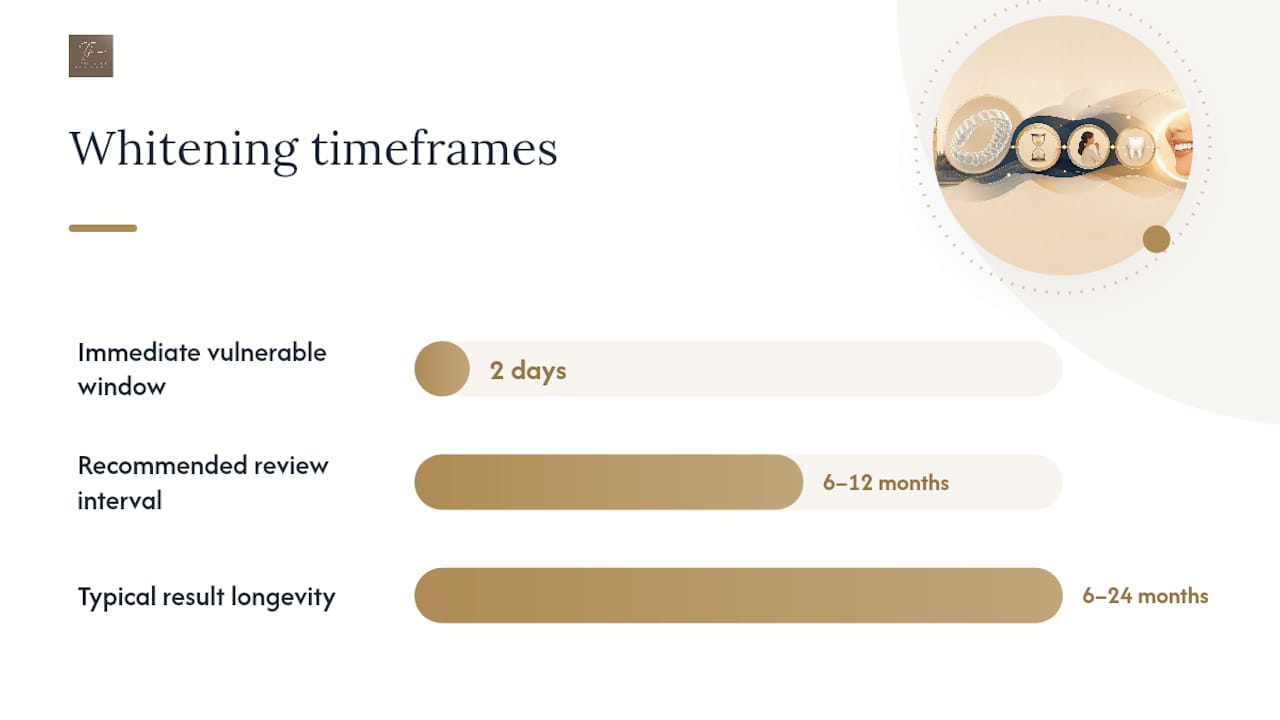
The first 48 hours after whitening matter more than people expect, because your enamel is temporarily more porous and prone to picking up stains from strongly coloured food and drink. During that window, avoid coffee, tea, red wine and berries, along with anything else that would stain a white t-shirt.
Beyond those first two days, the habits that keep your result looking good are mostly ones you already know:
- Brush twice daily and floss to keep plaque from dulling your new shade
- Use a whitening toothpaste occasionally to slow the return of surface staining
- Moderate rather than eliminate staining drinks, using a straw where practical
- Book a whitening review roughly every 6 to 12 months if you want to top up
Realistically, most professional whitening results last somewhere between six months and two years depending on diet, smoking, and how well you stick to maintenance habits. A touch-up session is far quicker and cheaper than starting from scratch, which is one reason a periodic review is worth the modest cost.
Why trust this advice: Dr Tashfeen Jamil and TJ Smile Studio’s approach
This guidance reflects the clinical approach of Dr Tashfeen Jamil BDS, MFDS RCS Ed, AssocFCGDent, GDC registration number 286427, who leads treatment planning at TJ Smile Studio in Glasgow.
At TJ Smile Studio, post-Invisalign whitening starts with an assessment covering gum health, sensitivity, and any white spot lesions, followed by remineralisation work where needed before bespoke trays or in-clinic whitening begins. Every plan is sequenced so restorative work, if any, matches your final whitened shade rather than the other way round.
A post-Invisalign review covers exactly this assessment, giving you a clear, personalised timeline rather than a generic “wait a month” rule.
Clinician viewpoint: typical recommendations and common mistakes
I typically recommend the one to three month window because it accounts for real healing time, not just convenience. Exceptions exist for patients with excellent gum health and no white spots, who can sometimes start sooner under supervision.
The most common mistake I see is patients whitening in their aligner trays without checking in first, unaware they’ve got developing white spots that bleaching will only highlight. Wait, get assessed, and the result is almost always more even and longer lasting.
— Dr Tashfeen Jamil BDS, MFDS RCS Ed, AssocFCGDent - GDC 286427
How TJ Smile Studio can help: supervised whitening and finishing cosmetic work
TJ Smile Studio is the alternative to a rushed, unsupervised whitening kit for anyone finishing Invisalign in Glasgow: every plan starts with a proper dental assessment before any gel touches your teeth, not after.
Once your review confirms you’re ready, options range from bespoke home whitening trays at £299 to in-office whitening at £399, or a combined in-office plus home package at £499 for patients who want the fastest start with a maintenance kit included. If white spots or old bonding need attention first, composite bonding can be sequenced in afterwards to match your new shade exactly. Every stage is overseen by Dr Tashfeen Jamil, GDC 286427, so nothing happens without a qualified dentist checking gum health and enamel condition first.
Book a Retainer Review or Whitening Review at £35 to get a clear, personalised timeline for your own teeth, rather than guessing at generic advice.
Sources
For further reading, the Dental Health Foundation’s guidance on whitening law explains the UK legal framework in full. NHS guidance on teeth whitening covers general safety points, while the study on hydrogen peroxide and orthodontic attachments offers the clinical evidence behind whitening during aligner treatment.
- Dental Health Foundation — Safe smiles: tooth whitening law
- Dentistry
- Effect of 35% hydrogen peroxide in promoting enamel whitening with orthodontic attachments bonded on its surface — 2025
FAQ
Do your teeth get whiter after Invisalign?
Invisalign itself doesn’t whiten teeth, but many patients notice their teeth look brighter once aligners come off simply because plaque and staining that built up around brackets or attachments is gone. Any further whitening needs a separate, dentist-supervised treatment.
What is the 30 minute rule for Invisalign?
The ‘waiting period’ refers to removing aligners before eating or drinking anything except water, then waiting a short time before putting them back in after eating, to avoid trapping food or staining liquids against your teeth. It’s an aligner-wear guideline, not a whitening rule.
Why are my teeth getting more yellow with Invisalign?
Yellowing during aligner treatment is usually plaque or tartar build-up trapped against enamel by the trays, particularly if oral hygiene slips or aligners aren’t cleaned properly. It can also reflect existing staining becoming more visible once you’re checking your teeth more often in the mirror.
Do I really have to wait 48 hours after teeth whitening?
Yes, the first 24 to 48 hours after whitening matter because enamel is temporarily more porous and absorbs stains more easily. Avoiding coffee, tea, red wine and dark berries during that window protects your result significantly.
Should I whiten before or after finishing Invisalign?
Most dentists recommend waiting until Invisalign treatment is complete and gums have settled, typically one to three months, before whitening. Whitening during treatment is sometimes offered under supervision, but a touch-up afterwards is usually needed to even out areas that sat under attachments.
Recommended
This article is general information, not personal dental advice. What’s right for your teeth depends on a clinical examination — the condition of your enamel, gums, bite and any existing dental work — and no article can assess that. Outcomes vary between patients, and all treatment at TJ Smile Studio is subject to assessment and clinical suitability.
- Dr Tashfeen Jamil BDS, MFDS RCS Ed, AssocFCGDent, PGDip Restorative and Aesthetic Dentistry — GDC registration 286427
This article is general information, not personal dental advice. What's right for your teeth depends on a clinical examination — the condition of your enamel, gums, bite and any existing dental work — and no article can assess that. Outcomes vary between patients, and all treatment at TJ Smile Studio is subject to assessment and clinical suitability.
Clinically reviewed by Dr Tashfeen Jamil BDS, MFDS RCS Ed, AssocFCGDent, PGDip Restorative and Aesthetic Dentistry — GDC registration 286427, Principal Dentist at TJ Smile Studio, 1 Spiersbridge Way, Thornliebank, Glasgow G46 8NG.
If you have dental pain, swelling or an injury, call the practice on 07728 808510. Out of hours in Scotland, call NHS 24 on 111.