
16 September 2026 · TJ Smile Studio
48 Hours: When UK Patients Should Act on an Aligner Not Tracking
If your aligner isn't tracking, photograph the gap, keep to 20–22 hours' wear, use chewies, and contact a UK clinic after 48 hours if the gap persists.
When your aligner is not tracking, teeth have failed to move as planned in your ClinCheck, which usually shows up as a visible gap or a tray that will not seat fully. The most common cause is simply not wearing it enough. Keep wearing the current tray, try seating techniques with a chewie, and photograph the gap; contact your clinician if it persists past 48 hours, hurts, or a tooth feels loose.
TL;DR:
- Wearing aligners less than 20 to 22 hours daily significantly slows or halts teeth movement, requiring strict adherence to achieve proper tracking.
- Visual gaps and loose fit indicate non-tracking, but biting on a chewie can help re-seat aligners and confirm if the issue is temporary.
- If a gap persists after 48 hours of proper wear and chewie use, or if pain or tooth mobility occurs, contact your clinician immediately.
- Common causes of tracking failure include attachment loss, advancing trays too early, or plastic warping from heat or damage.
- Most minor tracking issues can be fixed with adjustments like longer wear, attachment rebonding, or short-term additional measures, avoiding the need for a full rescan.
Table of Contents
- What good tracking looks like and how to check at home
- Common causes of aligners failing to track
- At-home checks and immediate self-help steps you can try safely
- What the clinician will check and the in-clinic fixes they commonly use
- How to prevent tracking problems and keep treatment on schedule
- Clinical perspective from Dr Tashfeen Jamil on tracking problems
- A clinician’s honest note on tracking hiccups
- How TJ Smile Studio reviews and resolves tracking problems
- Sources
- FAQ
What good tracking looks like and how to check at home
A tray that is tracking well sits flush against every tooth, with no visible daylight between the plastic and the enamel and an even line along the gumline. If your clinic used attachments (the small tooth coloured bumps that give the aligner extra grip), you should feel and see them fully seated into their matching notch in the tray, not sitting proud or off to one side.
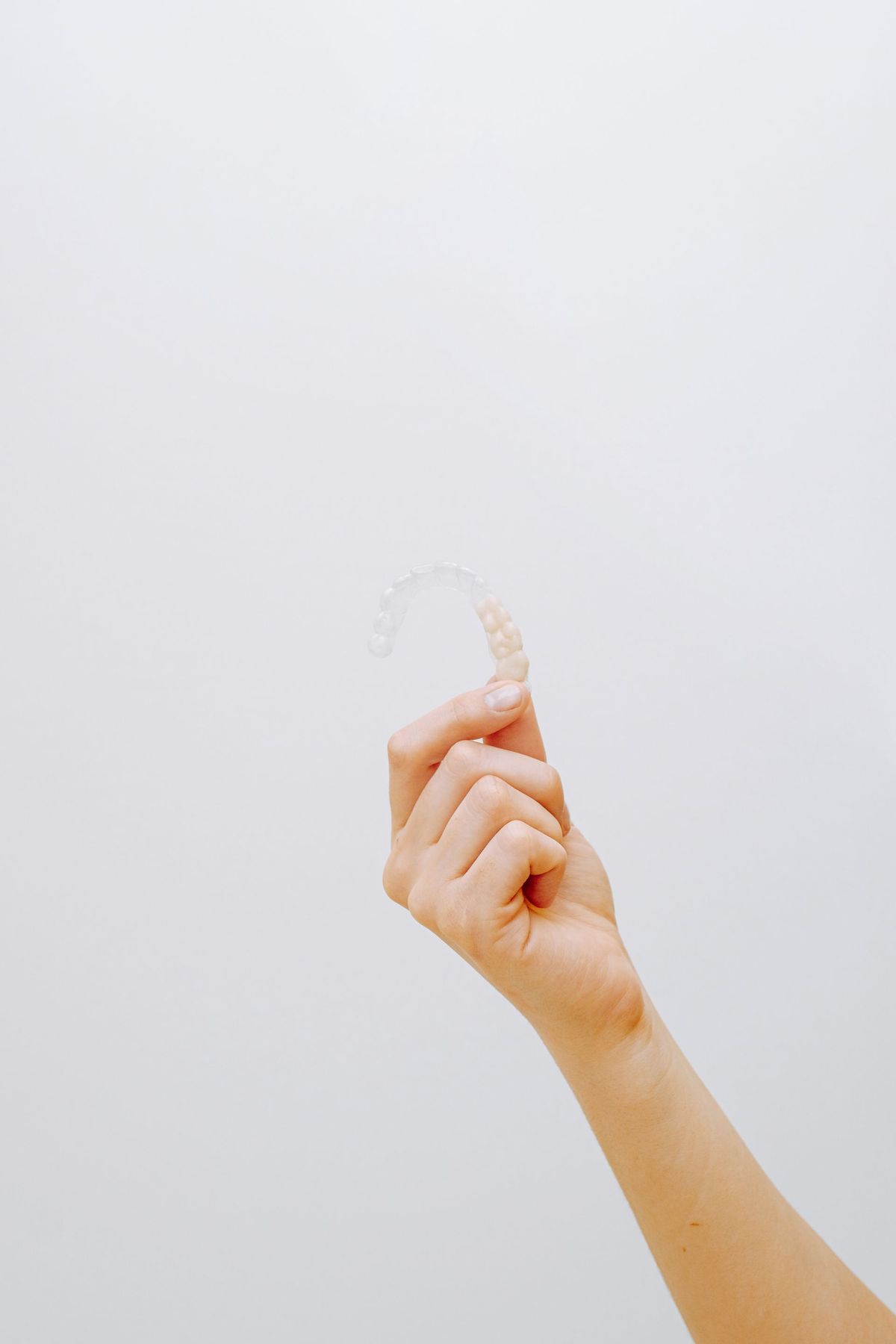
Non-tracking usually shows up as a gap, sometimes called a “halo”, where the edge of a tooth has not caught up with the aligner’s shape. Clinical guidance on troubleshooting clear aligner treatment treats this air gap as the classic warning sign, and it is exactly what your clinician will look for first.
Two simple checks catch most problems early:
- Visual gap check: look in a mirror under good light and see whether any tooth edge shows a visible gap against the aligner, particularly at the incisal edge (biting edge) of front teeth.
- Seating test with a chewie: bite down on a chewie along the arch for a minute or two, then recheck for gaps; if they close, you are likely just behind on seating, not off track.
- Wear-time log: note the time you put the tray in and take it out each day; most people underestimate their actual hours by two or three.
- Dated photos: take a front-on and side photo of the suspected tooth every two to three days so you and your clinician can compare progress.
This kind of documentation, recommended by patient-facing guides on how to tell if aligners are tracking, turns a vague “it feels off” into evidence your clinician can actually act on.
Common causes of aligners failing to track
Wear time is the biggest single factor, and it is not close. Maintaining roughly 20 to 22 hours a day of wear gives teeth the continuous, low grade force they need to move through bone; drop below that consistently and movement slows or stalls, even if you feel like you are “mostly” wearing it.
Several other mechanical and behavioural issues show up regularly in clinic:
- Reduced wear or inconsistent compliance: eating with trays in, forgetting them after meals out, or removing them for long social occasions all chip away at the daily total.
- Attachment loss or a poor fit: an attachment that has debonded or chipped stops delivering the grip force it was designed for, particularly on rotations and extrusions.
- Advancing trays too early: moving to the next tray before the current one has fully seated compounds the error, because each subsequent tray is built on the assumption the last one worked.
- Complex movements and staging errors: rotating a rounded tooth like a canine, or extruding a tooth vertically, asks more of the plastic than simple tipping movements, and these stages are the ones most likely to fall behind.
- Physical damage or warping: leaving a tray on a car dashboard, running it under hot water to “clean” it, or biting down hard on something rigid can distort the plastic enough to change how it seats.
None of these causes are unusual, and most are fixable without derailing your whole treatment plan. The problem comes when they go unnoticed for several trays in a row, because tracking errors tend to stack rather than cancel out.
At-home checks and immediate self-help steps you can try safely
Before you call the clinic, there is a sequence worth working through yourself, because the fix is often simpler than it looks.
- Go back to strict wear discipline. Aim for the full 20 to 22 hours, removing trays only to eat and brush. Log the times for three to four days so you have a real number, not a guess.
- Use chewies properly. Bite down along the arch, moving from one side to the other, for one to two minutes, two or three times a day, especially straight after inserting a new tray.
- Backtrack if the gap is stubborn. If a tray will not seat after a few days of strict wear and chewie use, go back one tray and wear it for another five to seven days before trying the current one again.
- Never force a tight tray into place. Snapping a tray down over a tooth that has not caught up risks cracking the plastic or putting uneven pressure on the wrong tooth.
- Keep trays away from heat. Hot water, dishwashers, and direct sunlight in a car can warp the fit permanently, not just temporarily.
Pro Tip: Keep your previous two trays rather than binning them the moment you move on. If tracking slips, you can drop straight back a stage without waiting for a replacement to be made.
Seek clinical help sooner rather than later if the gap has not closed after 48 hours of dedicated wear and chewie use, if there is real pain rather than the normal pressure of a new tray, or if a tooth feels loose. Those three signs move the problem out of “wait and see” territory.
What the clinician will check and the in-clinic fixes they commonly use
Clinics generally work through a graded triage rather than jumping straight to a rescan. A useful framework, described in guidance on tracking problems in clear aligner therapy, splits cases into three levels.
- Minor: a small gap on one tooth, usually resolved chairside with extra chewie instruction, a longer stay on the current tray, or simply confirming wear time is genuinely adequate.
- Moderate: a gap that persists despite good wear, often addressed by re-bonding a lost attachment, adding auxiliaries such as buttons and elastics to help a stubborn movement, or performing interproximal reduction (IPR), which is a small amount of enamel reshaping that creates space for a tooth to move.
- Severe: a gap that exceeds roughly 2mm or spans multiple teeth, which usually means the current series cannot recover the movement and a new scan is needed.
When a rescan is required, your clinician takes fresh digital impressions, reviews the revised ClinCheck plan against the original target, and orders a refinement set of aligners built from where your teeth actually are, not where the original plan assumed they would be. That adds time to treatment, typically several weeks for the new trays to be manufactured and delivered, but it resets the plan onto realistic ground rather than continuing to build on a mismatch.
To support this, clinicians document the problem properly before sending anything to the lab: dated photos of the gap, notes on which tooth and how many stages it has affected, and where relevant, observations on the force vector that seems to be failing (rotation versus extrusion versus tipping). This is also where addressing a problem early pays off, since catching a tracking error before it compounds across several trays keeps the eventual refinement smaller and faster.
How to prevent tracking problems and keep treatment on schedule
Most tracking failures are preventable with a routine that takes a few minutes a day rather than a major lifestyle change.
- Keep to 20 to 22 hours of daily wear, and take a dated progress photo at the start of every new tray so you have a running record.
- Use a chewie for a minute or two after every tray change, particularly around any attachment, to help the plastic fully seat.
- Do not skip ahead to the next tray early, even if the current one feels loose. Loose can mean success, not failure.
- Keep trays away from heat sources and check attachments in the mirror each morning for any that look chipped or missing.
- Where your clinic offers it, remote monitoring apps can flag a developing gap between visits, though they are a supplement to in-person checks, not a replacement for them.
Pro Tip: Photograph your teeth from the same angle, same lighting, every single tray change. Small drifts are almost impossible to spot from memory but jump out instantly when you compare two photos side by side.
Good hygiene around attachments also matters more than people expect. A water flosser used carefully around braces and aligner attachments helps keep the bonding sites clean, which supports attachment longevity and, indirectly, tracking.
Clinical perspective from Dr Tashfeen Jamil on tracking problems
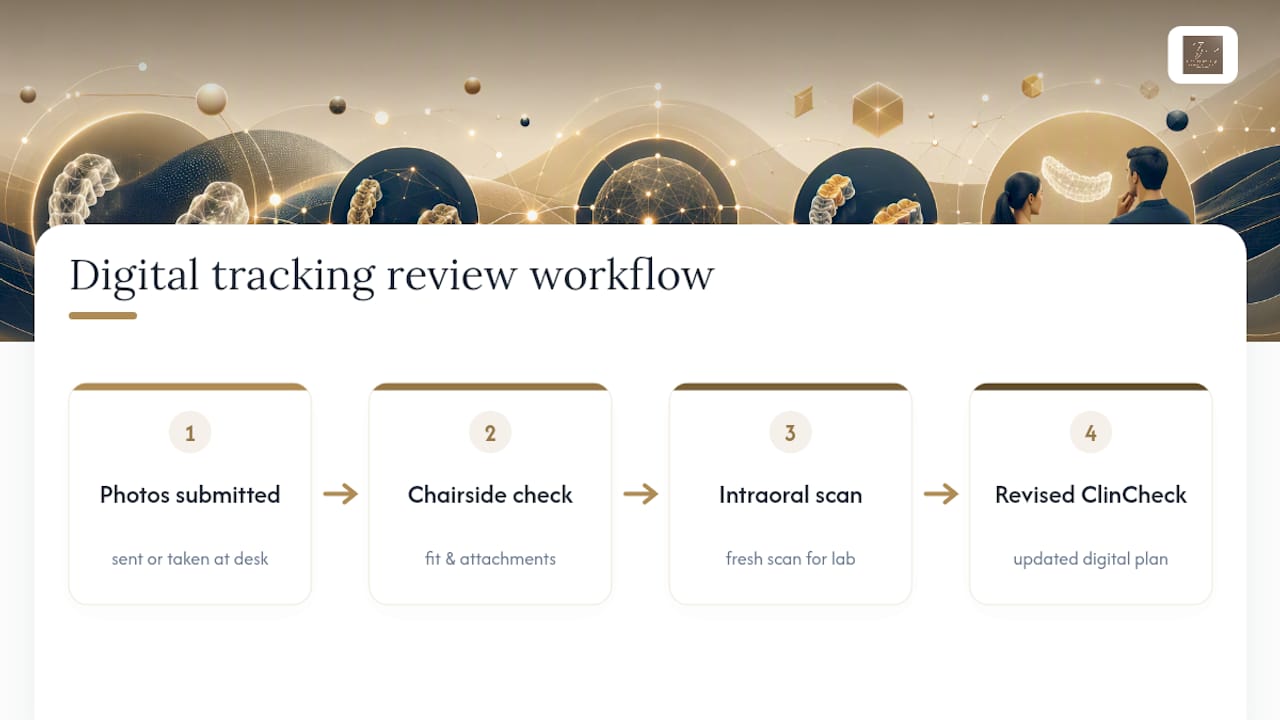
Dr Tashfeen Jamil oversees Invisalign care at a Glasgow clinic, and the approach to tracking issues follows a fully digital workflow similar to other treatments. A typical review starts with photos sent in or taken at the front desk, moves to a chairside check of fit and attachments, and if the gap does not resolve, a fresh intraoral scan feeds straight into a revised ClinCheck for the lab.
Patients coming in for a tracking review get the most out of the appointment by bringing dated progress photos, a rough wear-time log, and any damaged or previous trays they have kept. That gives the clinician a timeline to work from rather than a single snapshot, and it usually shortens the visit considerably. Readers can find more detail on what to expect at each aligner treatment appointment in TJ Smile Studio’s patient guidance.
A clinician’s honest note on tracking hiccups
Most tracking problems that reach us are fixable with wear-time correction and a chewie, not a new scan. The cases that need refinement are the ones left unaddressed for two or three trays, where a small gap became a multi-tooth mismatch.
A minor fix might cost you nothing beyond an extra week on the current tray. A genuine refinement adds real time, usually several weeks for new aligners to be manufactured, so it is worth being honest with yourself about wear time before assuming the plan has failed. Document the problem and contact your clinic as soon as you notice it. Waiting for your next scheduled appointment, sometimes weeks away, is exactly how a small gap turns into a bigger one.
— Dr Tashfeen Jamil BDS, MFDS RCS Ed, AssocFCGDent - GDC 286427
How TJ Smile Studio reviews and resolves tracking problems
The clinic runs every Invisalign review through a fully digital workflow, allowing a suspected tracking issue to go from chairside check to intraoral scan to a revised digital plan without waiting weeks for physical impressions to be sent away and returned.
If your tray has stopped seating properly, bring your dated progress photos, a note of your recent wear-time, and any previous trays you have kept, and the team can assess whether you need a short extension on your current stage, an attachment rebond, or a full rescan. Booking a review of your Invisalign treatment in Glasgow through TJ Smile Studio gets the problem in front of Dr Tashfeen Jamil quickly, rather than letting a small gap sit unresolved until your next routine appointment.
Sources
- Troubleshooting in clear aligner treatment - Dentistry
- Invisalign active wear time compliance: Clinical guide | HCMC Dental
- How to tell if your aligners are tracking · TrayJourney
- Tracking problems in clear aligner therapy — ClearForward
These are background resources for general understanding; treatment decisions should always go through your own clinician.
This article is general information, not a substitute for advice from a qualified doctor. Consult a qualified healthcare professional about your own circumstances before acting on anything here.
FAQ
Why are my Invisalign aligners not tracking?
The leading cause is wear time below the recommended 20 to 22 hours a day, followed by lost attachments, advancing trays too early, or a tray warped by heat.
What does it look like when Invisalign isn’t tracking?
A visible gap, sometimes called a “halo”, appears between the edge of a tooth and the aligner, and the tray may feel loose or fail to seat fully even after biting on a chewie.
What is the 30 minute rule with Invisalign?
Some clinicians advise wearing a new tray with steady pressure or chewie use before judging whether it has seated, since initial tightness is normal and often resolves quickly.
Why is my Invisalign taking so long to arrive?
Delays usually come from lab manufacturing time for a standard set, or from a refinement or rescan being ordered mid-treatment, which typically adds several weeks while a new scan and revised plan are processed.
When should I contact my clinic about a tracking problem?
Contact your clinic if a gap has not closed after 48 hours of strict wear and chewie use, if you have genuine pain rather than normal pressure, or if a tooth feels mobile.
Recommended
This article is general information, not personal dental advice. What’s right for your teeth depends on a clinical examination — the condition of your enamel, gums, bite and any existing dental work — and no article can assess that. Outcomes vary between patients, and all treatment at TJ Smile Studio is subject to assessment and clinical suitability.
- Dr Tashfeen Jamil BDS, MFDS RCS Ed, AssocFCGDent, PGDip Restorative and Aesthetic Dentistry — GDC registration 286427
This article is general information, not personal dental advice. What's right for your teeth depends on a clinical examination — the condition of your enamel, gums, bite and any existing dental work — and no article can assess that. Outcomes vary between patients, and all treatment at TJ Smile Studio is subject to assessment and clinical suitability.
Clinically reviewed by Dr Tashfeen Jamil BDS, MFDS RCS Ed, AssocFCGDent, PGDip Restorative and Aesthetic Dentistry — GDC registration 286427, Principal Dentist at TJ Smile Studio, 1 Spiersbridge Way, Thornliebank, Glasgow G46 8NG.
If you have dental pain, swelling or an injury, call the practice on 07728 808510. Out of hours in Scotland, call NHS 24 on 111.