11 October 2026 · TJ Smile Studio
Veneers for Gaps: Can UK Digital Planning Mean Less Prep?
Tooth position and bite determine whether veneers can close gaps safely. Compare bonding or orthodontics, and explore UK digital planning with same day care.
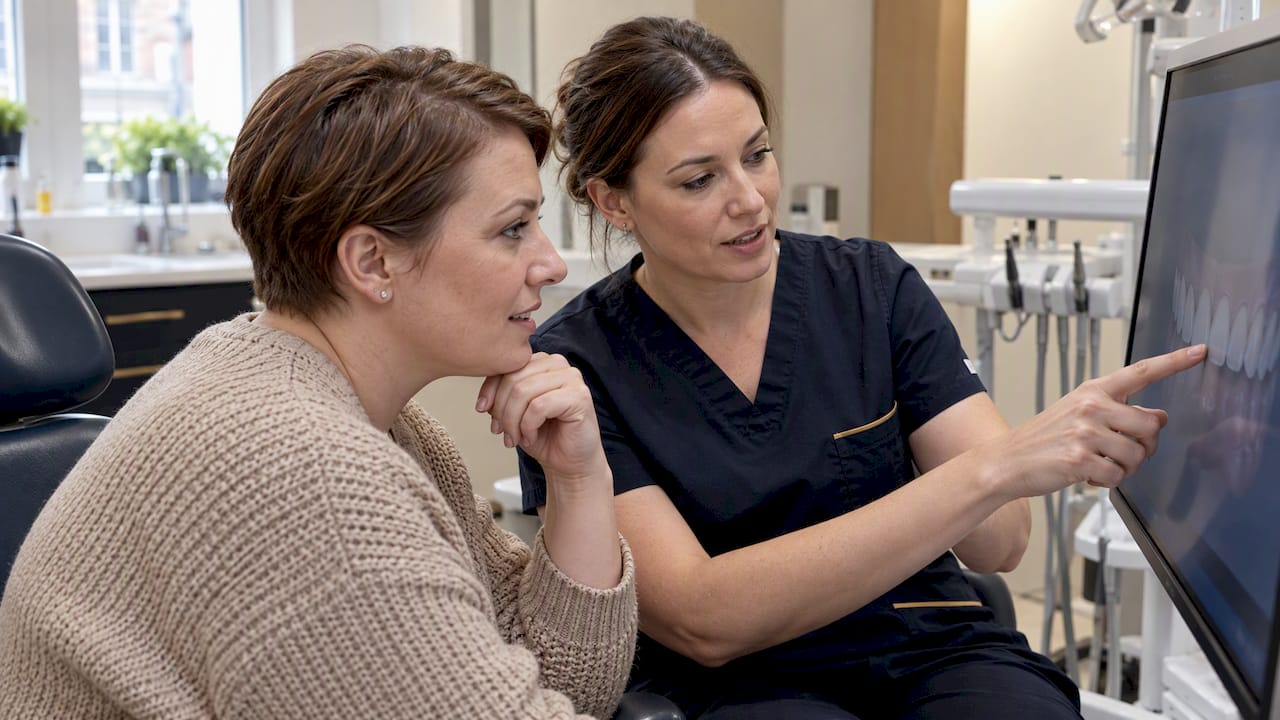
Veneers can close small to moderate gaps between teeth, and for many patients they give a predictable, good-looking result. The best outcomes come with gaps caused by tooth size or shape rather than by tooth position or an unstable bite. A dentist needs to check the cause of your gap first, because that single factor decides whether veneers, bonding or orthodontics is the right path.
TL;DR:
- If a gap comes from a drifted or rotated tooth, aligners or braces move it; veneers only mask position and may leave bite problems.
- Porcelain fitting commonly removes 0.5 to 0.75 mm of enamel permanently, while composite bonding usually needs little or none and is easier to repair.
- Ceramic veneers show about 96% survival at roughly 10 years; composite gap closures show 90% at four years, with more staining and surface wear.
- Before treatment, ask for a digital preview with a side view and bite assessment; reviews every six months can catch chips, wear, or decay.
Table of Contents
- What veneers are and the main types used to close gaps
- How veneers close gaps and clinical limits to what they can safely do
- Who makes a suitable candidate: the dentist’s assessment checklist
- Alternatives to veneers and when each is preferable
- Expected outcomes, longevity and maintenance for gap-closing veneers
- How TJ Smile Studio assesses and treats gaps: a practitioner’s approach
- Favour the least destructive option that achieves the smile goal
- How we can help close your gap
- FAQ
- Sources
What veneers are and the main types used to close gaps
A veneer is a thin shell bonded to the front surface of a tooth to change its shape, size or colour. For gap closure, that shell is built slightly wider than the natural tooth, so the extra width fills the space either side.
There are two main types used for this purpose, and they work quite differently.
- Porcelain veneers are made in a lab from ceramic, usually after removing around 0.5 to 0.75mm of enamel from the tooth surface to make room for the shell.
- Composite veneers (bonding) are built up directly on the tooth, chairside, from a tooth-coloured resin, with little or no enamel removal.
Porcelain holds its polish and colour well over time, resists staining better than resin, and tends to last longer once fitted, which is why it is often the choice for patients wanting a long-term, low-maintenance fix. Composite is more reversible and far easier to repair if it chips, but it typically has a shorter working life and can be more prone to colour change. Our guide to composite bonding versus veneers sets out the practical differences in more depth.
Either material adds width and alters the contour of the tooth edge, which visually closes the gap without moving the tooth itself. That distinction, masking the space rather than shifting the tooth, shapes almost everything else in this article.
How veneers close gaps and clinical limits to what they can safely do
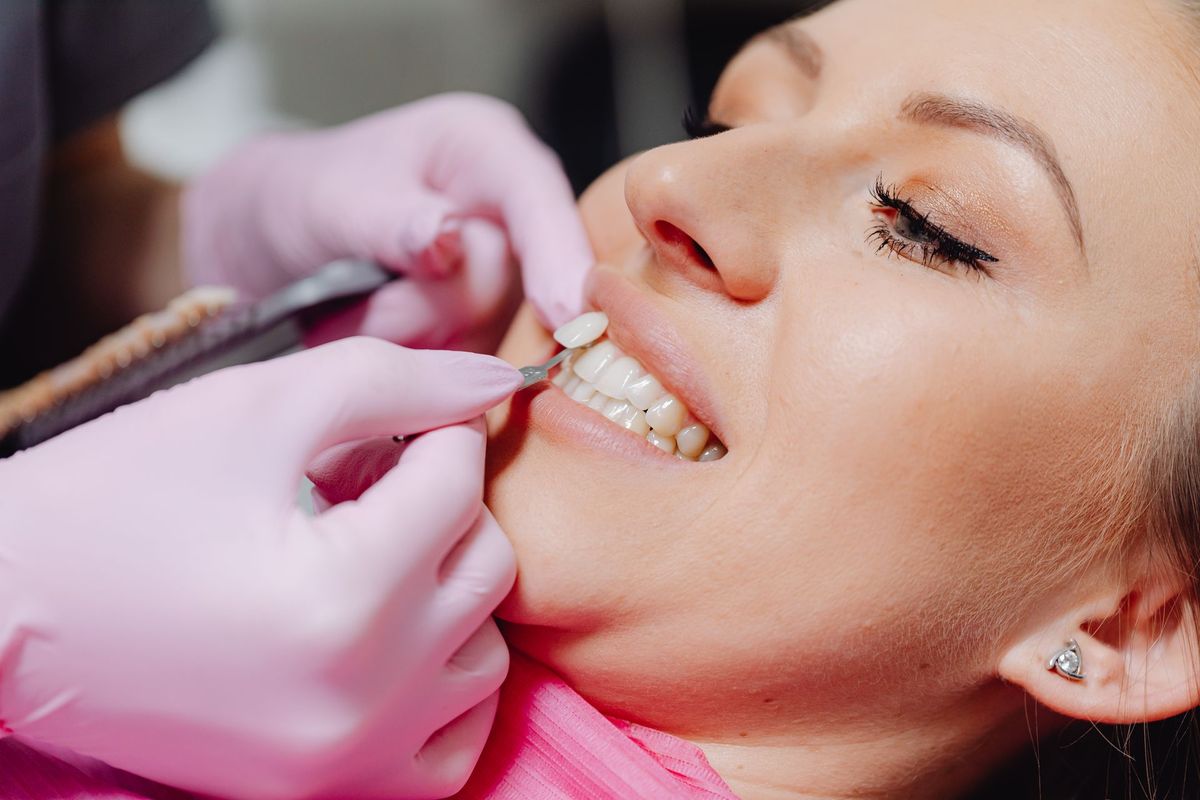
Closing a gap with a veneer is a design exercise before it is a dental one. A dentist usually starts with photographs and a wax-up or digital mock-up, which previews how much width needs to be added and whether the resulting tooth shape still looks balanced next to its neighbours.
- Photographs and measurements establish the exact size of the gap and the proportions of the surrounding teeth.
- A wax-up or digital mock-up shows the proposed new tooth shape before anything is prepared or bonded.
- The dentist checks whether the added width will sit comfortably within the bite, front to back and side to side.
- Minimal enamel preparation, often in the region of 0.3 to 0.7mm, is carried out only where needed to seat the veneer naturally.
There is a practical ceiling on how much width a veneer can add. Push past it and the tooth looks bulky, or the bite starts to carry force at an angle it was not designed for, which raises the risk of chips and fractures later. Veneers also cannot move a tooth: they change its visible shape, not its root position. So if the gap exists because a tooth has drifted or rotated, a veneer can disguise it from the front but will not correct the underlying position, and in some cases that mismatch becomes visible from other angles or affects the bite over time. Gum health matters too: receding gums or thin tissue between teeth can leave a small triangular gap below the veneer even after the visible space is closed.
Pro Tip: Ask to see your mock-up from the side as well as straight on, since gap closure that looks perfect face-on can still leave an awkward profile.
Who makes a suitable candidate: the dentist’s assessment checklist
Not every gap is a good candidate for veneers, and a thorough assessment before treatment is what separates a durable result from a disappointing one. Dentists typically work through a consistent set of checks.
- Decay and gum health: active cavities or gum disease need treating first, since veneers are bonded to tooth structure that must be sound.
- Bruxism and existing restorations: a habit of grinding or clenching can overload a veneer’s edges, and old fillings nearby may affect how well the veneer bonds.
- Enamel thickness and tooth size: porcelain veneers need enough enamel to bond to, and the natural tooth size affects how much width can be added convincingly.
- Bite and occlusion stability: a stable, even bite reduces the chance of chipping or debonding once the new shape is in place.
- Cause of the gap: a dentist distinguishes between gaps from naturally small or narrow teeth and gaps from tooth position, since only the former responds well to veneers alone.
- Expectations: a realistic sense of how the teeth will look, feel and need maintaining afterwards.
Patients with a position-related gap, or with an unstable bite, are usually steered towards a different plan, which the next section covers.
Alternatives to veneers and when each is preferable
Veneers are not the only route to a closed gap, and for some causes they are not the best one. Orthodontics, specifically clear aligners or braces, remains the preferred option whenever the gap exists because a tooth has drifted, rotated or sits in the wrong position: moving the tooth itself removes the gap permanently without reducing any enamel. The trade-off is time, since orthodontic movement takes months rather than days.
- Orthodontics repositions the tooth itself and is the right choice whenever position, not size, is the cause of the gap.
- Composite bonding is a minimal-prep option that works well for small gaps and suits patients who want to avoid removing enamel.
- Combined pathways align the teeth first with aligners or braces, then refine the final shape with bonding or veneers for a sharper aesthetic finish.
- Bridges or implants become relevant when the gap exists because a tooth is missing altogether, rather than simply undersized or misaligned.
Each of these sits on a different point of the invasiveness scale, from fully reversible bonding through to orthodontic movement and, at the far end, irreversible veneer preparation. Our comparison of composite bonding for gaps and our page on Invisalign versus braces both go into the practical trade-offs in more detail, and a combined approach is often the most conservative way to address both position and shape when a patient has both concerns.
Expected outcomes, longevity and maintenance for gap-closing veneers
Ceramic veneers have a strong long-term track record. A systematic review found pooled survival of around 96% at roughly 10 years for lithium disilicate veneers, which means the large majority are still functioning well a decade after placement. Composite bonding used specifically for diastema closure performs well over the shorter term too, with survival around 92% at two years and 90% at four years, though annual failure rates for composite closures can run from roughly 0.9% to 3.4% over that period.
The most common problems differ by material. Porcelain veneers can fracture under heavy bite forces or trauma, and a fractured veneer usually needs full replacement rather than a quick fix. Composite restorations are more prone to colour mismatch and surface wear over time, and because the material is more porous than ceramic, there is a long-term risk of secondary decay at the margins if hygiene lapses. Clinical practice guidelines recommend six-monthly reviews for anyone with veneers or bonding, specifically to catch these issues early, since most problems are far easier to manage when spotted at a routine recall rather than once they have progressed.
Composite is cheaper to place and simpler to repair chairside. Porcelain costs more upfront but tends to need less frequent intervention over its lifetime. Finance options are worth asking about if cost is a deciding factor between the two.
How TJ Smile Studio assesses and treats gaps: a practitioner’s approach
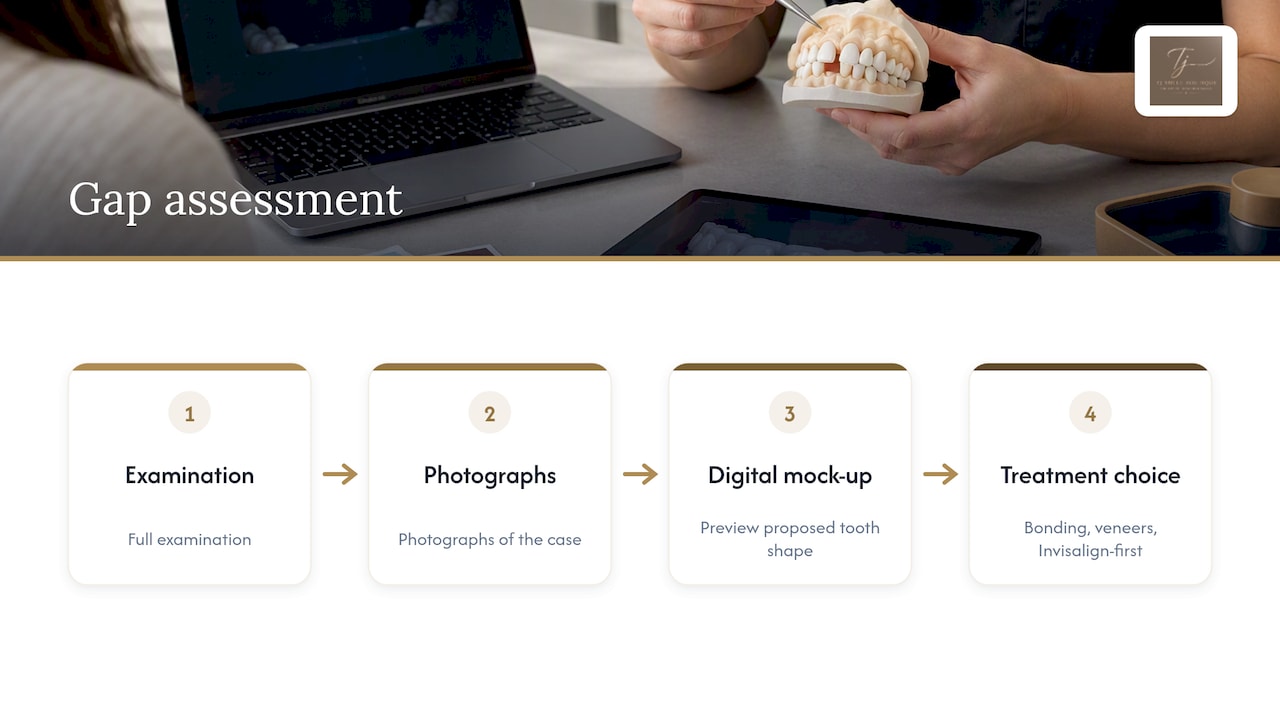
Every gap case we see starts the same way: a full examination, photographs, and a digital mock-up that shows the proposed new tooth shape before we commit to any preparation. That mock-up stage is where we, and the patient, decide whether a gap is better suited to composite bonding, veneers, or an Invisalign-first approach that closes the space by moving the teeth rather than reshaping them.
We use a Same-Day Hybrid Veneer workflow that carries digital planning through to delivery in a single visit for suitable candidates. Every case is led personally from the first consultation through to the finished result, keeping the planning and clinical work joined up rather than split across different hands.
Where a gap is caused by tooth position rather than size, we recommend Invisalign first, refining the final shape with bonding or veneers afterwards if needed. For smaller gaps better served by a reversible, lower-cost option, composite bonding may be recommended. The consultation covers the exam, photographs, a mock-up of options, and outlines next steps, so patients understand the options before deciding.
Favour the least destructive option that achieves the smile goal
My own view, after years of planning these cases, is that the best veneer is often the one you don’t end up needing. Enamel removed for a veneer is gone permanently, so the right question is never “can veneers close this gap” but “what is the least invasive way to get the result this patient actually wants”. A mock-up that honestly shows maintenance requirements, not just the finished smile, does more for a patient’s long-term satisfaction than any amount of persuasion. Used for the right reasons, veneers are one of the most reliable cosmetic tools available, but that reliability depends entirely on choosing them for the right gap in the first place.
— Dr Tashfeen Jamil BDS, MFDS RCS Ed, AssocFCGDent - GDC 286427
How we can help close your gap
If you are weighing up whether your own gap suits veneers, bonding, or Invisalign, the only way to know for certain is a proper look at your teeth, your bite and your goals. We offer a Smile Consultation where photographs are taken, the cause of the gap is discussed, and a digital mock-up is built to show the proposed result before any decision is made.
- Smile Consultation, where we assess your gap and talk through every realistic option.
- Composite bonding, a reversible, same-visit option for smaller gaps.
- Same-Day Hybrid Veneers, for patients who want a longer-lasting ceramic result delivered in one appointment.
- Invisalign, when the gap needs the teeth to move rather than simply look different.
Come prepared with questions about maintenance and longevity, since that conversation shapes which option suits you best and is part of broader self-care skincare best practices for healthy skin. Book your Smile Consultation and we will map out a plan built around your own teeth, not a generic template.
This article is general information, not a substitute for advice from a qualified doctor. Consult a qualified healthcare professional about your own circumstances before acting on anything here.
FAQ
How do veneers work?
A veneer is a thin shell, either porcelain or composite resin, bonded to the front of a tooth to change its shape, size or colour. For gaps, the shell is made slightly wider than the natural tooth so the added width fills the space, without moving the tooth itself.
Do veneers align teeth?
No, veneers reshape the visible surface of a tooth but do not move it within the jaw. If teeth need to be repositioned to close a gap, orthodontic treatment such as aligners or braces is the appropriate option, sometimes followed by bonding or veneers to refine the final shape.
What are the pros and cons of veneers?
Porcelain veneers offer strong stain resistance and high long-term survival, with pooled estimates around 96% at roughly 10 years, but they require permanent enamel removal and can fracture under heavy bite forces. Composite veneers are reversible and easier to repair, with survival around 90% at four years for diastema closure, but they are more prone to staining and chipping over time.
Are veneers permanent?
Porcelain veneers are considered a long-term, largely irreversible treatment because the enamel removed to fit them does not grow back, though the veneer itself will eventually need repair or replacement. Composite veneers are not permanent in the same sense: they can be adjusted, repaired or removed far more easily since little or no enamel is taken away.
Sources
- Diastema closure composite survival study (PubMed)
- Systematic review: ceramic laminate veneer survival (PubMed)
- NHS: orthodontics overview
- Prosthodontics
Recommended
This article is general information, not personal dental advice. What’s right for your teeth depends on a clinical examination — the condition of your enamel, gums, bite and any existing dental work — and no article can assess that. Outcomes vary between patients, and all treatment at TJ Smile Studio is subject to assessment and clinical suitability.
- Dr Tashfeen Jamil BDS, MFDS RCS Ed, AssocFCGDent, PGDip Restorative and Aesthetic Dentistry — GDC registration 286427
This article is general information, not personal dental advice. What's right for your teeth depends on a clinical examination — the condition of your enamel, gums, bite and any existing dental work — and no article can assess that. Outcomes vary between patients, and all treatment at TJ Smile Studio is subject to assessment and clinical suitability.
Clinically reviewed by Dr Tashfeen Jamil BDS, MFDS RCS Ed, AssocFCGDent, PGDip Restorative and Aesthetic Dentistry — GDC registration 286427, Principal Dentist at TJ Smile Studio, 1 Spiersbridge Way, Thornliebank, Glasgow G46 8NG.
If you have dental pain, swelling or an injury, call the practice on 07728 808510. Out of hours in Scotland, call NHS 24 on 111.