13 September 2026 · TJ Smile Studio
Bonding for Gaps in the UK: Same Day Fixes That Last Up to 17 Years
Practical guide for UK patients on bonding for gaps: what to expect, lifespan evidence (up to 17 years), aftercare and same day clinic steps.
Composite bonding closes small to moderate gaps between teeth in a single visit for most patients, reshaping the sides of the teeth with tooth-coloured resin rather than moving them. Expect a realistic lifespan commonly lasting several years with good care, chips or staining as the main long-term risks, and a proper clinical assessment first, since wide gaps, an unstable bite, or gum disease can rule bonding out.
TL;DR:
- Bonding is most suitable for small to moderate gaps in otherwise healthy, well-aligned teeth, especially when patients prefer a quick, minimally invasive cosmetic fix.
- The lifespan of bonding varies, but well-placed composite can last over five years in favorable bite positions, with repairs often being simple and localized.
- Wide gaps, bite misalignment, or gum disease may require orthodontics or veneers instead of bonding for long-term or stable results.
- Proper planning, communication, and oral hygiene significantly influence the bonding’s durability and success, especially in patients with clenching or grinding habits.
- Bonding is a private treatment that costs per tooth, often detailed during consultations, and is rarely available on the NHS unless it addresses functional issues rather than cosmetic gaps.
Table of Contents
- What is composite bonding, and why does it suit gap closure?
- What happens during a bonding appointment to close a gap?
- Who is a suitable candidate for bonding for gaps?
- How long does bonding for gaps actually last?
- How does bonding compare with veneers and orthodontics for gaps?
- How much does bonding for gaps cost, and is it available on the NHS?
- How do you care for teeth after bonding for gaps?
- What does the clinical evidence say about gap-closure bonding?
- Practitioner note: how we approach gap closure with bonding
- Ready to close your gap? What a consultation at TJ Smile Studio involves
- Sources
- FAQ
What is composite bonding, and why does it suit gap closure?
Composite bonding is the process of applying tooth-coloured resin directly onto a tooth, sculpting it by hand, then hardening it with a curing light. Dentists sometimes call it “direct bonding” or “composite resin bonding” to distinguish it from indirect work like crowns or veneers, which are made outside the mouth and then fitted. For closing gaps, or what dentists sometimes label a diastema when it sits between the two front teeth, bonding works by adding material to the edges facing the space until the gap visually disappears.
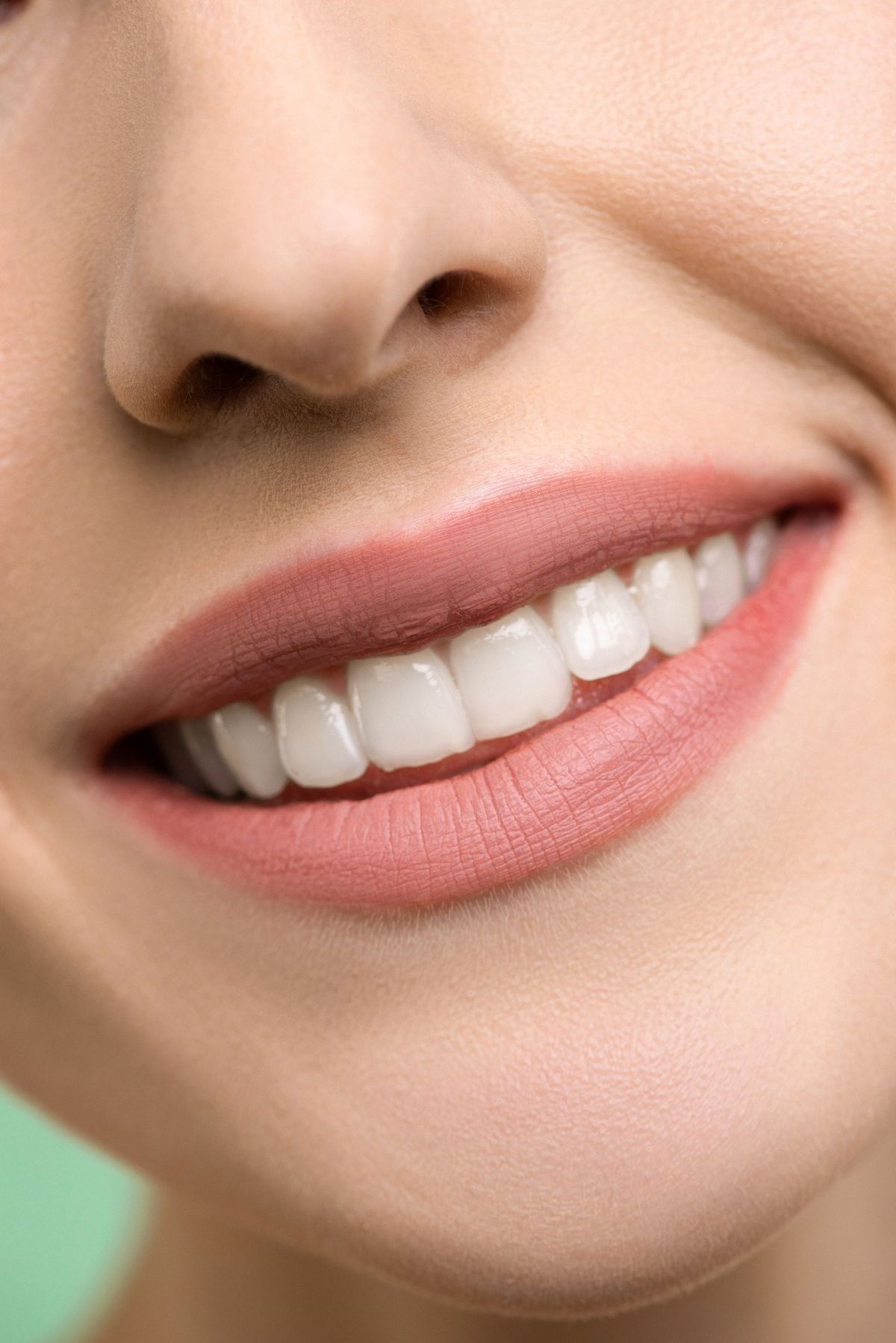
The chemistry behind it is straightforward. A mild etching gel roughens the enamel surface at a microscopic level, creating tiny pores the resin can grip. A bonding agent fills those pores, and the composite is layered on top and set hard with a blue curing light in seconds. According to Cleveland Clinic, this same resin is used to repair chips, reshape teeth, and close small gaps, which is why bonding has become the default first option for cosmetic spacing issues.
What makes bonding attractive compared with other gap-closing routes comes down to a few practical points:
- It typically removes little or no healthy enamel, unlike veneers, which usually need some surface reduction.
- The whole process can often be finished in one appointment, with no lab work or waiting.
- It is reversible in a meaningful sense. If a patient wants to switch approaches later, there is minimal permanent alteration to work around.
- Repairs are simple. A chipped or worn edge can usually be smoothed or topped up rather than replaced outright.
That conservative quality is the main reason bonding sits at the top of most gap-closure conversations, particularly for people who are not ready to commit to something as involved as crown preparation or full orthodontic treatment.
What happens during a bonding appointment to close a gap?
A single bonding visit for gap closure usually follows a consistent sequence, though the details shift slightly depending on how many teeth are involved and how wide the gaps are.
- Assessment and planning. The dentist examines the gap, checks the bite, and takes photographs. Some clinics also produce a digital mock-up so you can see roughly how the finished shape will look before any resin goes on.
- Shade matching. Composite comes in a range of shades, and the dentist selects one that blends with your surrounding teeth in natural light, not just under the surgery lamp.
- Surface preparation. The tooth is cleaned, and the bonding surface is lightly roughened. Many gap cases need very little preparation since the material is added rather than replacing lost structure.
- Etching and bonding agent. A gel etches the enamel for a controlled window of time, then a thin bonding layer is painted on and cured.
- Layering the composite. The resin is built up in thin layers, each cured separately, allowing the dentist to sculpt contours and contact points that close the visual gap without making the tooth look bulky.
- Shaping and polishing. Once the final layer is cured, the dentist trims excess material, checks the bite with articulating paper, and polishes to a smooth, glossy finish.
Most single-tooth or two-tooth bonding sessions for gaps take between 30 and 90 minutes, and local anaesthetic is rarely needed since the treatment doesn’t touch the nerve. If several teeth need reshaping to balance the smile evenly, the appointment can run longer.
Pro Tip: Bring reference photos of smiles you like, or point to a specific gap width you’re comfortable with. Composite bonding is largely a freehand sculpting process, so the more precisely you communicate shade and shape preferences before curing starts, the less adjustment is needed afterwards.
Before you leave, the dentist checks that flossing moves smoothly through the new contact points and asks you to bite down normally to confirm nothing feels high or uneven. Minor adjustments at this stage are routine, not a sign anything went wrong.
Who is a suitable candidate for bonding for gaps?
Bonding works best on teeth that are otherwise healthy, with a stable bite and gaps that are small to moderate in size. If your teeth are well aligned apart from a single visible space between the front two, or a handful of narrow gaps across the smile, bonding is often the most direct route to closing them without touching your natural tooth structure.
Certain factors point away from bonding, or at least suggest it needs to be part of a bigger plan:
- Gaps wider than a few millimetres, where enough composite to close them fully would look bulky or unnatural.
- Missing teeth, where the space needs a bridge, implant, or orthodontic movement rather than added resin.
- Untreated gum disease, since bonding placed against inflamed or receding gums tends to fail faster and can mask a problem that needs treating first.
- Significant malocclusion, where the bite itself is misaligned and closing a gap cosmetically won’t resolve the underlying issue.
- Heavy grinding or clenching, which places disproportionate force on the thin edges of bonded composite.
Tooth shape and bite force matter more than people expect. A dentist will check how your upper and lower teeth meet when you bite and grind side to side, because bonded edges sitting directly in that contact path wear down faster than composite placed away from heavy occlusal load. This is part of why a proper consultation involves more than a glance at the gap in a mirror.
For wider spacing, or spacing tied to tooth position rather than just proportion, combining orthodontics with bonding often gives a better long-term result than bonding alone. Moving teeth into a more balanced position first, then finishing with bonding to refine shape, tends to hold up longer than trying to mask a large structural gap with resin alone. Our comparison of cosmetic dentistry and orthodontic options covers how dentists decide which route, or which combination, fits a given case.
How long does bonding for gaps actually last?
Plan for a realistic lifespan commonly lasting several years, with well-placed composite in favourable bite positions sometimes lasting considerably longer.
Reported longevity: Clinical follow-ups summarised in a 17-year composite bonding case study note five-year survival rates above 90% for well-placed bonding, with some gap closures documented lasting up to 17 years under favourable conditions.
That range is wide because longevity depends heavily on where the bonding sits in your bite and how it was finished, not just the material itself. When bonding fails early, it’s usually one of a few recognisable patterns:
- Chipping, most often at thin edges that take direct biting force, such as the corner of a front tooth used to tear food.
- Staining, since composite resin picks up discolouration from tea, coffee, red wine, and tobacco more readily than natural enamel or porcelain.
- Debonding, where the resin separates cleanly from the tooth, usually from moisture contamination during placement or excessive force afterwards.
- Surface wear, a gradual dulling of the polish that makes the bonding look less lifelike over time.
Grinding is the single biggest risk factor most patients underestimate. Composite edges placed in a bite that clenches or grinds at night take repeated stress that natural enamel tolerates better. A 17-year case study on composite longevity points to bite management, including night guards for grinders, as one of the strongest predictors of whether bonding lasts years or decades. Finishing technique matters too. A high-gloss polish reduces the microscopic roughness that traps plaque and stain, which is one reason the skill of the person shaping and polishing the resin affects outcomes as much as the resin itself.
The advantage bonding holds over most alternatives is that it’s designed to be repaired rather than replaced outright. A chipped edge or a patch of staining usually needs a local repair and repolish, not a full redo of the tooth.
How does bonding compare with veneers and orthodontics for gaps?
Choosing between bonding, veneers, and orthodontics comes down to how wide the gap is, how much you want to change beyond just closing the space, and how much time and cost you’re prepared to commit.
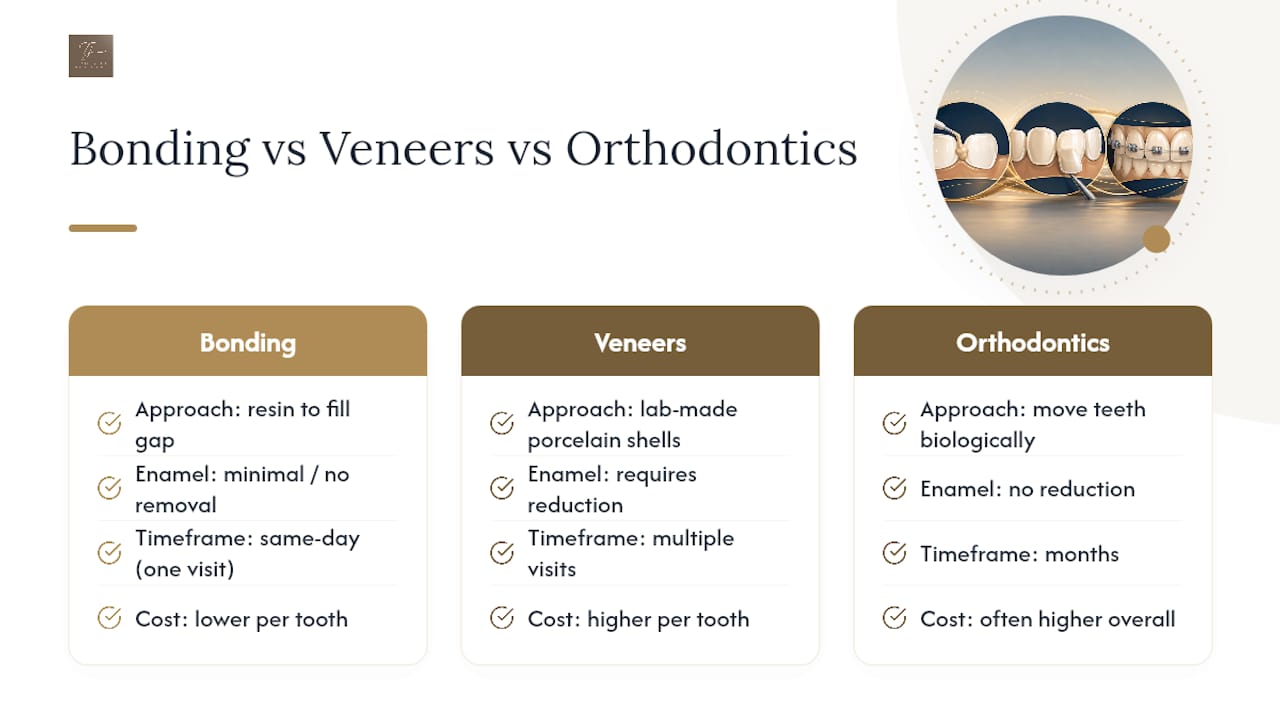
Bonding sits at the conservative, fast end of the spectrum. It removes minimal or no enamel, is usually finished in one visit, costs less per tooth than veneers, and can be adjusted or repaired easily. The trade-off is that composite resin stains more readily than porcelain and doesn’t respond to whitening treatments the same way natural enamel does, so any whitening should generally happen before bonding is placed, not after.
Veneers take more commitment upfront. They typically require some enamel reduction to fit properly, involve a lab-made restoration rather than same-day sculpting, and cost more per tooth. In exchange, porcelain is more stain-resistant and often longer-lasting than direct composite, which makes veneers a stronger option when someone wants a complete change to shape, colour, and gap closure all at once, rather than a targeted fix.
Orthodontics is the only option that actually moves teeth rather than reshaping them cosmetically. For gaps caused by genuine spacing between tooth roots, or where the bite itself is uneven, closing the space with orthodontic movement addresses the root cause rather than covering it. It takes months rather than an afternoon, but the result doesn’t rely on added material holding up under bite force.
In practice, the strongest outcomes often come from combining approaches: orthodontic movement to close the bulk of a wider gap, followed by conservative bonding to fine-tune tooth shape and symmetry once the teeth are in position. Our breakdown of composite versus porcelain veneers goes into more detail on where the line sits between a bonding case and a veneer case.
How much does bonding for gaps cost, and is it available on the NHS?
Composite bonding for gaps is a private cosmetic treatment for the vast majority of patients, and pricing is set per tooth rather than as a flat fee for the whole smile. According to Bupa’s patient guidance, private bonding tends to fall within a modest price range per tooth, though the exact figure depends on how many teeth need treatment and how much shaping each one requires.
NHS availability for cosmetic gap closure is limited by design. The NHS typically funds bonding only where it’s clinically necessary, such as repairing a broken tooth affecting function, not purely to close a cosmetic gap. If your only concern is the visual space between your teeth and there’s no underlying dental health issue, expect to book privately.
A proper consultation before treatment should cover more than just a price quote. Look out for these elements when booking:
- Photographs and, ideally, a digital mock-up showing the likely outcome before any resin is applied.
- A clear written treatment plan setting out how many teeth are involved and the expected number of visits.
- An honest conversation about maintenance, including how staining and chipping are handled if they occur.
- Financing options, if the treatment plan extends beyond a single tooth.
Worth asking directly: what happens if a chip appears six months later, and is a repair included or charged separately? Our guide to choosing a cosmetic dentist has a fuller list of questions worth raising before you commit to a treatment plan.
How do you care for teeth after bonding for gaps?
The first 24 to 48 hours after bonding matter more than most patients expect, mainly because the composite is fully cured but the gums around it can be mildly irritated from the procedure.
- Expect mild sensitivity for a day or two, particularly to hot or cold food, and let it settle before judging the final feel of the bonding.
- Avoid biting directly into hard foods like apples or crusty bread with the newly bonded teeth for the first few days while you get used to the new shape.
- Cut back on staining foods and drinks, especially red wine, coffee, tea, and tobacco, since composite resin absorbs colour more readily than natural enamel.
- Brush and floss as normal, but be gentle around the new contact points until they feel familiar under floss.
- Book a follow-up check if anything feels rough, sharp, or high when you bite, rather than waiting for your next routine appointment.
Professional maintenance plays a bigger role in bonding longevity than most people assume. A dental care aftercare guide on protecting cosmetic results points to regular polishing as one of the simplest ways to keep bonded edges smooth and stain-resistant over time, since a dull or roughened surface picks up plaque and discolouration faster than a freshly polished one.
If you grind your teeth at night, a night guard isn’t optional. It’s one of the most effective ways to protect thin bonded edges from the repeated force that causes chipping and early wear, and most dentists will recommend one as part of the treatment plan rather than as an afterthought.

What does the clinical evidence say about gap-closure bonding?
The evidence on composite bonding for gap closure is more reassuring than many patients expect walking in. Clinical follow-ups summarised in the 17-year case study on composite longevity report five-year survival rates above 90% for well-placed bonding, with individual gap closures documented lasting well beyond a decade under favourable bite conditions. That figure depends heavily on technique, which is why the dentist’s approach to finishing, contact placement, and bite adjustment matters as much as the material itself.
Well-placed composite for gap closures is designed to be repaired rather than replaced outright. A chip or patch of staining usually calls for a local repair and repolish, not a full redo of the tooth.
Contact point placement, in particular, separates a good result from a mediocre one. Position the new edge slightly wrong and food traps between the teeth, or the gap looks only partially closed from certain angles. Bite adjustment afterwards catches problems a mirror check alone would miss, since a bonded edge sitting even slightly high on a bite contact will wear or chip within months.
Before booking bonding anywhere, it’s worth checking that your dentist is registered with the General Dental Council, the body that maintains the UK register of qualified dental professionals and the standards patients can check against.
Composite bonding for gaps can be performed using a fully digital workflow that allows shade matching, mock-ups, and shaping to happen within a single visit. The clinic’s composite bonding service page has further detail on the approach and typical case outcomes for gap closure.
Practitioner note: how we approach gap closure with bonding
I favour composite bonding for gap closure whenever the case genuinely fits it, small to moderate spacing, healthy teeth, a stable bite, because it gives patients a real cosmetic change without committing them to permanent tooth reduction. What I won’t do is stretch bonding to cover a gap it isn’t suited to. A wide diastema forced shut with bulky composite looks unnatural and fails faster than one closed gradually with orthodontics first.
Planning and honest expectations matter more than the resin itself. I talk patients through likely longevity, staining habits, and what a repair visit looks like before we start, not after something chips. Bonding rewards follow-up. If you’re weighing this up, book a consultation so we can look at your specific gap and bite before deciding what suits you.
— Dr Tashfeen Jamil BDS, MFDS RCS Ed, AssocFCGDent - GDC 286427
Ready to close your gap? What a consultation at TJ Smile Studio involves
Some clinics offer gap closure with a fully digital workflow that allows patients to see a mock-up of their closed gap and leave with finished bonding in the same visit, rather than booking multiple appointments for planning and placement separately.
A consultation typically starts with photographs and a bite assessment, followed by a discussion of whether bonding alone suits the gap or whether a combined approach, orthodontics first, or veneers for a bigger change, would be better long-term. Pricing and, where relevant, finance options are usually covered at this stage as well. If your case involves several teeth or a broader smile change, the digital smile makeover option lets you preview the full result before any treatment begins.
If you’ve got a gap you’d like closed and want a straight answer on whether bonding is the right route, book a consultation through the composite bonding page and get an assessment tailored to your teeth and bite.
This article is general information, not a substitute for advice from a qualified doctor. Consult a qualified healthcare professional about your own circumstances before acting on anything here.
Sources
FAQ
Is bonding good for gaps in teeth?
Yes, for small to moderate gaps between otherwise healthy, well-aligned teeth, bonding is generally an effective and conservative option, though wide gaps or bite problems often need orthodontics or veneers instead.
How long does dental bonding for gaps last?
Plan for a realistic lifespan commonly lasting several years, with well-placed bonding in favourable bite positions sometimes lasting considerably longer, according to a 17-year clinical case study.
Can I get composite bonding if I have a gap?
Most people with small to moderate gaps and healthy teeth and gums are suitable candidates, but a dentist needs to check your bite and gap size first since untreated gum disease or a large space can rule bonding out.
How much does 1 tooth composite bonding cost?
Private UK pricing for composite bonding is set per tooth and varies by case complexity, with cosmetic bonding rarely available on the NHS unless there’s a clinical need beyond appearance.
Does bonding for gaps hurt?
Bonding for gaps is usually painless since it doesn’t involve removing enamel down to the nerve, and local anaesthetic is rarely needed; mild sensitivity to hot or cold for a day or two afterwards is common.
Recommended
This article is general information, not personal dental advice. What’s right for your teeth depends on a clinical examination — the condition of your enamel, gums, bite and any existing dental work — and no article can assess that. Outcomes vary between patients, and all treatment at TJ Smile Studio is subject to assessment and clinical suitability.
- Dr Tashfeen Jamil BDS, MFDS RCS Ed, AssocFCGDent, PGDip Restorative and Aesthetic Dentistry — GDC registration 286427
This article is general information, not personal dental advice. What's right for your teeth depends on a clinical examination — the condition of your enamel, gums, bite and any existing dental work — and no article can assess that. Outcomes vary between patients, and all treatment at TJ Smile Studio is subject to assessment and clinical suitability.
Clinically reviewed by Dr Tashfeen Jamil BDS, MFDS RCS Ed, AssocFCGDent, PGDip Restorative and Aesthetic Dentistry — GDC registration 286427, Principal Dentist at TJ Smile Studio, 1 Spiersbridge Way, Thornliebank, Glasgow G46 8NG.
If you have dental pain, swelling or an injury, call the practice on 07728 808510. Out of hours in Scotland, call NHS 24 on 111.