29 October 2026 · TJ Smile Studio
Restoring Worn Teeth: Your Options, Costs and What to Expect
Worn teeth cannot regrow, but they can be rebuilt. Compare bonding, veneers, crowns and full reconstruction, with Glasgow prices and what each involves.
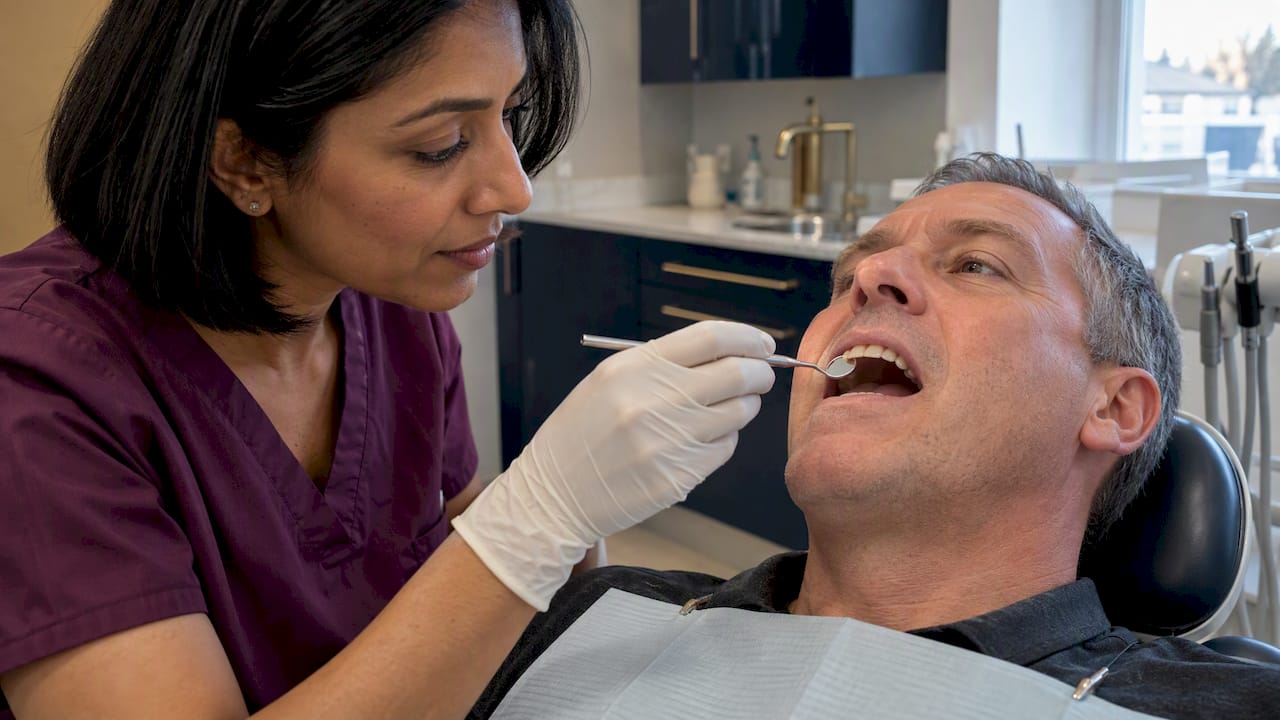
Worn teeth can be rebuilt, but they cannot be regrown. Once enamel or dentine is lost it stays lost, so restoring worn teeth means adding material back (bonding, veneers, onlays or crowns) and dealing with whatever caused the wear so it does not carry on. Which option suits you depends on how much tooth is left, where the wear is and how your bite works. This guide explains each route, what it costs at our Glasgow clinic, and how a dentist decides.
TL;DR
- Lost enamel does not grow back, so treatment is about rebuilding shape and protecting what remains, not reversing the damage.
- Mild to moderate wear is often restored with composite bonding, which bonds to the tooth and usually needs little or no drilling.
- Veneers, crowns or a full mouth rehabilitation come into play when wear is widespread, deep or affecting your bite.
- Finding the cause (grinding, acid from food, drink or reflux) matters as much as the restoration itself.
- At TJ Smile Studio, a smile consultation is £50 and bonding starts from £200 per tooth.
Table of Contents
- What wear actually is, and why it happens
- Can enamel be restored naturally?
- How a dentist assesses worn teeth
- Your options for restoring worn teeth
- Which option fits which situation?
- What does restoring worn teeth cost?
- Our perspective on worn teeth
- What to expect during and after treatment
- Start with a consultation
- FAQ
- Sources
What wear actually is, and why it happens
Tooth wear is the gradual loss of hard tooth tissue. The GOV.UK oral health toolkit describes it as cumulative loss caused by chemical and mechanical factors, usually a mix of three processes:
- Erosion: acid dissolving the tooth surface. The acid can come from outside (fizzy or acidic drinks, some foods) or from inside (stomach acid from reflux or repeated vomiting).
- Attrition: teeth wearing against each other, most often through grinding or clenching.
- Abrasion: wear from something other than teeth, such as aggressive brushing or habitually biting objects.
Most people have more than one going on. A person who clenches at night and sips squash all day is wearing their teeth down two ways at once, which is why a good assessment looks at the whole picture rather than just the teeth that look worst.
Signs your teeth are wearing down
The University of Bristol’s tooth wear patient information lists the common signs: teeth that look shorter, small cupped-out areas on biting surfaces, chipping or fractures, a yellower colour as the dentine underneath shows through, and sensitivity. In severe cases eating or speaking becomes difficult.
If you notice your front teeth getting shorter, edges looking thin or translucent, or hot and cold drinks becoming uncomfortable, it is worth having them looked at before the wear progresses. Early wear is far simpler and cheaper to manage than advanced wear.
Can enamel be restored naturally?
No. Enamel contains no living cells, so the body cannot replace it once it is gone. Cleveland Clinic is clear that lost enamel does not regrow, which is why prevention is the main focus of management. The GOV.UK toolkit also notes that once tooth tissue is lost to erosion, the loss is irreversible.
What you can do is slow things down:
- Use fluoride toothpaste twice a day.
- Cut back on how often you have sugary and acidic food and drinks, rather than just how much.
- See a dentist regularly so changes are caught early.
- Tell your dentist about reflux, vomiting or a dry mouth, because the GOV.UK guidance stresses that tackling the source of acid matters more for long-term control than relying on special toothpastes or brushing tweaks alone.
You may see articles about “remineralising” teeth. That can help early, soft demineralised areas, but it cannot rebuild a tooth that has already lost height or shape. For that you need a restoration.
How a dentist assesses worn teeth
Good treatment starts with a proper assessment. A British Dental Journal paper on treatment planning for tooth wear describes a systematic approach: your main concern, a thorough history, a clinical examination and special tests, which together shape the diagnosis and the options.
In practice, expect questions and checks like these:
- Your history: diet, drinks, reflux, sleep, grinding, previous dental work, and what bothers you most (looks, sensitivity, chipping, function).
- Examination: which teeth are affected, how much structure is left, how your teeth meet and whether any are cracked or decayed.
- Records: photographs, scans or models, so wear can be tracked over time and a design planned.
- A decision on timing: the Royal College of Surgeons of England’s erosion guidelines favour monitoring early wear and choosing interventions that preserve tooth structure for the future. Restoration is recommended when it is needed to relieve pain, restore function and appearance, and protect what remains.
That last point is worth holding on to. Not every worn tooth needs treatment today. A sensible plan may be monitor, protect, then restore the teeth that matter most.
Your options for restoring worn teeth
Composite bonding
Bonding builds tooth-coloured resin directly onto the tooth and shapes it in the chair. Bristol Dental School’s guide to composite build-ups for tooth wear says it suits localised wear when enough tooth remains, and that it bonds directly to the tooth, often with little or no drilling.
The same guide is honest about the trade-offs: the bite can feel different at first, the material can chip or fracture, it can discolour, and it typically lasts around 5 to 6 years on average before needing repair or replacement. Because it is additive and conservative, it keeps options open for later veneers or crowns.
Bonding suits:
- Short or flattened front teeth with thinning edges
- Small areas of wear on biting edges
- People who want a reversible, lower-cost first step
- Wear that is still being monitored
At our clinic, composite bonding starts from £200 per tooth, and additional teeth bonded in the same plan are £245 each. Edge bonding for chipped or thinning edges is £199 per tooth. We have written more on using bonding for enamel erosion and on single-visit edge bonding.
Veneers
Veneers are thin shells bonded over the front surface, and in worn teeth they can rebuild length and colour together. They suit wear that has reached the visible front teeth, particularly when colour is also an issue because exposed dentine looks yellow.
We offer veneers from £399 per tooth, and our Same-Day Hybrid Veneers start from £2,995, with each additional 3D hybrid veneer at £350 per tooth. If you are weighing materials, our comparison of composite versus porcelain veneers sets out the differences, and bonding versus veneers covers the broader choice. You can see the range on our veneers page.
Veneers are not right for everyone with wear. If grinding is active and uncontrolled, any thin restoration is at risk, so the grinding is dealt with first, often with a night guard.
Crowns and onlays
Where a tooth is badly broken down or weakened, a crown covers the whole tooth. A Leeds Teaching Hospitals patient leaflet on crowns explains that crowns rebuild badly broken or weakened teeth with a cap, but that some natural tooth must be removed to make room. Crown treatment usually takes two visits: the tooth is reshaped and an impression taken, then the permanent crown is fitted around two weeks later.
Crowns and onlays are generally kept for back teeth under heavy biting load, or for teeth with substantial structure loss, because they protect the tooth fully. The price of that protection is losing more natural tooth, which is why a dentist will usually try conservative options first when they are suitable.
Full mouth rehabilitation
When wear is widespread, the bite has collapsed or many teeth have lost height, treating tooth by tooth stops working. Full mouth rehabilitation (also called full mouth reconstruction) plans the whole mouth together, often combining bonding, veneers, onlays and crowns so that your bite, appearance and function are restored as one design.
This is a bigger commitment and needs careful planning, usually with a digital design stage so you can see the proposed result first. Our full mouth rehabilitation page explains how we approach it, and our digital smile makeover is often where the planning begins. We do not publish a set price for full rehabilitation because it depends entirely on what your mouth needs; you will get a quote after your consultation.
Which option fits which situation?
| Situation | Typical approach | Tooth removal | Our starting price |
|---|---|---|---|
| Slightly short or thinning front edges | Edge bonding | Little to none | £199 per tooth |
| Localised wear, enough tooth remaining | Composite bonding | Little to none | From £200 per tooth |
| Front teeth worn and discoloured | Veneers | Minimal, depends on type | From £399 per tooth |
| Several front teeth needing a full redesign | Same-Day Hybrid Veneers | Planned digitally | From £2,995 |
| Badly broken down or weakened tooth | Crown or onlay | Yes | Quoted after consultation |
| Widespread wear, collapsed bite | Full mouth rehabilitation | Varies | Quoted after consultation |
Treat this as a guide, not a diagnosis. Two people with similar-looking teeth can need quite different plans once their bite and the cause of wear are understood.
What does restoring worn teeth cost?
Costs depend on how many teeth, the material, and how complex your bite is. On the NHS in England, crowns, inlays and onlays sit in Band 3, which costs £332.10, and your dentist should tell you the cost before treatment starts. NHS charges differ between the nations of the UK, and purely cosmetic work is generally not available on the NHS, so check the position with your own NHS dentist if you live in Scotland.
Privately, our published prices are:
- Smile consultation: £50
- Composite bonding: from £200 per tooth
- Edge bonding: £199 per tooth (additional teeth)
- Veneers: from £399 per tooth
- Additional 3D hybrid veneer: £350 per tooth
- Same-Day Hybrid Veneers: from £2,995
- Composite polish and maintenance: £95
- Composite repair assessment: £75
The maintenance lines matter. Bonding is not a one-off for life, so factor in occasional polishing and repair. Our pricing page lists everything, and we offer finance on larger packages. Our bonding cost guide for Glasgow breaks the figures down further.
Our perspective on worn teeth
We see many patients who have put up with worn teeth for years because it happened slowly and nothing hurt. By the time they come in, they have often adapted without noticing: they chew on one side, hide their smile, or have stopped liking photographs.
Our view is that the restoration is the easy part. The harder, more important work is understanding why the teeth wore, because a beautiful rebuild on a mouth that is still grinding or bathed in acid will not last. That is why we start with conversation, records and a proper look at your bite before talking about materials.
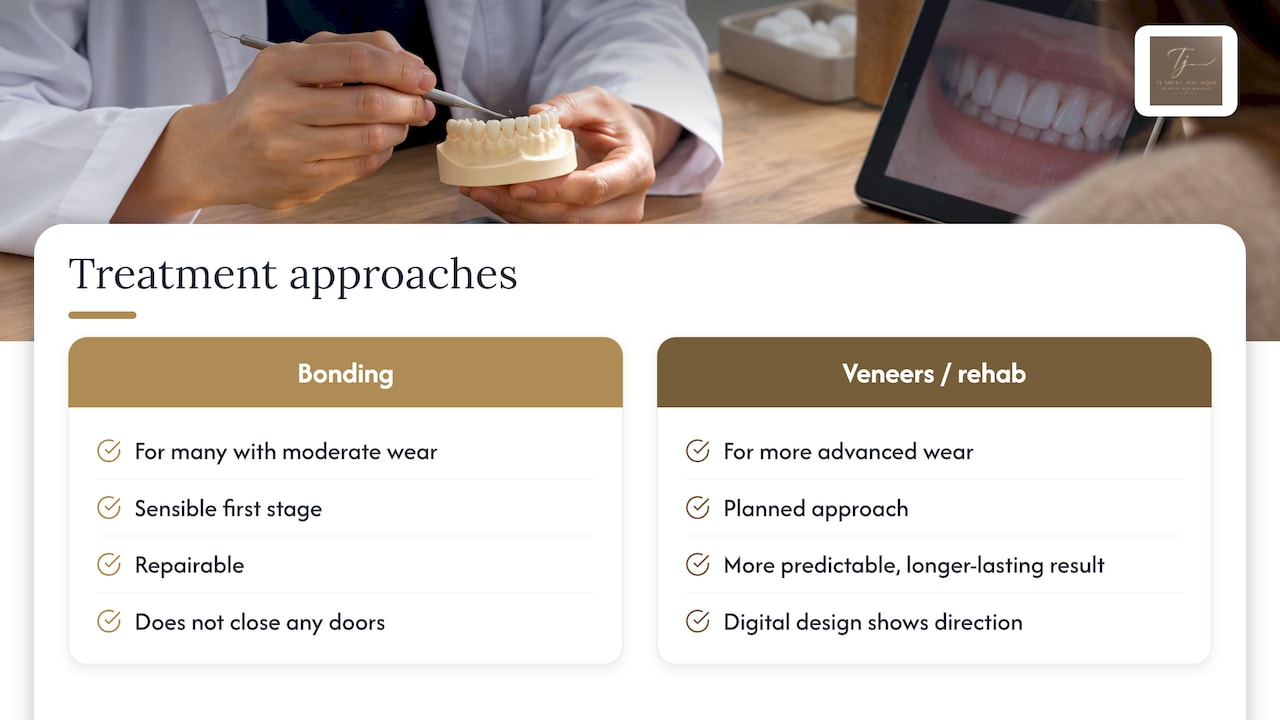
We also lean towards the least invasive option that will do the job well. For many people with moderate wear, bonding is a sensible first stage: it adds back shape, it is repairable, and it does not close any doors. Where wear is more advanced, a planned approach with veneers or a fuller rehabilitation gives a more predictable and longer-lasting result, and a digital design lets you see the direction before we begin.
Every treatment is planned and led personally from consultation to completion, so the person who designed your smile is the person who delivers it. For many patients our digital workflow means treatment can be completed in a single visit, and we offer evening and weekend appointments for people who cannot easily take time away from work.
— Dr Tashfeen Jamil BDS, MFDS RCS Ed, AssocFCGDent - GDC 286427
What to expect during and after treatment
A typical journey with us looks like this:
- Consultation (£50): we discuss your concerns, look at how your teeth wear and meet, and take photographs and scans.
- Design: you see a proposed result, and we agree which teeth to treat and with what.
- Treatment: bonding is often completed in one visit; veneer and larger plans depend on the design. Our Same Day Smile service is built around single-visit results where suitable.
- Aftercare: we advise on brushing, cleaning between teeth, and any night guard needed to protect the work.
Afterwards, keep brushing with fluoride toothpaste, clean between your teeth and attend regular check-ups, as the NHS crown leaflet advises. Expect to notice your bite feeling slightly different for a short time; if it still feels high after a few days, tell us so it can be adjusted. Tea, coffee and red wine can stain composite over time, which is part of why periodic polishing helps.
When to get urgent help
Do not wait for a routine appointment if a restoration breaks. NHS guidance says to seek urgent dental advice for a broken or loose filling, crown, bridge or veneer, severe or persistent tooth or mouth pain, increasing swelling, or uncontrolled bleeding. Swelling or severe pain needs urgent attention from a dentist or NHS 24 on 111 in Scotland. If a bonded tooth chips, we offer an emergency cosmetic appointment for £75.
Start with a consultation
If your teeth look shorter, feel sensitive or keep chipping, the quickest way to know your options is to have them assessed. At TJ Smile Studio in Glasgow, a smile consultation costs £50, and you leave with a clear view of what is worth doing now, what can wait and what it would cost.
You can also browse all our treatments before you book. If whitening is part of what you want, our guide to whitening alongside bonding explains the right order, because bonding material does not whiten.
FAQ
Can worn teeth be fixed without drilling?
Often, yes. Composite bonding is built up directly on the tooth and, according to Bristol Dental School, often needs little or no drilling. Crowns do require some tooth reduction, so a dentist will usually consider conservative options first where they are suitable.
How long does bonded wear repair last?
Bristol Dental School gives an average of around 5 to 6 years for composite build-ups, though this varies with grinding, diet and care. Polishing and small repairs can extend its life. We offer maintenance and repair appointments for exactly this reason.
Should I stop the wear before restoring teeth?
Yes, as far as possible. Restoring teeth without addressing grinding, acid reflux or acidic drinks risks wearing the new material down too. Your dentist should identify the cause and may suggest a night guard, dietary changes or a medical review for reflux.
Is worn tooth restoration covered by the NHS?
Some restorative work, such as crowns, is available on the NHS where clinically necessary, and in England it falls in Band 3 at £332.10. Cosmetic treatments such as bonding and veneers are generally private. Ask your NHS dentist what applies in Scotland.
Sources
- Chapter 7: tooth wear, GOV.UK
- Tooth wear, Bristol Dental School
- Composite build-ups for tooth wear, Bristol Dental School
- Tooth erosion: stages, causes and treatment, Cleveland Clinic
- Treatment planning for patients with tooth wear, British Dental Journal
- Clinical guidelines for dental erosion, Royal College of Surgeons of England
- Crowns, Leeds Teaching Hospitals
- How much NHS dental treatment costs, NHS
- Dental care, NHS Nottingham and Nottinghamshire ICB
Recommended
- Composite Bonding for Enamel Erosion
- Act Within 60 Minutes
- Composite Bonding in Glasgow
- Full Mouth Rehabilitation in Glasgow
This article is general information, not personal dental advice. What’s right for your teeth depends on a clinical examination — the condition of your enamel, gums, bite and any existing dental work — and no article can assess that. Outcomes vary between patients, and all treatment at TJ Smile Studio is subject to assessment and clinical suitability.
- Dr Tashfeen Jamil BDS, MFDS RCS Ed, AssocFCGDent, PGDip Restorative and Aesthetic Dentistry — GDC registration 286427
This article is general information, not personal dental advice. What's right for your teeth depends on a clinical examination — the condition of your enamel, gums, bite and any existing dental work — and no article can assess that. Outcomes vary between patients, and all treatment at TJ Smile Studio is subject to assessment and clinical suitability.
Clinically reviewed by Dr Tashfeen Jamil BDS, MFDS RCS Ed, AssocFCGDent, PGDip Restorative and Aesthetic Dentistry — GDC registration 286427, Principal Dentist at TJ Smile Studio, 1 Spiersbridge Way, Thornliebank, Glasgow G46 8NG.
If you have dental pain, swelling or an injury, call the practice on 07728 808510. Out of hours in Scotland, call NHS 24 on 111.