
09 October 2026 · TJ Smile Studio
Veneer Maintenance: 6 Daily Habits Backed by UK Dental Evidence
Protect veneers with six daily care steps, NHS fluoride advice, regular dental reviews, and nightguard guidance to limit damage from grinding and staining.
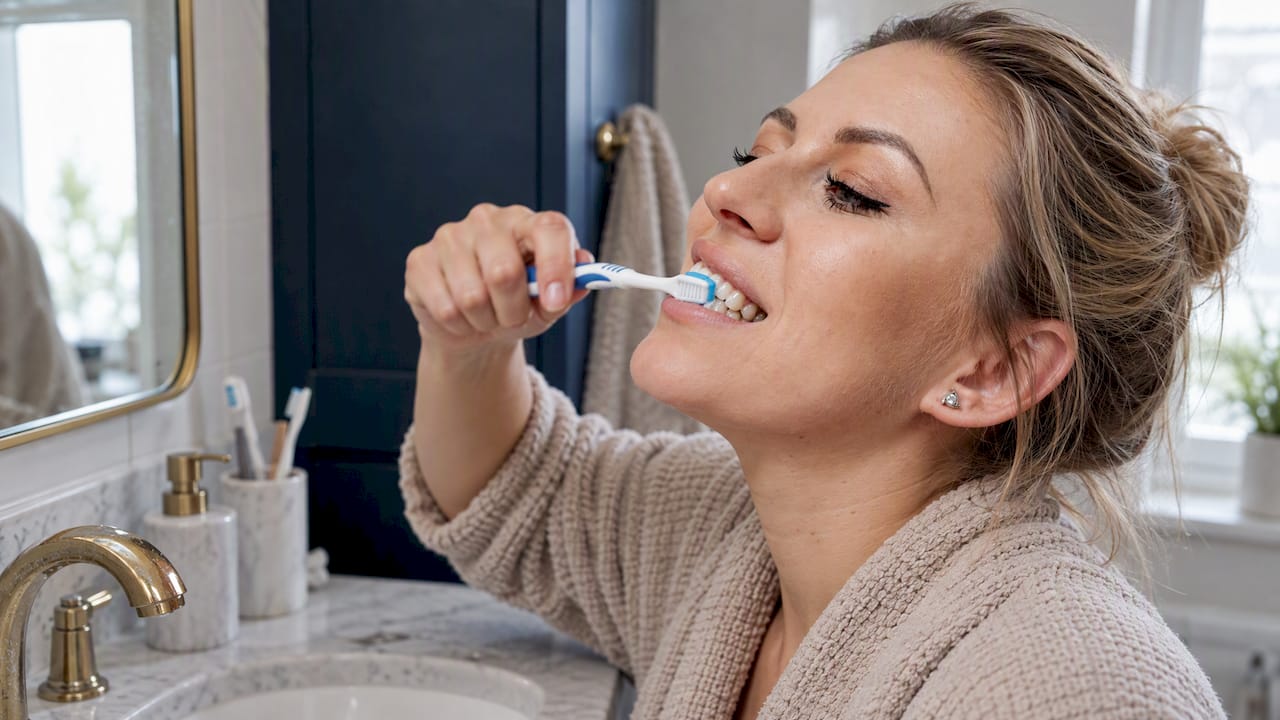
Three things reliably preserve veneers: a disciplined daily hygiene routine, scheduled professional reviews, and protection from grinding. Brush twice daily with a fluoride toothpaste around 1,350 to 1,500 parts per million, clean between your teeth once a day, book regular dental check-ups, wear a nightguard if you grind, and moderate heavy-staining habits such as smoking, coffee and red wine.
TL;DR:
- Use fluoride toothpaste containing 1,350 to 1,500 ppm, spit without rinsing after brushing, and use mouthwash at another time to preserve fluoride.
- Schedule professional reviews every six to twelve months; composite veneers often need polishing more frequently because resin wears and stains faster than porcelain.
- A review of more than 6,500 porcelain veneers found about 95.5% cumulative survival at ten years, provided cases were selected well and bonding was sound.
- Book an earlier assessment for new sensitivity, visible gaps, or chips; waiting for the next routine visit can delay a simple polish or localized repair.
Table of Contents
- Daily care routine for veneers: step-by-step at-home maintenance
- Professional maintenance: what dentists and hygienists do and how often to visit
- What affects veneer lifespan: materials, design and patient factors
- Diet, staining and surface care: practical rules and recovery tactics
- Bruxism and protective measures: nightguards and sporting protection
- Cleaning products and technique: safe tools and those to avoid
- Clinic-proven maintenance tips and author notes
- Author perspective and realistic expectations
- How we support your veneers, repairs and replacements
- FAQ
- Sources
Daily care routine for veneers: step-by-step at-home maintenance
Veneers do not need a special routine, but they reward a careful one. The habits below protect both the restoration and the tooth margin underneath it.
- Brush for two minutes, twice a day. Use a soft manual brush or an oscillating-rotating powered brush, angled gently at the gumline where veneers meet natural tooth.
- Choose a fluoride toothpaste in the 1,350 to 1,500 ppm range. This concentration is what NHS guidance recommends for adults to protect exposed margins from decay.
- Clean between your teeth once daily. Floss, interdental brushes or a water flosser all work. Pick the size that slides through each gap without forcing it, since a too-tight fit can disturb the bond line.
- Time your mouthwash correctly. Use it at a different time from brushing, not immediately afterwards, so you do not rinse away the concentrated fluoride left on your teeth.
- Spit, don’t rinse. After brushing, spit out the excess toothpaste and avoid rinsing with water straight away.
- Skip abrasive whitening pastes. Gritty formulas marketed for stain removal can dull the polished surface of a veneer over time.
Pro Tip: Keep your toothbrush head at a slight angle towards the gum edge, where veneer margins are most exposed to plaque build-up.
Professional maintenance: what dentists and hygienists do and how often to visit
Home care only goes so far. Regular professional reviews catch problems while they are still small and cheap to fix.
- Most patients benefit from a check-up roughly every six to twelve months, with a hygiene visit alongside it.
- At each review, your dentist examines the margins for gaps or leakage, checks gum health around the restoration, assesses your bite, and looks for hairline fractures.
- Composite veneers typically need more frequent polishing than porcelain, since the resin surface wears and stains faster.
- Repair pathways range from a simple polish, through localised composite repair, to full rebonding or replacement, depending on what the clinician finds.
- Under some NHS frameworks, certain restorative items carry a 12-month guarantee covering early defects, though this excludes trauma and does not replace ongoing private review for cosmetic veneers.
What affects veneer lifespan: materials, design and patient factors
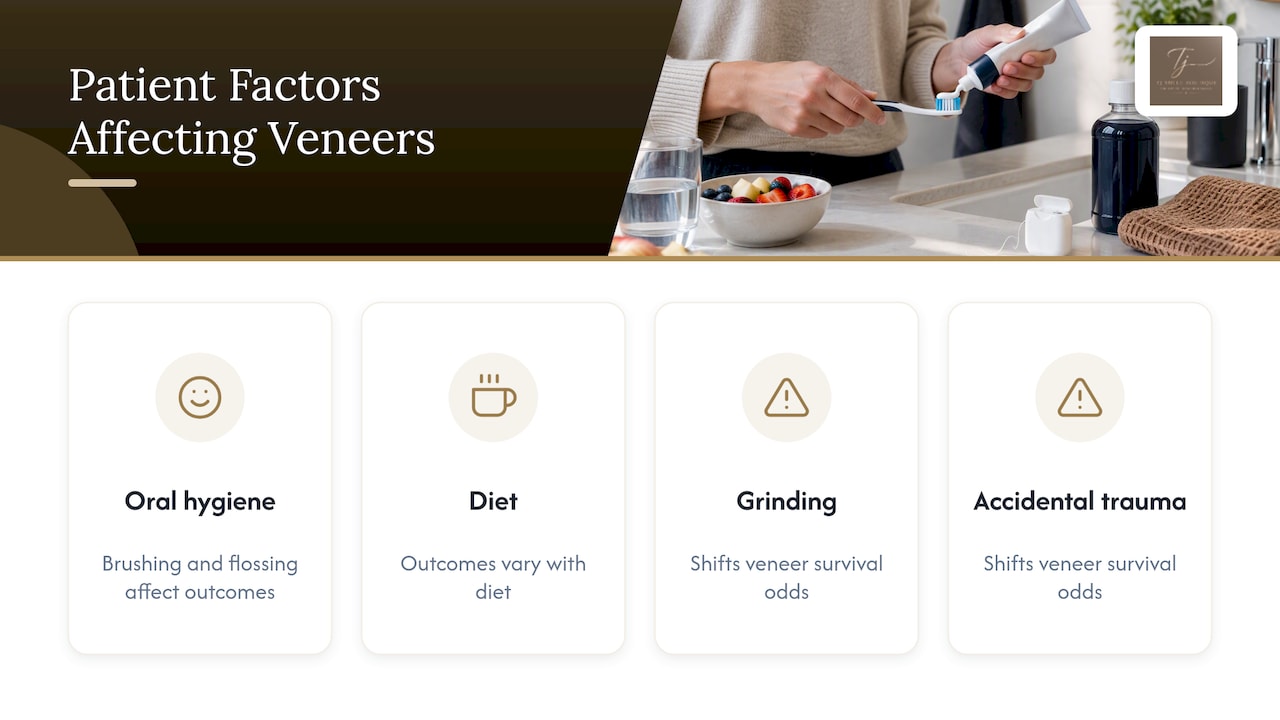
Longevity depends on a mix of clinical factors and daily habits. Leeds Teaching Hospitals guidance puts typical lifespan at around 8 to 10 years with good care, though outcomes vary with brushing, flossing and diet.
A systematic review of over 6,500 porcelain laminate veneers reported a 10-year cumulative survival rate of around 95.5% when cases were well selected and bonding was carried out to a high standard. A separate review of feldspathic porcelain veneers found 5-year survival of about 95.7%, with 10-year figures varying more widely across individual studies.
Design matters as much as material. Veneers without incisal coverage show higher failure rates in some studies, because the exposed edge carries more bite force. Behavioural factors, including hygiene, diet, grinding and accidental trauma, shift these odds further. Watch for sensitivity, visible gaps at the margin, or chipping: each is a signal to book a review rather than wait for the next scheduled check-up.
Diet, staining and surface care: practical rules and recovery tactics
Porcelain resists staining far better than composite, but no veneer is immune to the habits that discolour natural teeth.
- Coffee, red wine, dark tea and curry sauces are the most common staining culprits; enjoying them occasionally rather than daily limits build-up.
- After a staining drink, rinse with water, but wait before brushing if the drink was acidic, since brushing straight after can abrade softened enamel at the margin.
- Veneers do not respond to whitening gels the way natural teeth do, so stubborn discolouration usually needs professional polishing rather than a home whitening kit.
- Smoking is one of the strongest predictors of surface staining and gum irritation around veneer margins, so cutting it out protects both appearance and the supporting tissue through benefits of red-light therapy on gum health.
Pro Tip: If you’ve noticed persistent discolouration despite good brushing, a professional polish often restores shine without needing replacement.
Bruxism and protective measures: nightguards and sporting protection
Grinding puts more force through veneers than normal chewing, and it often happens without the person noticing, usually overnight. Signs include morning jaw ache, flattened edges, or a partner mentioning the noise.
- A custom-fitted nightguard distributes bite force evenly and is widely recommended as protection against fracture in patients who grind.
- Over-the-counter guards are cheaper but fit less precisely, which can reduce how well they protect the veneer edge.
- Anyone playing contact sport should wear a sports mouthguard, since a direct impact is one of the few things a nightguard cannot prevent.
- Reducing bite force at night meaningfully lowers the risk of both fracture and debonding over the life of the restoration.
Cleaning products and technique: safe tools and those to avoid
The right tools matter as much as the routine itself.
- Pick a soft-bristled manual brush or an oscillating-rotating powered brush. Both clean effectively without scratching the polished veneer surface.
- Avoid heavily abrasive “whitening” toothpastes. Their abrasive particles are designed to buff natural enamel and can dull a veneer’s glaze over months of use.
- Choose a low-abrasivity fluoride paste instead, which cleans just as well without the surface wear.
- Use interdental brushes for wider gaps and floss for tighter contacts, sizing interdental brushes so they pass through without resistance.
- Book a professional polish if staining builds up despite good home care, rather than trying to remove it with stronger abrasives at home.
Clinic-proven maintenance tips and author notes
Reported outcomes back up what careful maintenance can achieve. We have tracked veneer survival at 95% at 10 years and 96% at 15 years among our own patients, figures that sit consistently with the published systematic review data above.
- We recommend a short soft-food window immediately after fitting, while the bite settles.
- Mild sensitivity to hot or cold in the first week or two is normal and usually eases without intervention.
- Same-day hybrid veneers receive a final polish and bite check before you leave, with a follow-up review scheduled shortly afterwards.
- We tailor the maintenance plan to the veneer type you have, since composite and porcelain age differently.
Author perspective and realistic expectations
Good maintenance protects more than appearance. It protects the natural tooth structure sitting underneath every veneer, which is the part you cannot replace with a polish. If you are unsure whether your current routine is doing enough, book a review and ask for a straight answer.
— Dr Tashfeen Jamil BDS, MFDS RCS Ed, AssocFCGDent - GDC 286427
How we support your veneers, repairs and replacements

Maintenance is easier when the person who placed your veneers is also the one reviewing them. We offer composite polish and maintenance visits, nightguard fittings, and hygiene reviews that catch small issues before they become repairs, all led personally by Dr Tashfeen Jamil from consultation through to follow-up.
- Considering new veneers or a replacement: see our veneers page for details.
- Want a same-day result: our same-day hybrid veneers use a fully digital workflow.
- Need a maintenance or repair visit: check pricing for current options.
Aftercare plans are built around the veneer type and bite behaviour, and reviews can be booked at flexible times, including evenings and weekends.
This article is general information, not a substitute for advice from a qualified doctor. Consult a qualified healthcare professional about your own circumstances before acting on anything here.
FAQ
What happens after 10 years of veneers?
Many veneers are still functioning well past 10 years with good care, and published data put cumulative survival at around 95.5% at the 10-year mark for well-maintained porcelain veneers. Beyond this point, a dentist will usually assess margins, wear and bite before deciding whether a polish, repair or replacement is appropriate.
What is the 4-8-10 rule for veneers?
This is not an established clinical or research term, and no NHS or peer-reviewed source defines it as a recognised standard. Published guidance instead points to general lifespan ranges, with Leeds Teaching Hospitals citing around 8 to 10 years as typical with proper care.
How often should veneers be replaced?
Replacement timing depends on wear, staining and how well the margins have held up, rather than a fixed schedule. Composite veneers tend to need attention sooner than porcelain, and regular reviews every six to twelve months help your dentist flag replacement before a problem becomes urgent.
How do your teeth not rot under veneers?
The tooth beneath a veneer stays just as vulnerable to decay as any other tooth, so the protection comes entirely from your hygiene routine. NHS guidance on brushing twice daily with fluoride toothpaste and cleaning between teeth daily is what keeps the margin where the veneer meets natural tooth free of decay.
Sources
- Long-Term Survival and Complication Rates of Porcelain Laminate Veneers in Clinical Studies: A Systematic Review
- How to keep your teeth clean - NHS
- Crowns - Leeds Teaching Hospitals NHS Trust
- A systematic review and meta-analysis of the survival of feldspathic porcelain veneers over 5 and 10 years
- NHS Business Services Authority — restorative item guarantee (FAQ)
Recommended
- 95% Survive 10 Years
- Keep Porcelain Veneers Stain Free 10–15
- 96% Survival at 15 Years
- Broken veneer?
This article is general information, not personal dental advice. What’s right for your teeth depends on a clinical examination — the condition of your enamel, gums, bite and any existing dental work — and no article can assess that. Outcomes vary between patients, and all treatment at TJ Smile Studio is subject to assessment and clinical suitability.
- Dr Tashfeen Jamil BDS, MFDS RCS Ed, AssocFCGDent, PGDip Restorative and Aesthetic Dentistry — GDC registration 286427
This article is general information, not personal dental advice. What's right for your teeth depends on a clinical examination — the condition of your enamel, gums, bite and any existing dental work — and no article can assess that. Outcomes vary between patients, and all treatment at TJ Smile Studio is subject to assessment and clinical suitability.
Clinically reviewed by Dr Tashfeen Jamil BDS, MFDS RCS Ed, AssocFCGDent, PGDip Restorative and Aesthetic Dentistry — GDC registration 286427, Principal Dentist at TJ Smile Studio, 1 Spiersbridge Way, Thornliebank, Glasgow G46 8NG.
If you have dental pain, swelling or an injury, call the practice on 07728 808510. Out of hours in Scotland, call NHS 24 on 111.