22 September 2026 · TJ Smile Studio
Whiten Sensitive Teeth Without Lasting Pain for UK Patients
Dentist approved ways to whiten sensitive teeth safely: assessment, low concentration trays, alternate night dosing, and fit and care tips.
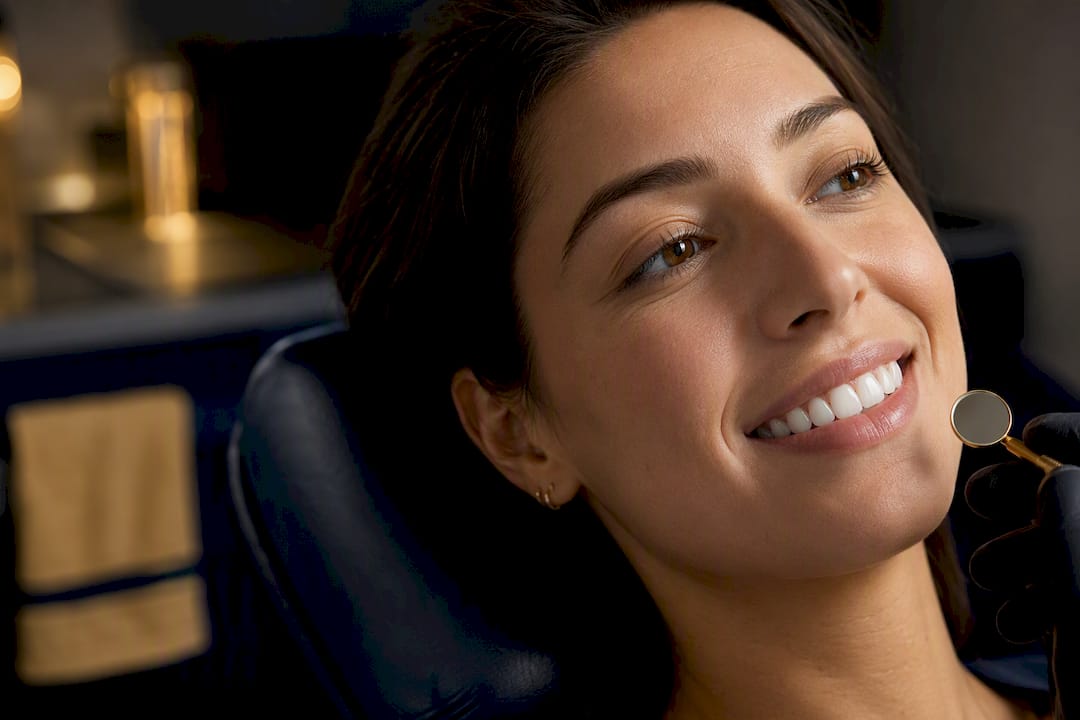
Yes, you can whiten sensitive teeth safely in most cases. The best route is a dentist-supervised low-concentration home tray system or a modified in-chair protocol, both adjusted to your level of sensitivity. Some short-lived tingling is normal and usually settles within days. A dental check first is non-negotiable, because sensitivity sometimes signals a problem whitening won’t fix.
TL;DR:
- Custom-fit trays used on an alternate-night schedule or modified in-office protocols are the safest whitening options for sensitive teeth determined by a thorough dental assessment.
- The concentration of peroxide should not exceed 0.1% in over-the-counter products or 6% under professional supervision to minimize nerve exposure and discomfort.
- If sensitivity increases during treatment, reducing gel amount, spacing out applications, and using sensitivity toothpaste can typically manage flare-ups without discontinuing whitening.
- Avoid DIY kits from unregulated sellers, overfilling trays, and combining abrasive or high-peroxide products that can cause long-term damage or worsen sensitivity.
- Proper pre-treatment care, including a dental exam and using sensitivity toothpaste for several weeks, helps prepare teeth and reduce discomfort during whitening.
Table of Contents
- Is teeth whitening safe for sensitive teeth?
- Why does whitening make sensitive teeth worse?
- What are the best whitening options for sensitive teeth?
- What should you avoid if your teeth are sensitive?
- How should you care for your teeth before, during, and after whitening?
- How long do results last, and what should you expect long-term?
- How does a dental practice adapt whitening for sensitive patients?
- A dentist’s view on managing whitening sensitivity
- Bespoke whitening plans for sensitive teeth at TJ Smile Studio
- Sources
- FAQ
Is teeth whitening safe for sensitive teeth?
Whitening is usually fine for sensitive teeth once a dentist confirms your mouth is healthy enough to handle it. The check matters because NHS guidance on tooth whitening is clear that it’s a private treatment, not something offered on the NHS, and that a dentist should examine your teeth and gums beforehand. Sensitivity and sore gums are recognised short-term side effects, not a reason to rule whitening out automatically.
The peroxide concentration matters too. Under UK cosmetic products regulation, over-the-counter products are capped at 0.1% hydrogen peroxide, while anything above that, up to 6%, is restricted to dental professionals, with the first application required to happen under professional supervision. That rule exists precisely because stronger gels need trained eyes watching for reactions.
Before booking anything, watch for signs that mean you should treat the mouth first and whiten later:
- Visible decay or a cracked tooth
- Active gum disease, bleeding, or swelling
- Noticeable gum recession exposing root surfaces
- Sudden, sharp, localised pain rather than general tingling
Any of these point to a dental problem that whitening will only aggravate.
Why does whitening make sensitive teeth worse?
Whitening gels work by letting hydrogen peroxide or carbamide peroxide diffuse through the enamel and into the dentine underneath. Dentine is riddled with microscopic tubules that run straight to the nerve inside the tooth, and peroxide movement through those channels is what triggers the short, sharp zing many people feel.
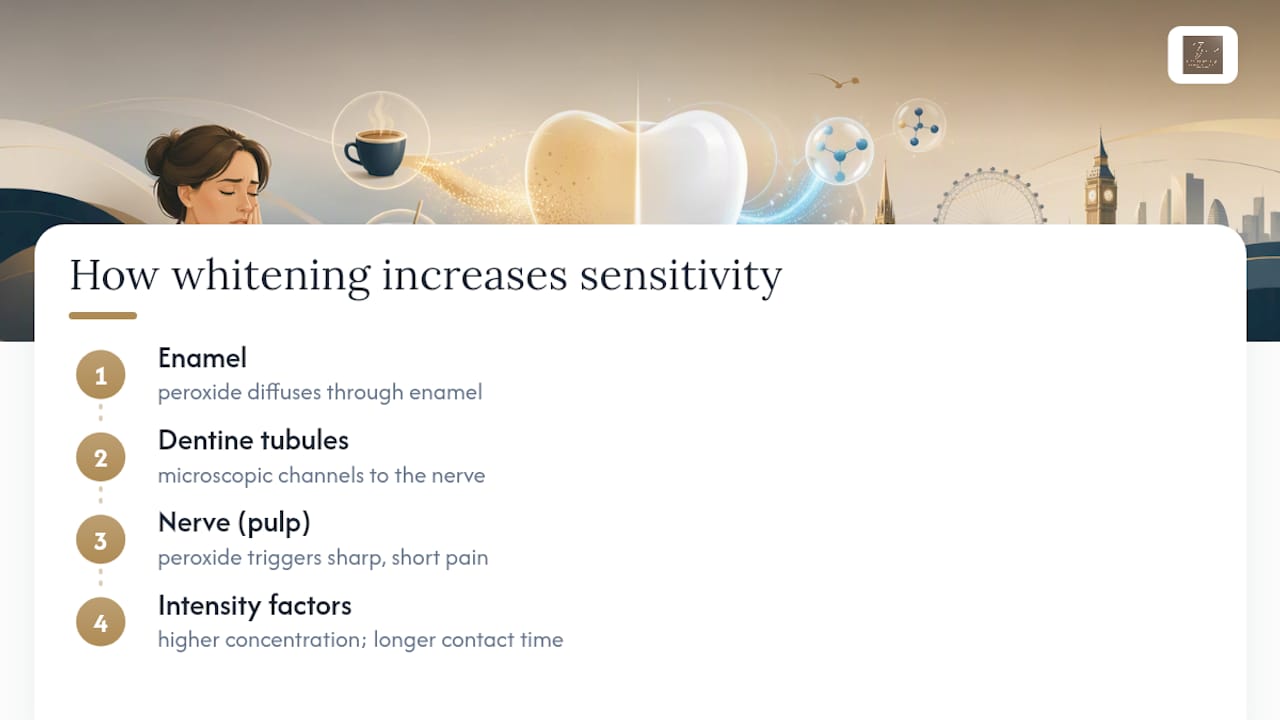
Several factors decide how much you’ll feel it. Thin enamel, gum recession, acid erosion, or hairline cracks all leave dentine more exposed, so peroxide reaches the nerve faster and in higher concentrations. Concentration and contact time compound the effect. A Cochrane review of home bleaching products found sensitivity and gum irritation were the most common side effects, and both were more common with stronger active ingredients. That’s the core logic behind every safe protocol: lower the strength, shorten the exposure, or both.
What are the best whitening options for sensitive teeth?
Not every whitening method suits a sensitive mouth, and the right choice depends on how reactive your teeth already are and what’s causing the discolouration. Here’s how the main routes stack up:
- Dentist-prescribed custom trays. Made from a scan or impression of your own teeth, these fit snugly so gel sits on the tooth surface rather than pooling against the gum line. Your dentist sets the exact gel volume and concentration, which is the single biggest factor in avoiding irritation.
- In-chair whitening with a modified protocol. For patients who want visible results in one sitting, dentists can shorten application cycles, use gum shields, and pause between applications to check comfort. It’s a good option when you want brightening without weeks of home trays.
- Supervised home whitening on an alternate-night schedule. Rather than bleaching every night, you use the tray every other night, giving the nerve time to settle between applications. This is often paired with an initial in-chair session for faster results.
- Peroxide-free and stain-removal-first approaches. Professional scale and polish, plus whitening toothpaste for maintenance, can lift surface staining from tea, coffee, or smoking without touching the nerve at all. Which? testing on toothpaste claims found active levels in these pastes are too low to bleach intrinsic colour, but ingredients such as stannous fluoride, potassium nitrate, and Novamin do genuinely help manage sensitivity.
- Over-the-counter strips and pens. These are capped at the same 0.1% peroxide limit as other consumer products, so results are modest, and generic-fit strips can easily overlap onto gum tissue in a way custom trays don’t. For anyone already prone to sensitivity, they’re rarely the best starting point.
Matching the method to the problem helps: mild surface staining often responds well to a professional polish and maintenance toothpaste alone, moderate intrinsic staining usually needs a graded tray or in-chair approach, and mouths with several existing restorations need a dentist to plan shade matching before any gel goes near a tooth.
Pro Tip: If your tray whitening starts stinging more than expected, don’t push through it hoping it’ll pass. Switch to alternate nights first. That single change, combined with wiping away excess gel, resolves most sensitivity flare-ups without abandoning treatment altogether.
Worth noting: a PubMed meta-analysis on potassium nitrate additives found adding it to carbamide peroxide gel didn’t significantly cut sensitivity risk or pain intensity. Sensitivity-relief toothpaste used alongside treatment still helps day-to-day comfort, just don’t expect the gel formula itself to solve the problem.
What should you avoid if your teeth are sensitive?
Some products and habits raise your risk of lasting damage rather than a manageable tingle. Which? investigations into online marketplace whiteners found many kits sold through third-party sellers contained illegal, dangerous concentrations of hydrogen peroxide, far above the legal consumer limit.
Steer clear of the following:
- DIY kits from online marketplaces or social media adverts with no clear regulatory information
- Leaving gel in trays for longer than instructed, or overfilling a poorly fitting mould so it leaks onto the gums
- Beauty salon whitening treatments carried out by non-dental staff
- Combining abrasive whitening toothpaste regimens with peroxide gel at the same time, which compounds enamel stress
If a product doesn’t state its peroxide percentage clearly, that’s a reason to walk away.
How should you care for your teeth before, during, and after whitening?
A bit of preparation makes the whole process far more comfortable, and the order you do things in genuinely matters.
- Before you start: Book a dental exam to rule out decay or gum disease, treat anything active first, and switch to a soft brush with sensitivity toothpaste for two to four weeks to settle the nerve endings before gel touches them.
- During treatment: Use only the gel amount your dentist recommends, wipe away any excess before it sits against the gum, and consider alternate-night use if the Leeds Teaching Hospitals guidance on tray whitening sensitivity threshold hits. Stop and call your dentist if pain is sharp rather than a mild tingle.
- Afterwards: Keep using sensitivity toothpaste nightly for a week or two, avoid very cold food and drink while nerves settle, and get in touch with your dentist if discomfort lasts more than a few days after finishing.
Pro Tip: Gum irritation is often about fit, not strength. A tray that traps gel against soft tissue causes more soreness than a slightly stronger gel sitting correctly on enamel, so a proper fitting appointment is worth more than chasing a “gentler” formula.
How long do results last, and what should you expect long-term?
Results typically last somewhere between a few months and a couple of years depending on diet, smoking, and how well you maintain the shade afterwards, though the underlying evidence for exact durability remains low certainty. A touch-up session every so often, rather than a full repeat course, is usually enough to hold the colour.
One thing whitening never does: change the shade of crowns, veneers, or fillings. If you have visible restorations at the front of your mouth, plan the target shade with your dentist before treatment, or you risk a mismatch between natural teeth and existing dental work. Sticking to good hygiene, limiting staining drinks, and using a soft brush protects both your results and your sensitivity levels without any extra whitening needed.
How does a dental practice adapt whitening for sensitive patients?
At consultation, the priority is working out why a mouth is sensitive before deciding how, or whether, to whiten it. Dr Tashfeen Jamil BDS, MFDS RCS Ed, AssocFCGDent brings that assessment-first approach to every whitening plan at TJ Smile Studio, checking for recession, wear, or restorations that change the calculation.
The practice’s digital workflow allows precise tray fitting from a scan rather than a generic mould, which cuts down on the gum leakage that causes most avoidable irritation. Gel concentration and application schedule get built around what each patient can tolerate, often starting conservative and adjusting once the dentist sees how the mouth responds.
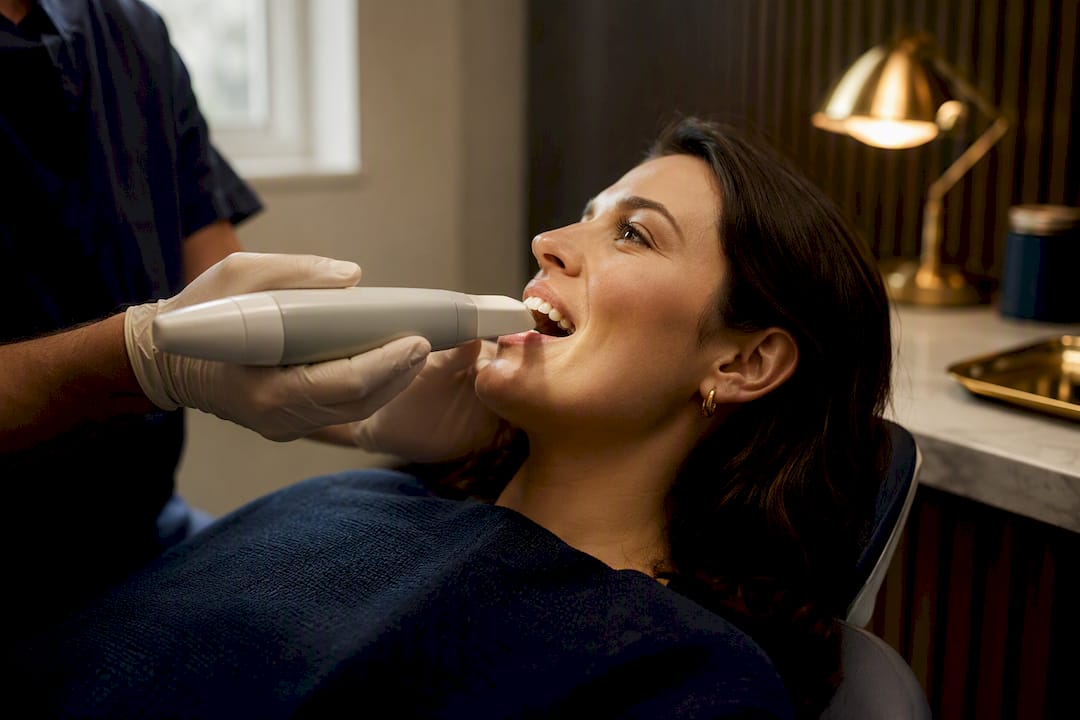
At a first visit, expect a straightforward conversation about your sensitivity history, a look at your existing restorations, and an honest trade-off discussion: faster in-chair brightening versus a gentler, slower home protocol. Neither is objectively better; it depends on your mouth and your patience.
A dentist’s view on managing whitening sensitivity
If you have sensitive teeth and want a brighter smile, don’t skip the assessment step to save time. Most sensitivity during whitening is manageable with the right tray fit, gel dose, and pacing, and a tailored plan solves far more problems than any product swap ever will. Book a proper consultation before you buy anything.
— Dr Tashfeen Jamil BDS, MFDS RCS Ed, AssocFCGDent - GDC 286427
Bespoke whitening plans for sensitive teeth at TJ Smile Studio
TJ Smile Studio builds whitening plans around your sensitivity rather than a one-size gel and hoping for the best. Every treatment starts with Dr Tashfeen Jamil personally assessing your teeth and gums, then choosing between Bespoke Home Teeth Whitening at £299, Professional In-Office Teeth Whitening at £399, or a combined in-office and home protocol at £499, depending on how your mouth responds.
A fully digital workflow can allow for custom trays to be fitted precisely from a scan, not a generic tray that leaks gel onto the gums, and gel dosing can be adjusted individually rather than using a standard rate. If sensitivity flares mid-treatment, a Whitening Review appointment at £35 lets you get the plan adjusted rather than pushing through discomfort. For readers exploring gentler protocols before booking, the Starboard Dental guide to whitening sensitive teeth covers similar tray-comfort techniques worth reading first.
Book a teeth whitening consultation with TJ Smile Studio in Glasgow to get a plan built around your sensitivity, not a generic one.
This article is general information, not a substitute for advice from a qualified doctor. Consult a qualified healthcare professional about your own circumstances before acting on anything here.
Sources
- Teeth whitening - NHS
- Tooth whitening information for adult patients - Leeds Teaching Hospitals NHS Trust
- Home-based chemical bleaching of the teeth - Cochrane (abstract)
- Does the addition of potassium nitrate to carbamide peroxide gel reduce sensitivity during at‑home bleaching? - PubMed
FAQ
Can very sensitive teeth be whitened?
Yes, in most cases, once a dentist confirms there’s no active decay, gum disease, or exposed root surfaces driving the sensitivity. A low-concentration, dentist-supervised approach with careful gel dosing is usually the safest starting point.
Is there a teeth whitening treatment for very sensitive teeth?
Custom-fitted dentist trays used on an alternate-night schedule, or a modified in-chair protocol with shorter exposure times, are the two main routes built for sensitivity. TJ Smile Studio’s Professional In-Office + Home Teeth Whitening at £499 combines both approaches under one plan.
Is there any teeth whitening that doesn’t hurt at all?
No method can guarantee zero sensation, since even mild gel can cause brief tingling in some people. Correct tray fit, the right gel volume, and alternate-night use reduce discomfort significantly, based on Leeds Teaching Hospitals’ clinical advice.
What is the fastest way to whiten sensitive teeth safely?
A dentist-modified in-chair session gives visible results in a single visit while still allowing shorter exposure cycles and monitoring for discomfort. It’s faster than home trays, though a graded home approach is often gentler for genuinely reactive teeth.
What causes teeth to feel sensitive during whitening?
Peroxide gel moves through enamel into the dentine layer, where microscopic tubules carry the sensation directly to the nerve. Thinner enamel, gum recession, or existing cracks all make that process feel stronger, which is why concentration and contact time matter so much.
Recommended
This article is general information, not personal dental advice. What’s right for your teeth depends on a clinical examination — the condition of your enamel, gums, bite and any existing dental work — and no article can assess that. Outcomes vary between patients, and all treatment at TJ Smile Studio is subject to assessment and clinical suitability.
- Dr Tashfeen Jamil BDS, MFDS RCS Ed, AssocFCGDent, PGDip Restorative and Aesthetic Dentistry — GDC registration 286427
This article is general information, not personal dental advice. What's right for your teeth depends on a clinical examination — the condition of your enamel, gums, bite and any existing dental work — and no article can assess that. Outcomes vary between patients, and all treatment at TJ Smile Studio is subject to assessment and clinical suitability.
Clinically reviewed by Dr Tashfeen Jamil BDS, MFDS RCS Ed, AssocFCGDent, PGDip Restorative and Aesthetic Dentistry — GDC registration 286427, Principal Dentist at TJ Smile Studio, 1 Spiersbridge Way, Thornliebank, Glasgow G46 8NG.
If you have dental pain, swelling or an injury, call the practice on 07728 808510. Out of hours in Scotland, call NHS 24 on 111.