
05 October 2026 · TJ Smile Studio
Sevenfold Fracture Risk Without a Splint: Veneers for People Who Grind
Learn when veneers suit people who grind, how grinding raises fracture risk, and why a custom hard night guard, material choice and mock-ups matter.
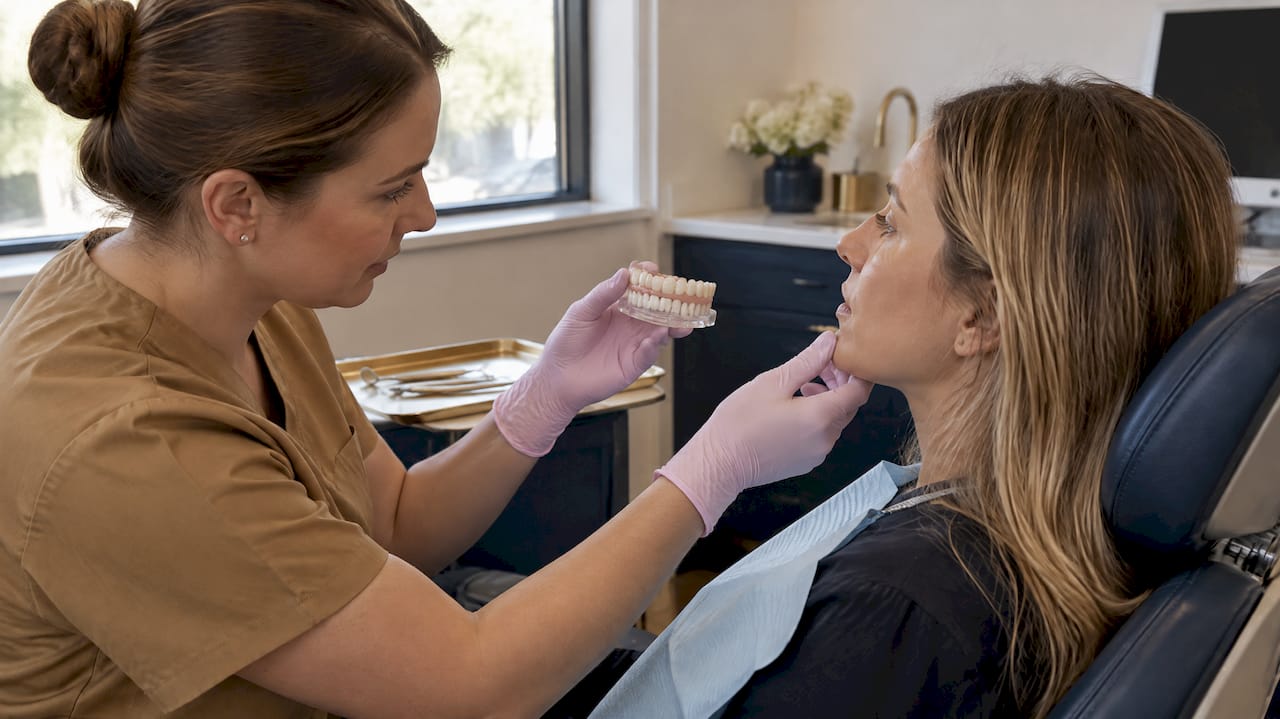
Veneers can work well for people with bruxism, but only with careful planning, enamel-bonded restorations and lifelong commitment to a custom hard night guard. Without that protection, grinding roughly doubles the risk of veneer fracture, and the risk climbs much higher still if a splint is never worn. Dr Tashfeen Jamil and clinicians like him treat veneers in bruxists as part of a wider bite management plan, not a stand-alone cosmetic fix.
TL;DR:
- Veneers in bruxists require careful planning, enamel bonding, and lifelong use of a hard night guard to prevent fracture, especially without protection.
- Maintaining a stable bite through splint therapy or adjustments is essential before veneer placement, with mock-ups helping assess functional contact.
- Bruxism nearly doubles the risk of veneer fracture, and failure risk increases dramatically for non-wearers of night guards, up to seven times higher.
- Wearing a custom-made hard occlusal splint nightly is the most effective protection, and regular reviews are crucial for early detection of damage or failure.
- Alternatives like composite bonding, onlays, or full crowns may be better suited for severe structural loss or when bonding to enamel isn’t possible.
Table of Contents
- When veneers are a suitable option for people who grind their teeth
- Risks and typical failure modes when veneers meet bruxism
- Protective strategies: night guards, habit management and adjunctive options
- Material and design choices that improve veneer survival in grinders
- Managing bruxism long term: expectations, maintenance and follow-up
- When veneers are not the right choice and alternative treatments
- A clinician’s perspective: planning veneers for grinders
- How TJ Smile Studio can help with veneers and night guards
- FAQ
- Sources
- Key clinical studies and guidance
When veneers are a suitable option for people who grind their teeth
Grinding alone does not rule veneers out. What matters is how much damage has already happened and whether your bite can be stabilised before restorative work begins.
Dentists generally look for sufficient enamel remaining to bond to, since enamel-bonded veneers behave very differently from those bonded mostly to dentine. A stable or correctable occlusion also matters: some patients need a period of splint therapy or minor bite adjustment before veneers are even considered, so the new restorations are not immediately subjected to uneven forces.
Mock-ups and trial restorations help here. Seeing a trial smile in resin or temporary material lets both patient and dentist assess how the proposed shape handles contact during normal function, before committing to the final ceramic.
- Enough sound enamel must remain for a reliable adhesive bond.
- Your bite should be stable, or stabilised through splint therapy or adjustment first.
- A mock-up or trial phase helps predict how the final veneers will cope with your bite.
- Staged rehabilitation is often used for more complex or long-standing wear cases.
Risks and typical failure modes when veneers meet bruxism
Grinding changes the maths on veneer longevity. One clinical study found that bruxists faced about a twofold increase in the risk of laminate veneer fracture compared with non-bruxists, and that gap widens sharply without protection.
Among bruxists, those who never wear a splint face roughly seven times the fracture risk of bruxists who do. That single habit, wearing a night guard consistently, is one of the most significant variables in whether a veneer survives.
Fracture and debonding present differently. A fracture usually shows as a visible chip or crack, often sudden and linked to a specific bite or impact. Debonding tends to be quieter: the veneer feels slightly loose, the margin catches your tongue, or you notice a gap where none existed before. Both can precede more serious failure if ignored.
- A chipped or cracked veneer should be assessed promptly, even if it feels stable.
- A loose or lifted veneer needs urgent review, since moisture and bacteria can reach the underlying tooth.
- New sensitivity around a veneer margin is often an early sign worth investigating rather than waiting out.
Protective strategies: night guards, habit management and adjunctive options
A night guard is the single most effective thing you can do to protect veneers once they are fitted. The NHS recommends custom-made occlusal splints for bruxism that is causing damage, and generally favours hard stabilisation splints over soft ones. Soft splints can sometimes be chewed or compressed, and in some patients they appear to stimulate more clenching rather than less, which makes them a poor long-term choice for anyone with restorative work to protect.
- A dental impression or digital scan captures your bite precisely, so the splint fits without rocking or shifting.
- The splint is milled or moulded from hard acrylic, then adjusted at fitting so contacts are even across all teeth.
- You wear it nightly, clean it daily, and bring it to review appointments so wear and fit can be checked.
- Replacement is usually needed every few years, sooner if you grind heavily or the splint shows visible wear.
Beyond the splint itself, several adjunctive measures can help reduce grinding frequency. Habit-reduction approaches and cognitive behavioural therapy have a role for some patients, particularly where clenching is linked to stress or anxiety. Where sleep bruxism is suspected alongside snoring or daytime fatigue, screening for sleep apnoea is worthwhile, since treating an underlying airway problem can reduce grinding as a side effect. Botox is used in selected cases to reduce muscle force, though it is not first-line, and medication is rarely reached for first either, since behavioural and mechanical protection generally outperform a pharmacological approach for most patients.
Pro Tip: Keep your night guard in its case by your toothbrush, not loose in a drawer, so wearing it becomes as automatic as brushing.
Material and design choices that improve veneer survival in grinders
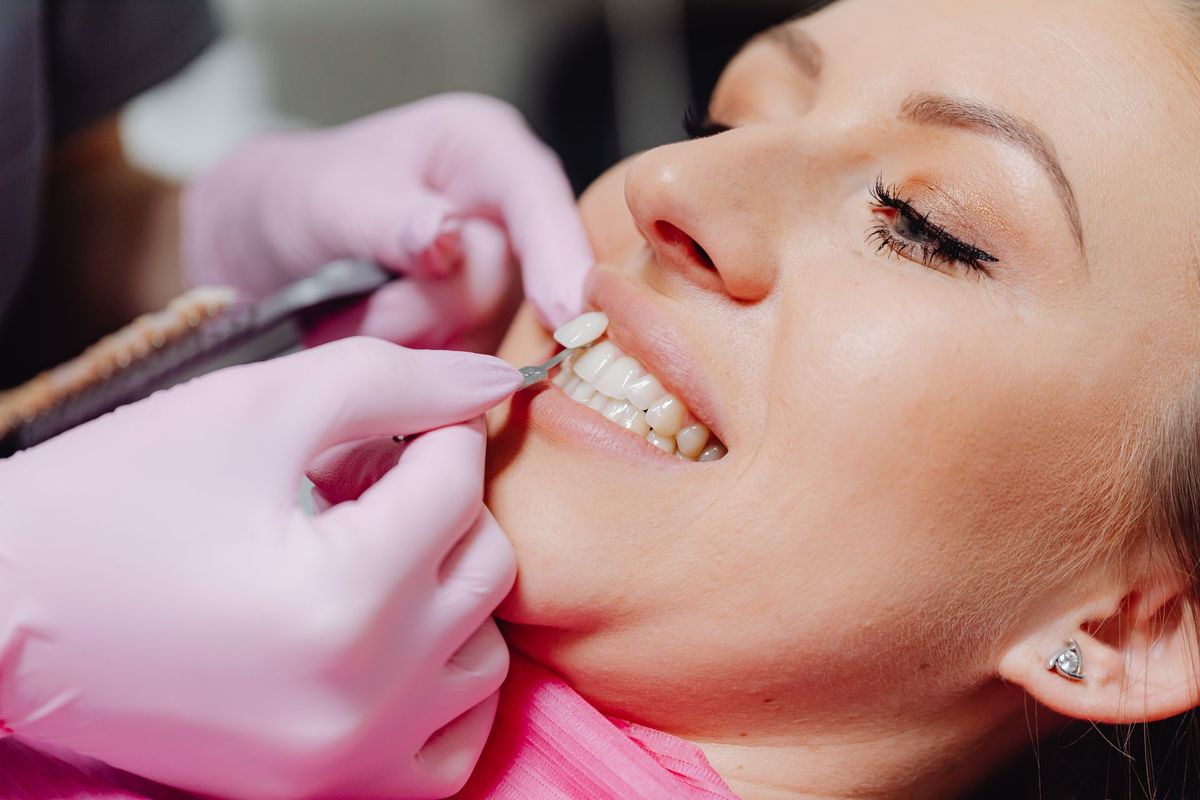
The way a veneer is designed matters almost as much as whether a splint is worn. Veneers with incisal coverage, meaning the ceramic wraps over the biting edge rather than stopping short of it, show lower long-term complication rates than veneers that leave that edge unprotected. Bonding to enamel rather than dentine also matters: veneers bonded mainly to dentine have higher complication rates, because the adhesive bond is weaker and less durable than an enamel bond.
Material choice adds another layer of protection. Lithium disilicate and other non-feldspathic ceramics have shown stronger long-term performance than traditional feldspathic porcelain, particularly where parafunctional forces are a factor.
- Choose incisal coverage designs where wear patterns suggest heavy edge-to-edge contact.
- Favour bonding to enamel wherever enough sound tooth structure remains.
- Discuss lithium disilicate or comparable ceramics rather than feldspathic porcelain if you grind.
- Conservative preparation and a careful adhesive protocol, often planned through a digital smile makeover workflow, reduce the chance of early failure.
Managing bruxism long term: expectations, maintenance and follow-up
Veneers in a grinder are rarely a one-and-done treatment. For many patients, the night guard becomes a lifelong companion to the restorations rather than a short course of therapy.
Review appointments typically start a few months after splint fitting, with follow-up checks around two to three months in to assess fit and benefit, then at longer intervals once things settle. A maintenance visit usually checks the splint for wear, the veneer margins for staining or lifting, and the overall bite for any drift.
Realistically, bruxists should expect a higher chance of repair or replacement over a lifetime than non-bruxist patients, even with excellent protection. Where bruxism is severe, persistent or linked to sleep issues, involving other specialists, sleep medicine for suspected apnoea, physiotherapy for jaw muscle tension, or CBT for stress-related clenching, often improves outcomes more than restorative work alone.
- Expect lifelong splint wear if your bruxism is ongoing rather than temporary.
- Budget for periodic reviews and occasional repairs as part of normal maintenance.
- Involve a sleep specialist if grinding is linked to snoring, pauses in breathing or daytime fatigue.
Pro Tip: Bring your night guard to every dental check-up, even when nothing feels wrong, so minor wear gets caught before it affects your veneers.
When veneers are not the right choice and alternative treatments
Veneers are not always the best answer, especially where structural loss is extensive or enamel is too thin to bond reliably. Composite bonding offers a more conservative, repairable alternative for milder wear, since chipped or worn composite can often be touched up chairside rather than replaced outright. For more significant wear, onlays preserve more tooth structure than a full crown while still restoring function.
Where structural loss is severe, full crowns or overlays may be unavoidable, particularly when cusps have broken down or vertical dimension needs rebuilding as part of a full mouth rehabilitation.
- Composite bonding suits milder wear and offers easier, cheaper repairs over time.
- Onlays balance conservation of tooth structure with stronger coverage than bonding alone.
- Full crowns or a staged rehabilitation are often necessary once wear has reached the dentine extensively.
A clinician’s perspective: planning veneers for grinders
Treating veneers in bruxists means setting expectations before we touch a single tooth. Patients need to commit to nightly splint wear and regular reviews, because the restoration is only as durable as the habits protecting it. A digital mock-up lets us test a proposed shape against a patient’s actual bite before any preparation happens, which makes same-day workflows far more predictable than they would otherwise be for a grinder.
— Dr Tashfeen Jamil BDS, MFDS RCS Ed, AssocFCGDent - GDC 286427
How TJ Smile Studio can help with veneers and night guards
If grinding has worn down your smile or you are weighing up veneers while managing bruxism, we plan every case around your bite, not just your aesthetics. Our veneers start from £399 per tooth, and for patients wanting a full transformation in fewer visits, Same-Day Hybrid Veneers start from £2,995. Where wear is more extensive, Full Mouth Rehabilitation addresses the whole bite rather than individual teeth.

A Smile Consultation costs £50 and includes an assessment of your grinding pattern, remaining enamel and whether splint therapy should come before or alongside restorative work. If you need a hard night guard outside a full treatment plan, ClearRetain offers custom-type options you can order directly. Book a consultation through our pricing page to start planning a realistic, protected smile.
This article is general information, not a substitute for advice from a qualified doctor. Consult a qualified healthcare professional about your own circumstances before acting on anything here.
FAQ
Can I get veneers if I have bruxism?
Yes, many people with bruxism can have veneers, provided the grinding is controlled or managed with a custom hard night guard and the bite is stable before treatment. A dentist will assess remaining enamel and occlusion first, since these factors determine whether veneers will hold up long term.
Why do dentists advise against veneers in some grinders?
Dentists may advise against veneers when enamel is too thin for reliable bonding or when bruxism is severe and uncontrolled, since this raises the risk of fracture or debonding. In these cases, a dentist might recommend splint therapy first, or suggest composite bonding, onlays or crowns as more durable alternatives.
Can dentists tell if you have bruxism?
Dentists can often identify bruxism from visible signs such as flattened or worn tooth surfaces, chipped edges, and muscle tenderness around the jaw. Sleep bruxism affects a notable minority of people, while awake bruxism is reported by a larger minority, so these signs are common findings during routine check-ups.
How long can teeth rot under veneers?
Decay can develop under a veneer at any point if the margin is compromised or a veneer becomes loose, since bacteria can reach the underlying tooth once the seal fails. Regular reviews catch this early, which is why dentists recommend prompt assessment of any veneer that feels loose, sensitive or chipped rather than waiting for symptoms to worsen.
Sources
- Bruxism and laminate veneer survival (PubMed)
- Protective effect of occlusal splints on veneer survival (PMC article)
- Long-term survival and complication rates of porcelain laminate veneers (systematic review)
- NHS: Teeth grinding (bruxism)
- Survival and complication rates of different ceramic laminate veneers (systematic review & meta-analysis)
Key clinical studies and guidance
- Bruxism and laminate veneer survival (PubMed)
- Protective effect of occlusal splints on veneer survival (PMC article)
- Long-term survival and complication rates of porcelain laminate veneers (systematic review)
- NHS: Teeth grinding (bruxism)
- Survival and complication rates of different ceramic laminate veneers (systematic review & meta-analysis)
- Sussex Community NHS: bite-raising appliance patient info
- Leeds Teaching Hospitals: Clenching and grinding (bruxism)
Recommended
This article is general information, not personal dental advice. What’s right for your teeth depends on a clinical examination — the condition of your enamel, gums, bite and any existing dental work — and no article can assess that. Outcomes vary between patients, and all treatment at TJ Smile Studio is subject to assessment and clinical suitability.
- Dr Tashfeen Jamil BDS, MFDS RCS Ed, AssocFCGDent, PGDip Restorative and Aesthetic Dentistry — GDC registration 286427
This article is general information, not personal dental advice. What's right for your teeth depends on a clinical examination — the condition of your enamel, gums, bite and any existing dental work — and no article can assess that. Outcomes vary between patients, and all treatment at TJ Smile Studio is subject to assessment and clinical suitability.
Clinically reviewed by Dr Tashfeen Jamil BDS, MFDS RCS Ed, AssocFCGDent, PGDip Restorative and Aesthetic Dentistry — GDC registration 286427, Principal Dentist at TJ Smile Studio, 1 Spiersbridge Way, Thornliebank, Glasgow G46 8NG.
If you have dental pain, swelling or an injury, call the practice on 07728 808510. Out of hours in Scotland, call NHS 24 on 111.