
18 September 2026 · TJ Smile Studio
Whiten First: When UK Patients Should Consider Veneers After Braces
A UK clinical guide on whether you need veneers after braces. Most patients avoid them; try whitening or bonding first, and wait 3–6 months before deciding.
Most people who finish braces or Invisalign do not need veneers. Your teeth are straight, and straight teeth are usually the whole goal. Veneers only become relevant if something braces cannot fix is still bothering you, such as intrinsic staining, an oddly shaped tooth, or wear from years of misalignment, a common concern addressed by non-invasive aesthetic dental treatments. Wait three to six months before deciding on anything, and try whitening or bonding first.
TL;DR:
- Veneers are mainly suitable for correcting intrinsic stains, tooth shape mismatches, or damage that cannot be fixed with whitening or bonding.
- Most cases involving veneers after braces focus on one or two teeth, with full sets only when multiple aesthetic issues combine.
- Dentists recommend waiting at least three to six months post-braces before placing veneers to ensure tooth stability and gum healing.
- Initial treatments like whitening or composite bonding are less invasive, reversible, and should be tried first before considering permanent porcelain veneers.
- The cost for porcelain veneers ranges from £500 to £1,200 per tooth, with a typical lifespan of 10 to 15 years, while bonding lasts 5 to 10 years and is less expensive.
Table of Contents
- Veneers after braces: when they’re actually appropriate
- Less invasive options worth trying first
- How long should you wait after braces before getting veneers?
- What dentists check before recommending veneers
- What veneers after braces cost and how long they last
- Clinical perspective from TJ Smile Studio
- What to expect in the weeks after your braces come off
- How TJ Smile Studio can help you decide
- Sources
- FAQ
Veneers after braces: when they’re actually appropriate
Straightening your teeth fixes position. It does nothing for colour, shape, or surface damage. That distinction is why so many people finish orthodontic treatment, look in the mirror, and still feel something is off, even though their teeth are perfectly aligned.
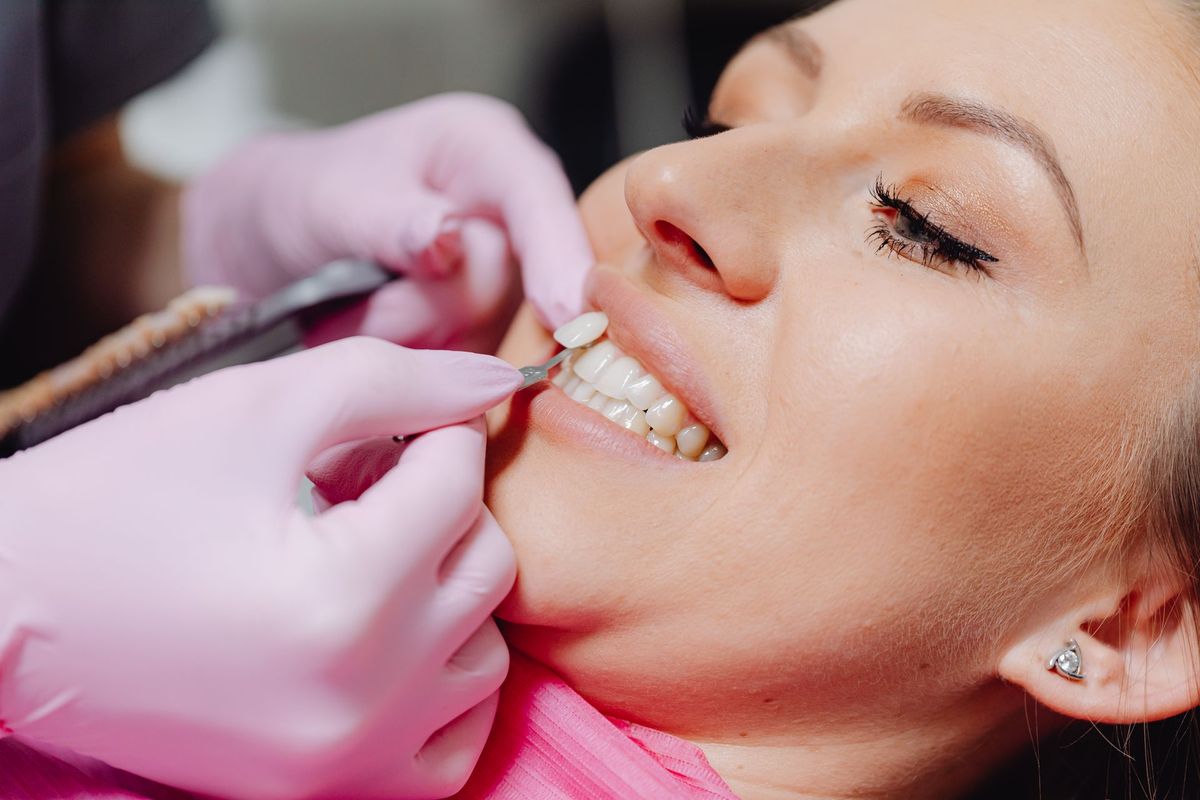
Staining is the first thing to rule out. Extrinsic stains sit on the enamel surface, caused by coffee, tea, red wine, or smoking, and respond well to professional whitening. Intrinsic stains sit inside the tooth structure itself, often from childhood antibiotic exposure (tetracycline is the classic culprit), fluorosis, or trauma to a developing tooth. Whitening gel can lighten intrinsic staining slightly, but it rarely gets a heavily discoloured tooth to match its neighbours. That’s a genuine case for a veneer, because no amount of bleaching solves a structural colour problem.
Shape and size mismatches are the second common trigger. Peg-shaped lateral incisors, a tooth that’s noticeably narrower than its pair, or asymmetric front teeth can look uneven even in a perfectly straight arch, and orthodontics cannot reshape enamel. A veneer or composite build-up closes that gap in appearance without moving anything.
Wear, chips, and enamel defects round out the list. Years of a crossbite or an edge-to-edge bite can flatten or chip front teeth before treatment even starts, and braces correct the bite without repairing that damage.
In practice, most post-orthodontic cases involve one or two targeted veneers or bonding on specific teeth, not a full set. Full smile makeovers tend to happen when several of these issues stack together, alongside a patient’s own aesthetic goals discussed in a consultation about orthodontics and cosmetic dentistry. Genuine indications for veneers after braces include:
- Intrinsic discolouration that whitening cannot fully correct
- Peg laterals or noticeably mismatched tooth proportions
- Chips, fractures, or enamel wear from a pre-treatment bite problem
- Persistent black triangles or gaps that orthodontics couldn’t fully close
Less invasive options worth trying first
Veneers are permanent. Once enamel is prepared for porcelain, that tooth needs a restoration for life. That’s exactly why every reasonable dentist starts with the least invasive option and works upward only if it falls short.
Professional whitening is step one for anyone dealing with extrinsic staining or mild yellowing after debonding. It’s cheap, reversible, and often enough on its own. The catch is sequencing: whitening should happen before any bonding or veneer work begins, because restorations don’t change shade once bleaching gel touches them. Whiten first, let the shade settle, then plan any restorative work around that final colour.
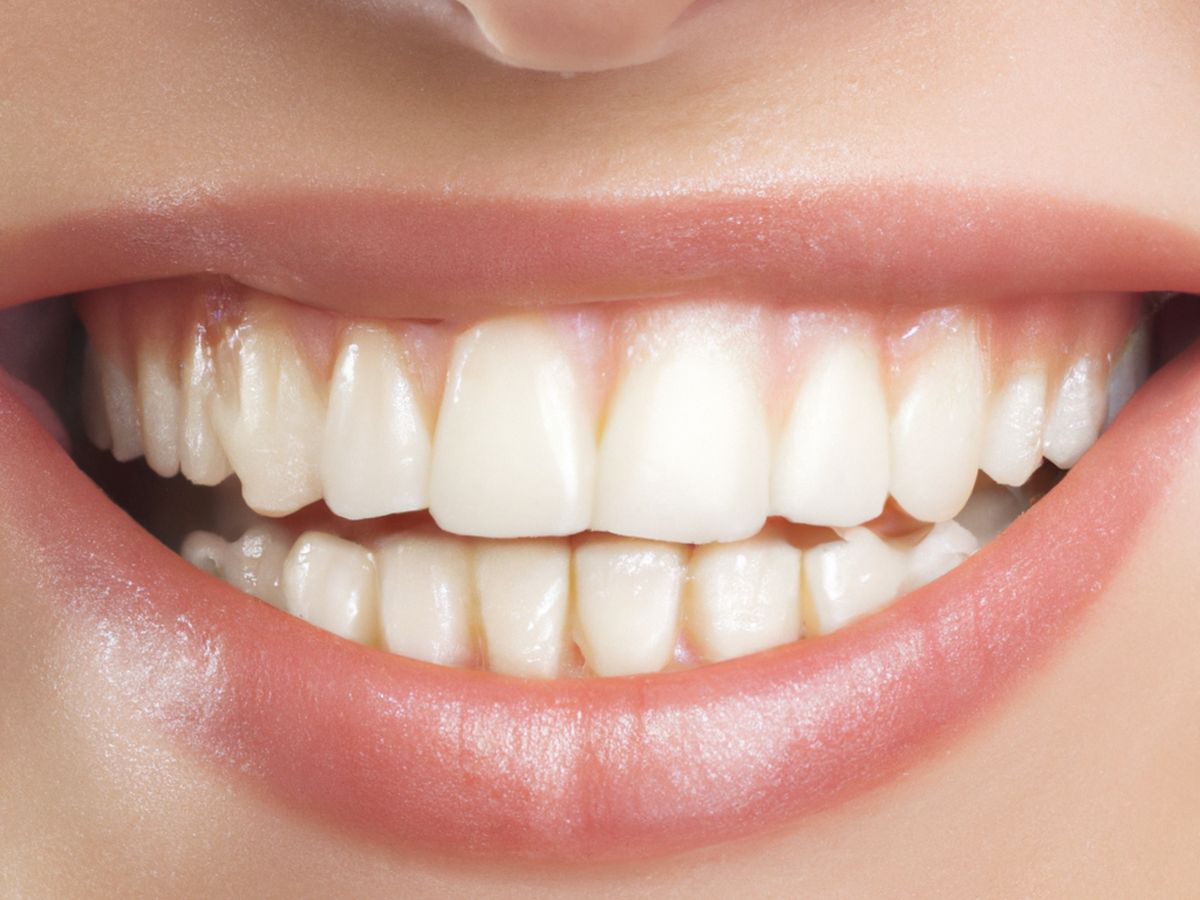
Composite bonding sits between whitening and veneers. It’s a same-visit procedure where tooth-coloured resin is sculpted directly onto the tooth to fix chips, close small gaps, or adjust shape, and it’s fully reversible if you change your mind later. The trade-off is durability: composite stains over time and needs repolishing or replacement sooner than porcelain, typically every few years rather than every decade.
A crown or fuller rehabilitation becomes the better route only when a tooth has significant structural damage, a large old filling, or a root canal history, situations where a thin veneer shell simply isn’t enough tooth to work with.
Pro Tip: Book a whitening review before you commit to bonding or veneers. Seeing your teeth at their lightest, natural shade first stops you from matching a permanent restoration to a colour that was never your baseline.
How long should you wait after braces before getting veneers?
Your teeth don’t stop moving the moment the brackets come off. The periodontal ligament and surrounding bone need time to remodel and lock each tooth into its new position, and that process continues quietly for months after debonding.
Here’s the general sequence dentists recommend:
- Months 0 to 3: Wear your retainer as instructed and focus on healing gum tissue and oral hygiene. This is not the time for irreversible cosmetic work.
- Months 1 to 6: Professional whitening is generally safe during this window, since it doesn’t touch tooth structure or position, though many dentists prefer to wait until at least a few weeks post-debond for tissue to settle.
- Months 3 to 6: Most restorative dentists advise this as the earliest point to seriously consider porcelain veneers, once gum contours and tooth positions have stabilised.
- Beyond 6 months: Cases involving significant rotation extend further, because rotated teeth are more prone to relapse than teeth that simply tipped or tilted.
Jumping the queue carries real risk. Placing a veneer on a tooth that’s still settling can lead to a poor fit, an open margin at the gumline, or a fractured veneer, because occlusal forces concentrate unevenly on teeth that haven’t fully stabilised. A rushed veneer is a remake waiting to happen.
What dentists check before recommending veneers
A proper consultation goes well beyond “which teeth bother you.” Your dentist is building a case for whether veneers solve a genuine problem or whether something more conservative gets you the same result.
Expect a bite and occlusion assessment, including a look at whether you clench or grind (bruxism), since an unmanaged grinding habit can crack a veneer within months and usually calls for a night guard alongside any restorative work. Your dentist should also examine how stable your tooth positions are post-braces, check for previous fillings or restorations that affect enamel thickness, and confirm there’s enough sound tooth structure to bond to.
Shade planning follows a strict order: whitening happens first, the colour is allowed to settle, and only then is a final shade chosen for any bonding or porcelain work, matching the rule covered above. Ask directly about expected lifespan, what ongoing maintenance looks like, and what happens when the veneer eventually needs replacing. A dentist who can’t answer those plainly hasn’t planned the case properly. Points worth raising at consultation:
- Do I grind my teeth, and do I need a night guard alongside this treatment?
- Are my teeth stable enough yet, or should we wait longer?
- What’s the realistic lifespan of composite versus porcelain here?
- What happens to this tooth in ten or fifteen years?
Choosing a cosmetic dentist who runs through this checklist properly is often the difference between a veneer you’re happy with for a decade and one you’re troubleshooting within eighteen months.
What veneers after braces cost and how long they last
Budget varies significantly by material choice. UK private pricing for composite bonding typically runs £150 to £400 per tooth, while porcelain veneers sit in the £500 to £1,200 per tooth range. A single peg lateral or one damaged incisor costs far less to fix than a full smile makeover spanning six or eight visible teeth.
Composite bonding typically lasts 5 to 10 years with good care; porcelain veneers tend to last 10 to 15 years or longer, according to UK cost and treatment guides.
The NHS does not routinely fund cosmetic veneers, since they’re classed as elective aesthetic treatment rather than clinical necessity, so this is a private-fee treatment for the vast majority of patients. Budget beyond the initial placement too: composite needs periodic repolishing, a night guard is a sensible add-on if you grind, and even porcelain veneers eventually need replacing as they age or if a margin starts to show.
Clinical perspective from TJ Smile Studio
Some treatment plans are led personally by experienced cosmetic dentists, using fully digital workflows that map out restorative options before a single tooth is touched. The value of that digital planning, in a post-orthodontic case, is straightforward: it shows exactly how many teeth genuinely need a veneer and how many can be resolved with whitening or bonding instead.
Coordinating orthodontic and restorative planning from the outset, rather than treating them as separate journeys, tends to reduce the number of veneers ultimately required and allows for thinner, more conservative preparations where veneers remain the right call. If you’ve recently finished braces or Invisalign, it’s worth discussing sequencing with both your orthodontist and a cosmetic dentist before booking anything irreversible. For patients who do need veneers and want the case completed efficiently, same-day hybrid veneers are one option worth raising at that consultation.
— Dr Tashfeen Jamil BDS, MFDS RCS Ed, AssocFCGDent - GDC 286427
What to expect in the weeks after your braces come off
The weeks right after debonding are for healing, not deciding. Wear your retainer exactly as instructed, keep up your oral hygiene, and give a whitening review some thought once your gums have settled. Most people find that combination, retainer compliance plus a whitening pass, resolves most of what was bothering them.
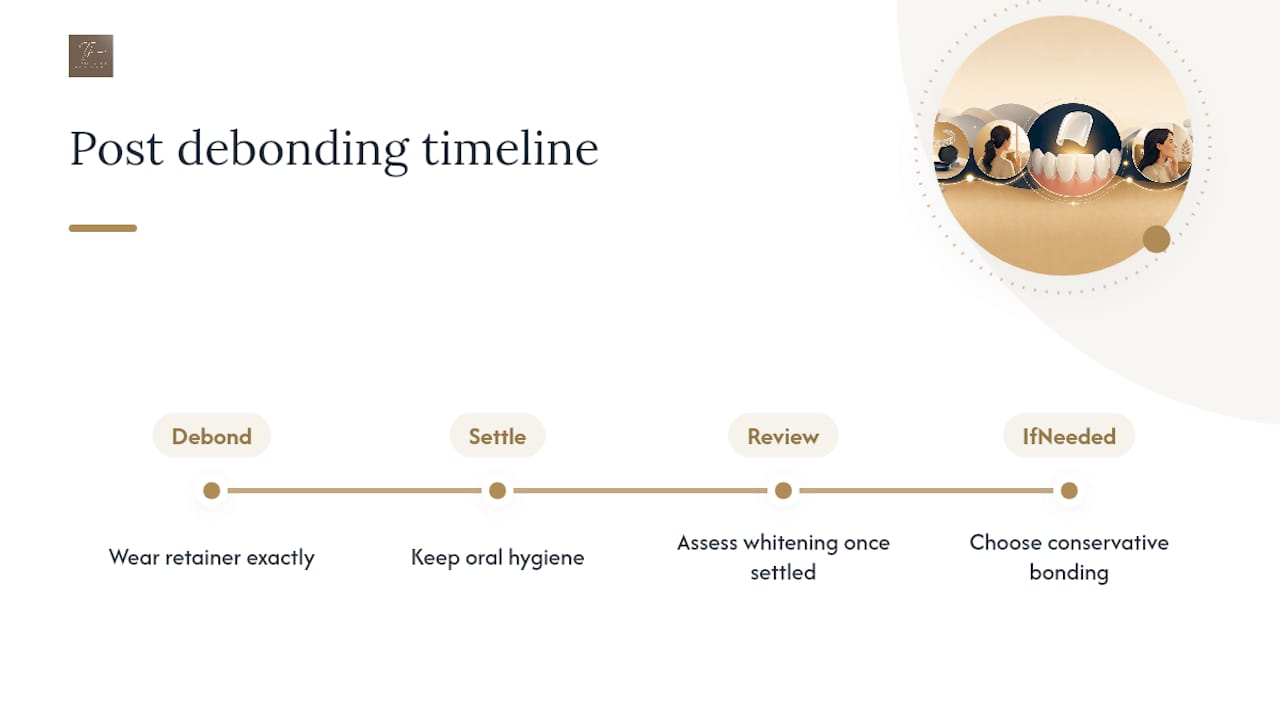
If something structural still stands out after that, a conservative option like bonding is usually the sensible next step before anything permanent.
How TJ Smile Studio can help you decide
Some clinics offer options for finishing your smile properly once braces come off, without pushing you toward veneers you may not need. A smile consultation gives you a straight answer on whether whitening, composite bonding, or veneers actually fit your case, and the clinic’s digital workflow means a same-day hybrid veneer is genuinely possible when veneers are the right call.
Services relevant to post-orthodontic patients include the Smile Consultation, teeth whitening, composite bonding, and full porcelain or hybrid veneers where structural work is genuinely needed. Plans are often led personally by cosmetic dentists, with flexible evening and weekend appointments to accommodate patient schedules rather than the other way round. Book a Smile Consultation to find out, in one visit, exactly what your finished smile needs.
This article is general information, not a substitute for advice from a qualified doctor. Consult a qualified healthcare professional about your own circumstances before acting on anything here.
Sources
- Post-Orthodontic Smile Design UK: Timing and Costs
- Orthodontics Before Veneers UK 2026 | Why Sequence Matters
- Veneers Cost UK 2026: £500–£1,200 Porcelain Per Tooth
FAQ
How much would four veneers cost?
Porcelain veneers typically cost £500 to £1,200 per tooth in the UK, based on the £500 to £1,200 per tooth range. Composite bonding costs considerably less, generally £150 to £400 per tooth.
Should you get braces before you get veneers?
Yes, in almost every case where both are being considered. Straightening teeth first often reduces the number of veneers needed and allows for thinner, more conservative preparations rather than masking crooked teeth under bulky porcelain.
What disqualifies you from getting veneers?
Insufficient enamel to bond to, active gum disease, unmanaged severe bruxism, and teeth that are still moving or stabilising after orthodontic treatment are the main reasons a dentist would delay or decline veneers. A consultation examining bite, tooth stability, and enamel thickness identifies these issues before treatment begins.
Which is better, veneers or braces?
They solve different problems, so “better” depends on what’s actually wrong. Braces move teeth into correct positions; veneers change colour, shape, or surface damage, and most people need braces first with veneers only for issues orthodontics cannot resolve, such as intrinsic staining or a misshapen tooth.
Recommended
This article is general information, not personal dental advice. What’s right for your teeth depends on a clinical examination — the condition of your enamel, gums, bite and any existing dental work — and no article can assess that. Outcomes vary between patients, and all treatment at TJ Smile Studio is subject to assessment and clinical suitability.
- Dr Tashfeen Jamil BDS, MFDS RCS Ed, AssocFCGDent, PGDip Restorative and Aesthetic Dentistry — GDC registration 286427
This article is general information, not personal dental advice. What's right for your teeth depends on a clinical examination — the condition of your enamel, gums, bite and any existing dental work — and no article can assess that. Outcomes vary between patients, and all treatment at TJ Smile Studio is subject to assessment and clinical suitability.
Clinically reviewed by Dr Tashfeen Jamil BDS, MFDS RCS Ed, AssocFCGDent, PGDip Restorative and Aesthetic Dentistry — GDC registration 286427, Principal Dentist at TJ Smile Studio, 1 Spiersbridge Way, Thornliebank, Glasgow G46 8NG.
If you have dental pain, swelling or an injury, call the practice on 07728 808510. Out of hours in Scotland, call NHS 24 on 111.