
30 October 2026 · TJ Smile Studio
Teeth Whitening Safety: Risks, UK Rules and How to Do It Right
Is teeth whitening safe? What the NHS and UK law say about risks, who should avoid it, and how to whiten safely, with Glasgow prices from £299.
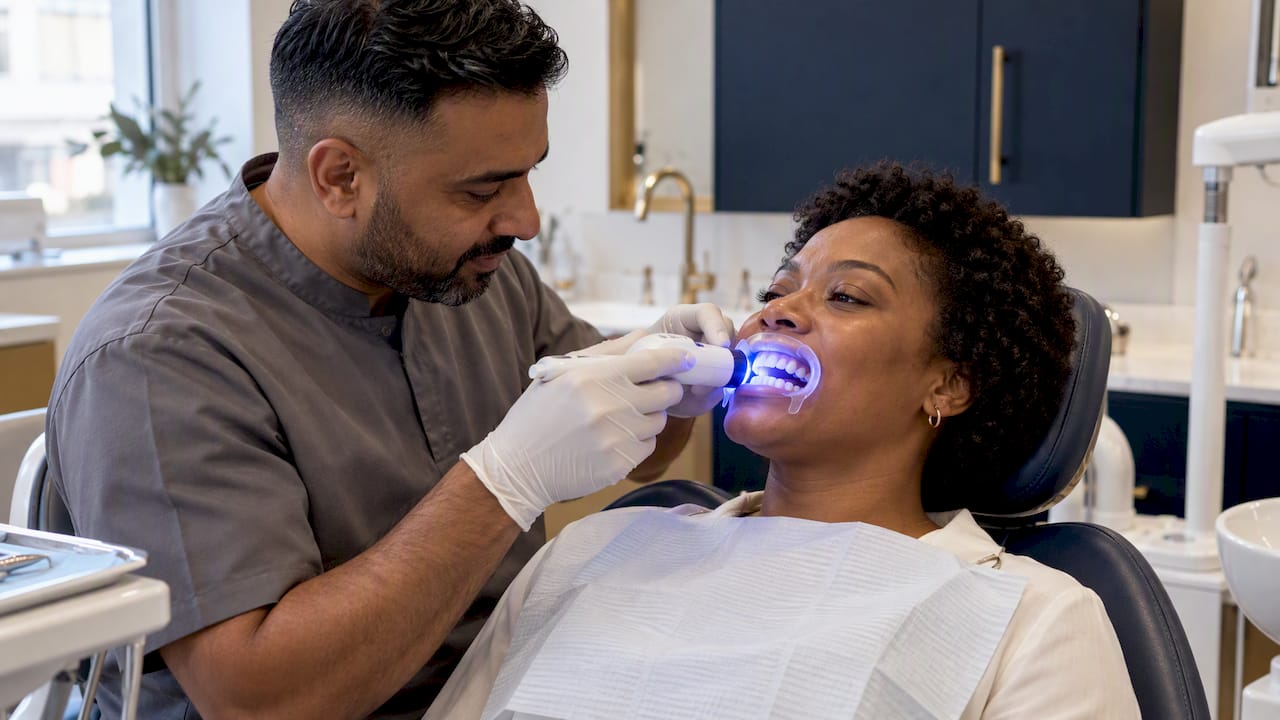
Teeth whitening is safe when a registered dental professional checks your mouth first and supervises the treatment. The NHS says that using a kit from a dentist, or having the treatment at a dental surgery, is the safest way to do it. The risks come mostly from where you have it done and what is used: beauty salons, online kits and unregulated products are where teeth and gums get hurt.
This guide covers the side effects to expect, what UK law says about who may whiten your teeth, who should wait, how long results last, and what safe whitening costs in Glasgow.
TL;DR
- Whitening supervised by a dentist is the safest route. Salon, pharmacy-counter and online kits are where the NHS warns of harm to teeth and gums.
- Common side effects are temporary: sensitivity to cold or sweet things, sore gums or throat, and white patches on the gums.
- In the UK, products releasing more than 0.1% and up to 6% hydrogen peroxide may only be started by a dental practitioner or under their direct supervision.
- Whitening is not recommended if you are pregnant or breastfeeding, are 17 or under, or have unhealthy teeth or gums.
- At TJ Smile Studio in Glasgow, whitening is £299 (home), £399 (in-office) or £499 (both), after a £50 consultation.
Table of Contents
- Is teeth whitening safe?
- The risks and side effects of teeth whitening
- UK law: who is allowed to whiten your teeth
- Who should avoid teeth whitening, or wait
- How to whiten your teeth safely: a short checklist
- Home, in-office or both?
- How long do results last?
- Teeth whitening and cosmetic dentistry prices in Glasgow
- Our perspective on whitening safety
- Safe whitening with TJ Smile Studio in Glasgow
- FAQ
- Sources
Is teeth whitening safe?
For a healthy mouth, yes, provided it is done properly. Dentist-led whitening uses regulated products, a check of your teeth and gums beforehand, and instructions matched to you. The British Dental Association sets out the same position for the profession: stronger whitening products should reach patients only through treatment by a registered dental professional.
A European scientific opinion on whitening products with 0.1% to 6% hydrogen peroxide reached a similar conclusion. It found that risks can be limited when treatment is done properly with a dentist’s approval and supervision, and that risk rises with the concentration used and how often it is applied. That is why the details matter: strength, frequency and who is in charge.
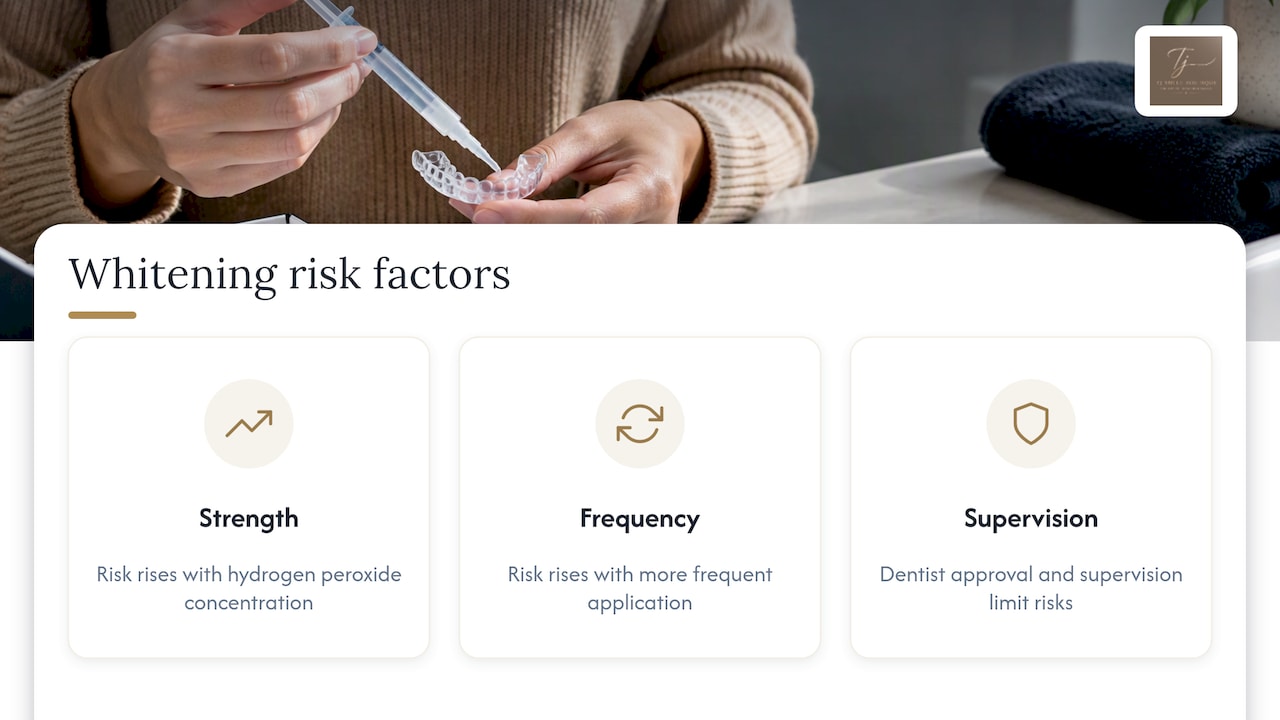
Safe does not mean side-effect-free. It means the risks are known, small, and managed by someone trained to spot problems early.
The risks and side effects of teeth whitening
The NHS lists the main side effects:
- Sensitivity. Teeth can become sensitive to cold or sweet food and drink.
- Sore gums or throat. Whitening gel that touches the soft tissues can irritate them.
- White patches on the gums. These come from contact with the whitening agent.
What the effects feel like in practice
Sensitivity is the one most people notice. It tends to show up as a sharp, short zing when you drink something cold, and it is usually temporary. Gum irritation is more likely when trays fit badly or too much gel is used, which is why a properly made, custom tray matters more than the gel brand.
Can whitening damage enamel?
People search this more than any other worry. Used as directed under supervision, whitening is not expected to harm healthy teeth. The concern is misuse: products that are too strong, left on too long or used too often. The European opinion above ties risk directly to concentration and frequency, which is exactly what unsupervised kits let people get wrong.
Why salons and online kits are the real danger
The NHS is blunt on this: whitening from beauty salons, or from pharmacy or online kits, may harm your teeth and gums. A salon worker cannot check for decay, gum disease or cracked fillings before applying gel, and cannot tell whether a tooth’s discolouration is staining or something that needs treatment. They are also, in most cases, breaking the law.
UK law: who is allowed to whiten your teeth
Two rules sit behind most of the safety advice you will read.
- Product strength. Oral products, including whitening products, may contain or release up to 0.1% hydrogen peroxide. Products containing or releasing more than 0.1% and up to 6% can only be sold to dental practitioners.
- Who does the first use. For each cycle of use, the first use of these stronger products must be by a dental practitioner or under their direct supervision. After that, the product may be given to the patient to finish the cycle at home.
In plain terms: a dentist (or a registered dental professional working under a dentist’s prescription) starts every course, and may then send you home with trays and gel. Anyone else offering whitening at those strengths is outside the rules. Products sold at or below 0.1% are legal to sell over the counter, but they are far weaker, so do not expect much from them.
A quick check before you book: ask who will carry out the treatment and whether they are registered with the General Dental Council. A legitimate provider will answer without hesitation.
Who should avoid teeth whitening, or wait
According to the NHS, whitening is not done if you are 17 or younger or have unhealthy teeth or gums, and it is not recommended if you are pregnant or breastfeeding. A dentist should confirm that your teeth and gums are healthy before treatment starts.
In practice, this is what the pre-whitening check looks for:
- Active decay, which needs filling first.
- Gum disease or bleeding gums, which need treating first.
- Worn, cracked or leaking fillings, where gel could reach sensitive areas.
- Existing crowns, veneers or bonding, which do not whiten and can leave a mismatch with natural teeth.
- Very sensitive teeth, where a gentler plan may be needed.
If you are pregnant or breastfeeding, postpone and ask your dentist or midwife. If you are under 18, speak to your dentist about why, and what to do instead.
How to whiten your teeth safely: a short checklist
- Book a consultation first. The point is the examination, not the gel.
- Get gum and tooth problems treated before whitening.
- Follow the instructions exactly. Wear time and frequency are where overuse starts.
- Keep gel off your gums. Wipe away excess from custom trays.
- Stop and call your dentist if you get persistent pain, blistering or gum soreness, rather than waiting for it to pass.
- Avoid DIY shortcuts. Charcoal, acidic home remedies and extra-strength kits bought online are not a substitute for supervised treatment.
Home, in-office or both?
Both routes can be safe when supervised. In-office whitening is done in one visit with the dental team in control. Home whitening uses custom-made trays you wear on your own schedule after the dentist has started the cycle. Some patients combine the two for a more complete result. We compare them in detail in our guide to home vs in-office teeth whitening.
How long do results last?
Whitening is not permanent. The NHS says that if you follow your dentist’s advice, the effect may last for around three years. Tea, coffee, red wine and smoking will shorten that. Our page on how long teeth whitening lasts goes into the habits that matter and when a top-up makes sense.
So yes, teeth can drift yellow again, but gradually. A short review of your trays or a top-up is far safer than reaching for a stronger kit.
Teeth whitening and cosmetic dentistry prices in Glasgow
Price is where many people are tempted to cut corners, so here are our published prices (read from our site in 2026), all one-off:
| Treatment | Price |
|---|---|
| Smile Consultation | £50 |
| Bespoke Home Teeth Whitening | £299 |
| Professional In-Office Teeth Whitening | £399 |
| Professional In-Office + Home Teeth Whitening | £499 |
| Whitening Review | £35 |
If whitening is not the right answer, because of existing restorations or the shape of your teeth, other treatments are priced like this:
| Treatment | Price |
|---|---|
| Composite Bonding | from £200 per tooth |
| Additional Edge Bonding | £199 per tooth |
| Veneers | from £399 per tooth |
| Same-Day Hybrid Veneers | from £2,995 |
| Invisalign | from £1,800 |
Full detail is on our pricing page, with deeper breakdowns in our guides to whitening costs in Glasgow, veneers cost and composite bonding cost. A cheap kit may look like a bargain, but whitening that is safe, supervised and matched to your mouth is the version worth paying for.
Our perspective on whitening safety
Most whitening problems we see are not caused by whitening itself. They come from skipping the examination. Someone has a leaking filling, a small area of decay or inflamed gums, and a strong gel goes on regardless. Then the sensitivity and gum soreness are blamed on the treatment.
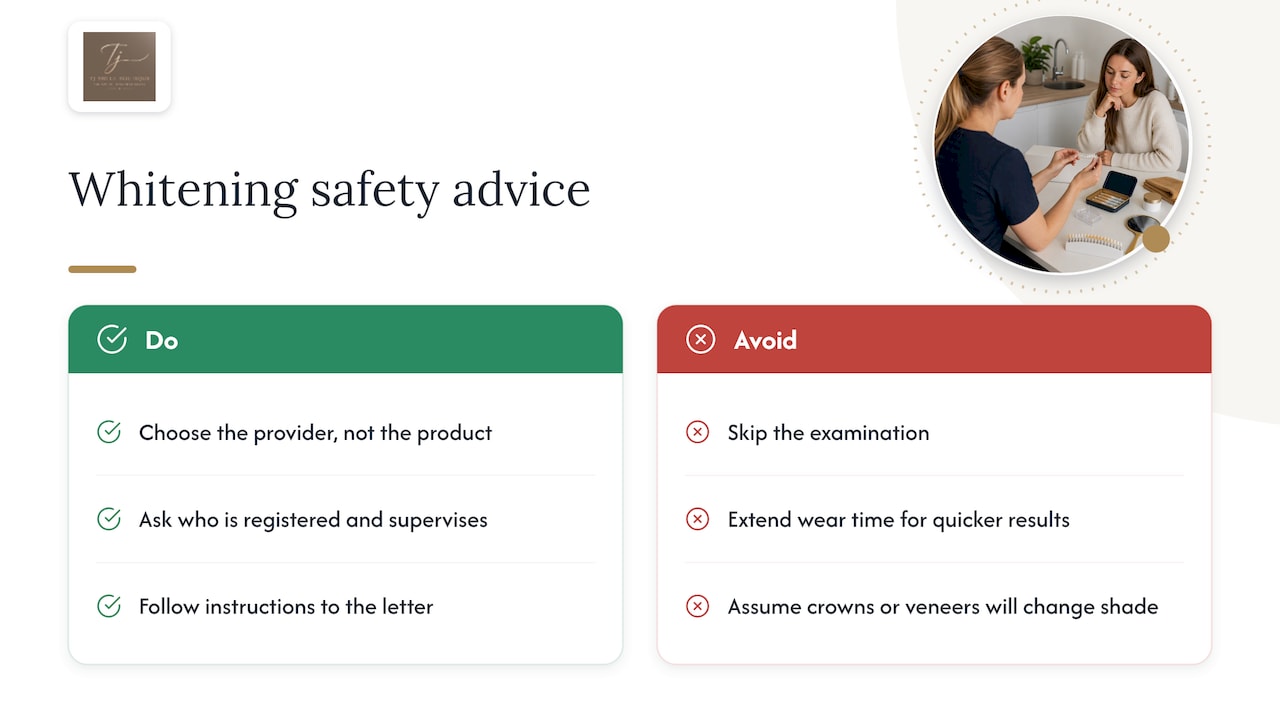
We start every whitening plan with a conversation about what you want and a look at what is actually in your mouth. Every treatment at TJ Smile Studio is personally led by me, so the person who assesses you is the person who plans your care. Sometimes the honest advice is that whitening alone will not give the result you picture. If you have bonding, veneers or crowns at the front, they will not change shade, and we would rather plan for that than leave you with uneven colour.
My advice to anyone considering whitening: choose the provider, not the product. Ask who is registered, who supervises, and what happens if you get sensitivity. Then follow the instructions to the letter, and do not extend wear time hoping for a quicker result.
— Dr Tashfeen Jamil BDS, MFDS RCS Ed, AssocFCGDent - GDC 286427
Safe whitening with TJ Smile Studio in Glasgow
If you want whitening done properly, start with a £50 Smile Consultation. We check your teeth and gums, talk through home, in-office or combined whitening, and give you a clear plan and price before you commit. We offer evening and weekend appointments, which suits busy diaries: see our evening and weekend dentist page.
You can see the options on our teeth whitening in Glasgow page, or book a consultation and we will take it from there.
FAQ
Is teeth whitening bad for your teeth?
Not when it is supervised and the products are used as directed. The NHS lists temporary sensitivity, sore gums or throat and white patches on the gums as the main side effects. The greater danger is unsupervised whitening from salons or online kits.
Is it illegal to whiten teeth at a beauty salon?
In general, yes. Products releasing more than 0.1% and up to 6% hydrogen peroxide can only be sold to dental practitioners, and the first use of each cycle must be by a dental practitioner or under their direct supervision. Those rules are why a salon cannot legally offer the stronger treatments.
Do teeth turn yellow again after whitening?
Gradually, yes, because whitening is not permanent. The NHS says results may last around three years if you follow your dentist’s advice, and staining drinks and smoking can shorten that. A review and top-up is the safe way to refresh the shade.
Who should not have teeth whitening?
People aged 17 or under, anyone with unhealthy teeth or gums, and anyone pregnant or breastfeeding. A dentist should check your teeth and gums before starting, and treat any decay or gum problems first.
How much does teeth whitening cost in Glasgow?
At TJ Smile Studio, bespoke home whitening is £299, in-office whitening is £399, and the combined option is £499, after a £50 consultation. Prices elsewhere vary by provider and treatment type, so compare what is included, not just the headline figure.
Sources
- Teeth whitening, NHS
- Council Directive 2011/84/EU, legislation.gov.uk
- Tooth whitening, British Dental Association
- Tooth Whiteners & Oral Hygiene Products containing hydrogen peroxide, European Commission opinion
Recommended
- Internal Tooth Whitening
- Whiten Sensitive Teeth Without Lasting
- Ease Whitening Sensitivity Within a Week
- Teeth Whitening for Smokers
This article is general information, not personal dental advice. What’s right for your teeth depends on a clinical examination — the condition of your enamel, gums, bite and any existing dental work — and no article can assess that. Outcomes vary between patients, and all treatment at TJ Smile Studio is subject to assessment and clinical suitability.
- Dr Tashfeen Jamil BDS, MFDS RCS Ed, AssocFCGDent, PGDip Restorative and Aesthetic Dentistry — GDC registration 286427
This article is general information, not personal dental advice. What's right for your teeth depends on a clinical examination — the condition of your enamel, gums, bite and any existing dental work — and no article can assess that. Outcomes vary between patients, and all treatment at TJ Smile Studio is subject to assessment and clinical suitability.
Clinically reviewed by Dr Tashfeen Jamil BDS, MFDS RCS Ed, AssocFCGDent, PGDip Restorative and Aesthetic Dentistry — GDC registration 286427, Principal Dentist at TJ Smile Studio, 1 Spiersbridge Way, Thornliebank, Glasgow G46 8NG.
If you have dental pain, swelling or an injury, call the practice on 07728 808510. Out of hours in Scotland, call NHS 24 on 111.