
09 September 2026 · TJ Smile Studio
Step by Step Smile Makeover Process: UK Digital Workflow, Timeline and Costs
Clinician led, facially driven breakdown of the smile makeover process for UK patients. Step by step planning, digital workflows, realistic timelines and...

A smile makeover is a staged clinical and cosmetic plan, not a single procedure. It runs through consultation, comprehensive assessment, digital design, preparatory care, treatment, and aftercare, in that order for good reason. Timeframes, complexity and cost all vary hugely depending on how many teeth are involved and which combination of whitening, bonding, veneers, aligners or implants is needed.
TL;DR:
- Proper sequencing and comprehensive diagnosis are crucial to ensure shade matching, treatment stability, and avoiding early failure of cosmetic restorations.
- Digital smile design and mock-ups, including intra-oral scans and facially driven planning, significantly improve natural appearance and patient satisfaction.
- The highest risk of failure occurs when treatments like whitening, bonding, or veneers are done out of order or without stabilizing gum and decay issues first.
- Fully digital workflows, including same-day milling and assessment tools, can shorten treatment time but must still prioritize thorough diagnosis and patient-specific planning.
- Selecting a qualified, transparent clinician with experience in cases similar to yours and a clear treatment sequence leads to better outcomes and lasting results.
Table of Contents
- The consultation: how to prepare and what to ask
- Comprehensive assessment: scans, imaging and clinical checks
- Digital smile design and mock-ups: seeing the result before you commit
- Sequencing: the rules that stop a makeover going wrong
- Treatment options: what each procedure actually involves
- Timeline, cost and finance: planning it realistically
- Aftercare: protecting the result you’ve paid for
- A clinician’s view on the digital workflow behind a same-day smile
- The psychological weight of a new smile
- Choosing the right cosmetic dentist for your case
- What to expect during each appointment
- Emerging technology worth knowing about
- Why the standard advice on smile makeovers undersells the planning stage
- Ready to plan your own smile makeover?
- Sources
- FAQ
The consultation: how to prepare and what to ask
The first appointment sets the tone for everything that follows. A cosmetic dentist will examine your teeth, gums and bite, ask what you dislike about your current smile, and talk through what’s realistically achievable given your facial shape and lip line. Bring any previous dental records, a list of medications, and photos of smiles you like, if you have them. It helps the clinician understand your reference point rather than guessing at it.
The NHS advises checking a practitioner’s registration and asking to meet the person who will actually carry out the work, not just the consultant who signs you up. That guidance holds for cosmetic dentistry as much as any other cosmetic procedure.
Questions worth asking at this stage:
- What are your qualifications and GDC registration number?
- Have you treated cases similar to mine, and can I see examples?
- What complications are possible, and how are they managed?
- What does aftercare involve, and for how long?
- Can I have a written, itemised treatment plan with costs before I commit?
Under GDC standards, valid informed consent means you understand the options, the risks, and what’s reversible before any irreversible work begins. A reputable clinic will put the plan in writing rather than promise a price verbally.
Pro Tip: Ask for the itemised plan to separate “must do” clinical work from “nice to have” cosmetic extras. That split alone makes budgeting far less stressful later.
Comprehensive assessment: scans, imaging and clinical checks
Before any design work starts, the clinician needs a full clinical picture. This is the diagnostic phase that decides not just what’s possible, but in what order.
A typical assessment includes:
- Screening for decay, gum disease and worn or cracked teeth
- Checking how your bite meets (occlusion), since misalignment affects veneer and crown longevity
- Intra-oral scanning and digital photographs to map your current smile precisely
- Standard X-rays, and a CBCT scan when implants or bone assessment are being considered
If active gum disease or untreated decay shows up, cosmetic work generally waits. NHS care pathway guidance in England is clear that oral health needs to be stabilised before elective cosmetic restorative treatment proceeds. Some patients are referred to a periodontist or restorative specialist first, and that referral can add weeks to the overall timeline. It’s frustrating when you’re eager to start, but skipping it risks the entire makeover failing early.
Digital smile design and mock-ups: seeing the result before you commit
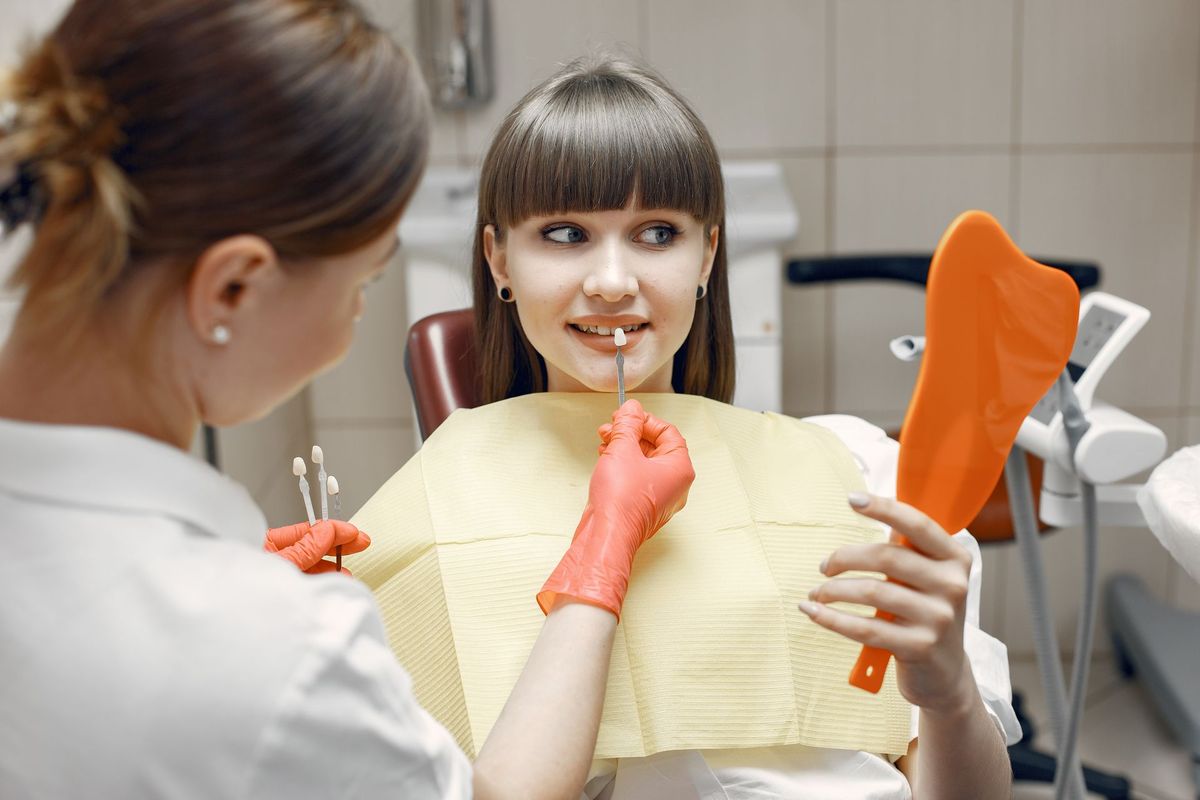
Digital smile design is where a plan stops being abstract. Using intra-oral scans and photographs, the clinician builds a digital model of your proposed new smile, mapped against your facial proportions and how your lips move when you talk and smile. A facially-driven approach tailors tooth shape, size and display to your face instead of applying a generic template, and that distinction is what separates a natural-looking result from an obviously “done” one.
You’ll typically see one or more of these previews:
- A wax-up model showing the physical shape of proposed restorations
- Temporary or trial veneers you can wear and test in daily life
- A digital overlay showing your new smile superimposed on photographs of your face
Clinics that build this into their digital workflow typically use intra-oral scanning and DSLR photography alongside the mock-up, giving a far more accurate preview than photos alone. Aligning design to facial proportions, rather than uniform templates, is consistently linked to higher patient satisfaction with the final result. Your approval, and any revisions you request, should be recorded in writing as part of the treatment plan, not left as a verbal agreement.
Sequencing: the rules that stop a makeover going wrong
Order matters more than most patients expect. Get it wrong and you end up with mismatched shades or restorations placed on unstable ground.
- Stabilise disease first: hygiene therapy, fillings and periodontal treatment happen before anything cosmetic, since treating unstable gum conditions first preserves the final result and reduces complications.
- Whiten before you match: veneers and bonding are colour-matched to your teeth, so whitening always comes before, never after, permanent restorations are made.
- Align before you cap: if aligners are part of the plan, they typically finish moving teeth before veneers or crowns are fitted over them.
- Confirm final shade last: your dentist should confirm the settled whitening shade before fabricating any permanent restoration, since shade shifts slightly in the days after treatment.
A common and entirely avoidable error is fitting a colour-matched veneer, then whitening around it. The whitened teeth lighten; the veneer doesn’t; the mismatch is permanent until the veneer is replaced.
Treatment options: what each procedure actually involves
Most smile makeovers combine two or three of the following, rather than relying on one procedure alone.
- Teeth whitening. The least invasive option and usually the starting point. In-chair sessions take under an hour; custom home kits run over one to two weeks. Fully reversible in the sense that results fade and need topping up.
- Composite bonding. Tooth-coloured resin is sculpted directly onto the tooth to fix chips, gaps or shape issues. Usually completed in a single visit per tooth, minimally invasive, and repairable if damaged.
- Porcelain veneers. Thin shells bonded to the front of the tooth, often requiring a small amount of enamel removal. Typically two visits: one for preparation and impressions, one for fitting, though same-day digital workflows can compress this. Less reversible than bonding.
- Crowns. Used where a tooth is significantly damaged or weakened rather than purely for appearance. Requires more tooth reduction than a veneer.
- Clear aligners. Address crowding, gaps or bite issues gradually over several months. Non-invasive but requires consistent daily wear, usually 20 to 22 hours.
- Dental implants. Replace missing teeth with a titanium post and crown. The most involved option, sometimes needing a healing period of several months before the final crown is fitted.
Recovery for whitening, bonding and veneers is typically mild sensitivity for a few days. Implants involve a longer healing window and more aftercare in the early weeks.
Timeline, cost and finance: planning it realistically
A single-tooth bonding fix might be done in one appointment. A full-mouth rehabilitation involving implants, veneers and aligners can run from several months to over a year once healing periods and staged fittings are factored in.
Representative 2025 UK price bands give a useful sense of scale:
- In-chair whitening: £350–£700
- Custom home whitening: £250–£450
- Composite bonding: £180–£350 per tooth
- Porcelain veneers: £750–£1,100 per tooth
- Clear aligner packages: £2,500–£4,500
- Single implant with crown: £2,200–£3,500
These figures vary with materials, the number of teeth treated and case complexity, so treat them as a starting point for budgeting rather than a fixed quote. Many UK clinics now offer staged finance and itemised quotes, letting patients spread larger multi-stage plans over monthly payments while keeping the clinical sequencing intact. Always check whether a deposit is refundable and what happens if your plan changes partway through.
Aftercare: protecting the result you’ve paid for
The work isn’t finished when the final restoration is fitted. What you do in the following weeks and months determines how long the result actually lasts.
Immediately after treatment, mild sensitivity to hot or cold is normal for a few days, particularly after whitening or veneer preparation. Ongoing maintenance usually includes:
- Six-monthly hygiene visits to keep gums healthy around veneers and bonding
- Wearing a retainer at night if aligners were part of your plan
- Occasional top-up whitening sessions, since natural staining continues over time
- A custom night guard if you grind your teeth, to protect veneers from chipping
Contact your clinic promptly if you notice a sharp edge, a veneer that feels loose, or persistent pain rather than mild sensitivity. Reputable clinics will outline what’s covered under warranty or review at the outset, so ask about this during your consultation rather than after something goes wrong.
Pro Tip: Write your maintenance schedule into your phone calendar the day treatment finishes. Six months passes quickly, and missed hygiene visits are the single biggest cause of early veneer failure.
A clinician’s view on the digital workflow behind a same-day smile
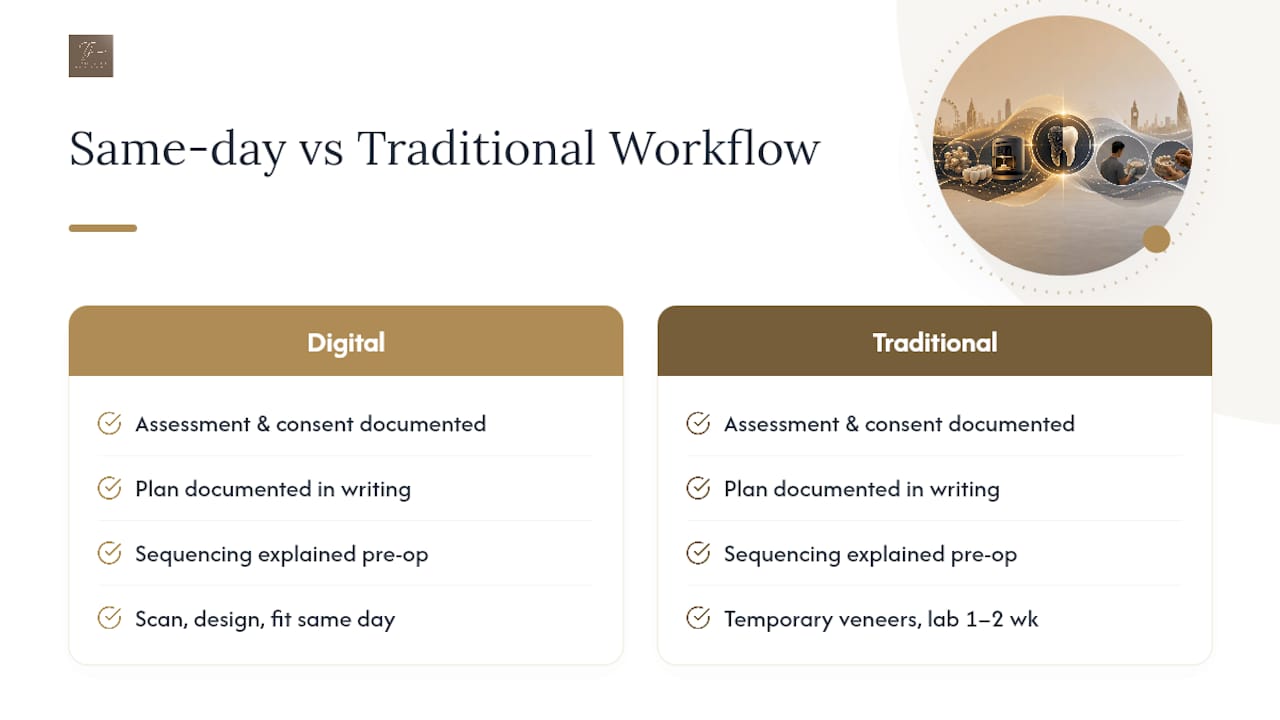
Some clinics build their process around a fully digital workflow, scanning, designing and often fitting same-day veneers in a single visit rather than the traditional two-appointment model. That compresses the sequencing described above into one carefully planned day, without skipping the assessment or consent steps. Every plan is documented in writing, with sequencing decisions explained before treatment starts.
The psychological weight of a new smile
People rarely book a smile makeover purely for the teeth. It’s usually about what the smile represents, confidence in photos, ease in job interviews, not covering your mouth when you laugh. That emotional undercurrent is worth naming honestly, because it shapes decisions in ways purely clinical advice doesn’t capture.
The risk is expecting a new smile to fix problems it can’t touch. A veneer changes how your teeth look; it doesn’t resolve unrelated anxiety or self-esteem issues rooted elsewhere. The patients who report the most satisfaction tend to be the ones with a specific, concrete goal, “I want to stop hiding my smile in photos”, rather than a vague hope that everything will feel different afterwards.
There’s also an adjustment period that catches people off guard. A smile that’s noticeably straighter or whiter than before can feel unfamiliar in the mirror for a week or two, even when the result is exactly what was planned. That’s normal and settles as it becomes your smile rather than “the new one.” Clinicians who take time to talk through this at consultation, rather than rushing straight to treatment options, tend to see patients settle into their results faster and with fewer second thoughts.
Family and friends’ reactions matter too, sometimes more than expected. A comment like “you look different” can land oddly even when it’s meant as a compliment, so it helps to go in expecting an adjustment period rather than instant, uncomplicated delight.
Choosing the right cosmetic dentist for your case
Credentials come first, but they’re not the whole picture. Confirm GDC registration, then ask specifically about experience with cases like yours. A dentist skilled at single-tooth bonding isn’t automatically the right choice for a full-mouth rehabilitation involving implants.
Look for a facially-driven design philosophy rather than a one-size-fits-all approach. Ask to see before-and-after cases involving patients with a similar facial shape or starting point to yours, not just their most dramatic transformation photos. Genuine case examples tell you far more about likely outcomes than marketing images do.
Communication style matters more than patients often anticipate. A good cosmetic dentist explains trade-offs plainly, veneers versus bonding, aligners versus a quicker fix, rather than pushing the most expensive option by default. If a clinician won’t put the treatment plan in writing or gets vague about total costs, treat that as a warning sign rather than a minor inconvenience.
Practical logistics count for more than they’re given credit for. How many appointments will this realistically take? Does the clinic offer digital scanning, or are you looking at uncomfortable physical impressions? Is there flexibility if your schedule is tight? A clinic offering tailored, stepwise treatment planning built around your specific circumstances, rather than a fixed package, tends to deliver a smoother experience overall.
What to expect during each appointment
Preparation varies by procedure, but a few things apply almost universally. Avoid heavy staining foods and drinks (red wine, coffee, turmeric-heavy curries) for 48 hours before whitening, since it affects how evenly the gel works. For veneer preparation, mild local anaesthetic is standard, and you’ll feel pressure rather than pain.
Whitening sessions are straightforward: gel applied, activated under light where relevant, checked at intervals, done within an hour for in-chair treatment. Bonding appointments involve the dentist sculpting resin directly onto the tooth while you’re seated upright so they can check the bite and appearance in real time, adjusting as they go.
Veneer preparation, where needed, involves removing a thin layer of enamel before taking a digital scan. In a same-day digital workflow, that scan feeds straight into design and milling, so you leave with finished veneers rather than temporaries. In a traditional two-visit model, you’ll wear temporary veneers for one to two weeks while the permanent set is fabricated in a laboratory.
Aligner fittings are the least eventful appointment of the lot. Scans are taken, the full sequence of aligner trays is planned digitally, and you’re shown how to insert and remove them before leaving with your first sets.
Whatever the procedure, ask before you sit down in the chair how long it will take and what sensation to expect. Clinicians who explain this upfront, rather than leaving you to guess mid-treatment, make the whole experience considerably less stressful.
Emerging technology worth knowing about
Digital workflows have already reshaped this process, and they’re still evolving. Intra-oral scanning has largely replaced physical impressions in clinics that have invested in the equipment, cutting out the discomfort of trays of putty and giving a more accurate digital model to design from.
Same-day milling, where a veneer or crown is designed and manufactured in-house within hours rather than sent to an external laboratory, is the development most likely to affect your timeline directly. It’s not universal yet, and not every case suits a single-visit approach, particularly complex multi-tooth rehabilitations, but where it’s available it removes weeks of waiting for temporaries.
AI-assisted smile design tools are increasingly used to model facial proportions and predict how a proposed design will look before any physical mock-up is made. These tools speed up the design conversation, but they don’t replace clinical judgement. A design that looks balanced on screen still needs a dentist to confirm it’s achievable given your actual tooth structure and bite.
Worth treating with more caution: at-home aligner and whitening kits that skip clinical assessment entirely. They can work for very minor cosmetic tweaks, but without the imaging and bite checks covered earlier in this guide, they carry a real risk of masking underlying problems rather than fixing them. Any technology that removes the assessment step removes the safety net, not just the appointment.
Why the standard advice on smile makeovers undersells the planning stage
Most guidance on this topic rushes to the treatment menu: veneers here, whitening there, aligners for crowding. That’s the least interesting part of the process, and honestly, the easiest to get right once everything before it has been done properly.
What the evidence actually supports is that sequencing and diagnostics are where outcomes are won or lost. A veneer fitted before whitening is finished, or cosmetic work started while gum disease sits untreated, doesn’t fail because the materials were wrong. It fails because the order was wrong. That’s a planning failure, not a dentistry failure, and it’s almost entirely preventable with a proper written plan.
I’d also push back gently on the assumption that faster always means better. Same-day digital workflows genuinely reduce weeks of waiting and multiple appointments for the right cases, and that convenience is real. But the diagnostic and design stages still need to happen properly within that compressed timeframe, not skipped to hit a one-day promise. Ask what’s actually being assessed before treatment starts, not just how quickly you’ll leave with new teeth.
If you take one thing from this: prioritise the clinician who explains sequencing before they show you a smile gallery. That’s usually the clearer signal of quality than the photos themselves.
— Dr Tashfeen Jamil BDS, MFDS RCS Ed, AssocFCGDent - GDC 286427
Ready to plan your own smile makeover?
TJ Smile Studio’s advantage over a traditional two-visit clinic is straightforward: its fully digital workflow lets many patients complete treatment, including Same-Day Hybrid Veneers, in a single visit rather than returning weeks later for the permanent fit. That means less time off work, fewer temporary restorations, and a shorter gap between your consultation and seeing the finished result.
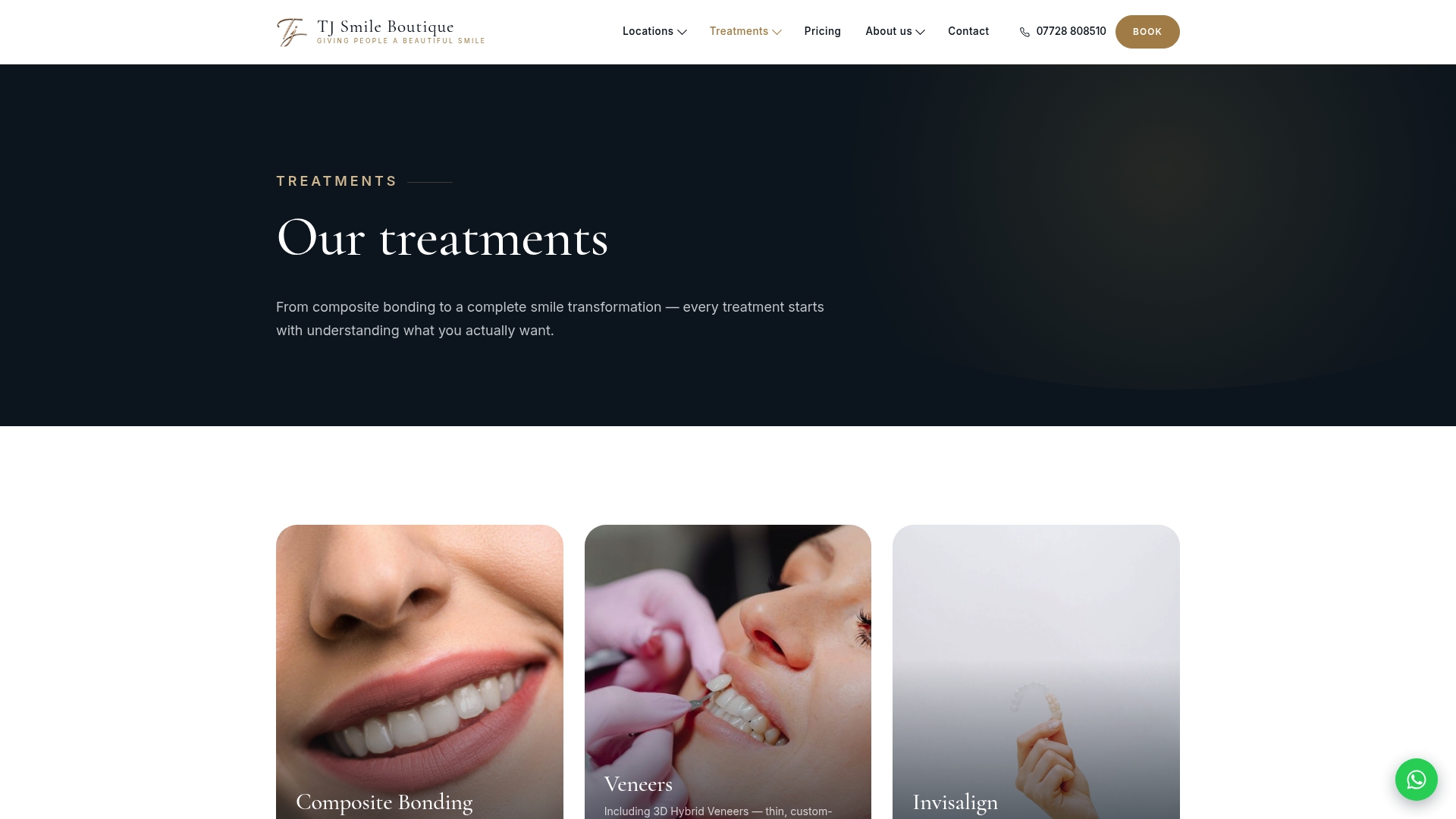
Based in Glasgow and led by Dr Tashfeen Jamil, the clinic offers digital smile makeovers, porcelain veneers, Invisalign, and same-day treatment options, all built on the intra-oral scanning and mock-up process described throughout this guide. Diagnostic consultations cover the full assessment outlined above, gum and bite checks, imaging, and a digital preview of your proposed new smile, before any irreversible work is agreed.
If you want a sense of realistic outcomes before booking, browse real patient results or check pricing and finance options to see how a staged plan might fit your budget. When you’re ready, book a consultation directly through TJ Smile Studio to get your written, itemised plan started.
This article is general information, not a substitute for advice from a qualified doctor. Consult a qualified healthcare professional about your own circumstances before acting on anything here.
Sources
- Choosing who will do your cosmetic procedure (NHS)
- General Dental Council (GDC)
- Dentistry
- NHS dentistry care pathways guidance (England)
FAQ
How much does a full smile makeover cost?
It depends entirely on which procedures are involved, but UK price bands run from around £250 for home whitening kits to £750–£1,100 per tooth for porcelain veneers, with full-mouth plans combining several treatments often reaching several thousand pounds. Ask your clinic for a written, itemised quote rather than relying on average figures.
What is the most feared dental procedure?
Root canal treatment and tooth extraction are the procedures most commonly associated with dental anxiety, though modern local anaesthetic and sedation options make both far more comfortable than their reputation suggests. Most cosmetic smile makeover procedures, whitening, bonding, veneers, involve little to no discomfort.
How long do smile makeovers last?
Longevity depends on the materials used and how well you maintain them: whitening results typically last several months to a year before a top-up is needed, composite bonding is repairable if damaged, and porcelain veneers can last a decade or more with good hygiene and a night guard if you grind your teeth.
Is a smile makeover worth it?
For patients with a specific, realistic goal and a properly sequenced treatment plan, most report high satisfaction, particularly when the design is tailored to facial proportions rather than a generic template. Value comes down to choosing a qualified practitioner, following the assessment and sequencing steps properly, and maintaining the result afterwards.
Recommended
- Digital Smile Makeover in Glasgow
- Pricing & Packages, Glasgow
- Same Day Smile in Glasgow
- Free Smile Assessment
This article is general information, not personal dental advice. What’s right for your teeth depends on a clinical examination — the condition of your enamel, gums, bite and any existing dental work — and no article can assess that. Outcomes vary between patients, and all treatment at TJ Smile Studio is subject to assessment and clinical suitability.
- Dr Tashfeen Jamil BDS, MFDS RCS Ed, AssocFCGDent, PGDip Restorative and Aesthetic Dentistry — GDC registration 286427
This article is general information, not personal dental advice. What's right for your teeth depends on a clinical examination — the condition of your enamel, gums, bite and any existing dental work — and no article can assess that. Outcomes vary between patients, and all treatment at TJ Smile Studio is subject to assessment and clinical suitability.
Clinically reviewed by Dr Tashfeen Jamil BDS, MFDS RCS Ed, AssocFCGDent, PGDip Restorative and Aesthetic Dentistry — GDC registration 286427, Principal Dentist at TJ Smile Studio, 1 Spiersbridge Way, Thornliebank, Glasgow G46 8NG.
If you have dental pain, swelling or an injury, call the practice on 07728 808510. Out of hours in Scotland, call NHS 24 on 111.