
24 September 2026 · TJ Smile Studio
UK Patients: 6 Clues to Read Smile Makeover Before and After
Learn how to judge smile makeover before and after photos, map visual changes to the likely treatments, and know what UK patients should ask clinics.
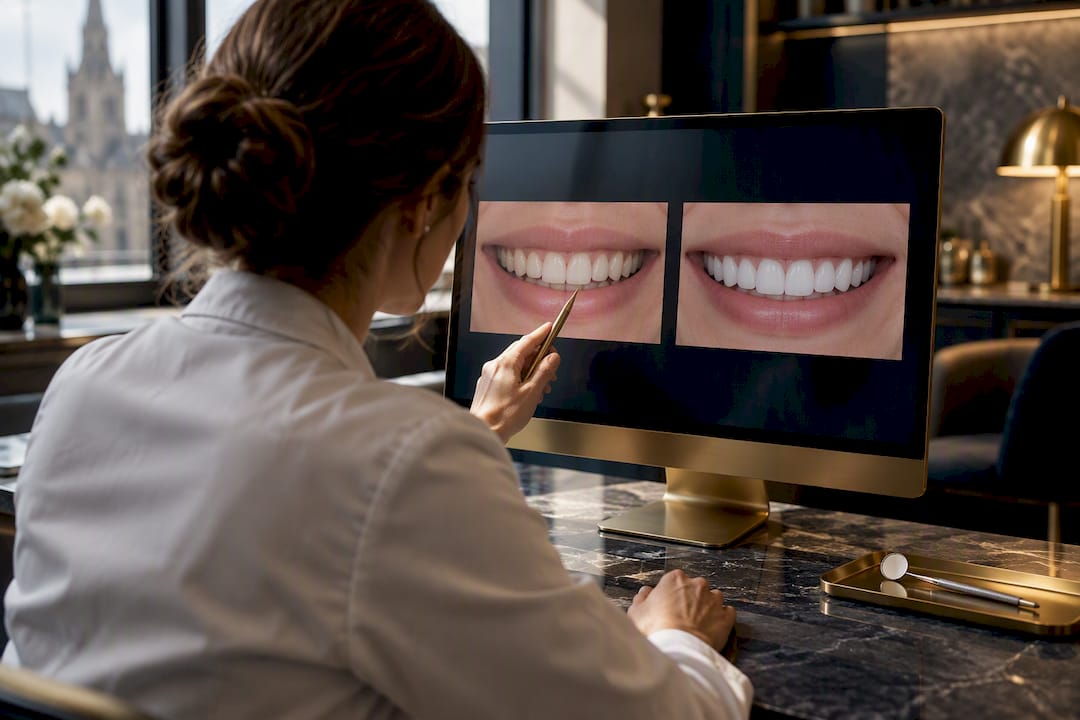
A smile makeover before-and-after shows changes in tooth colour, shape, spacing and alignment, but the exact result depends entirely on which treatments were used: veneers reshape, whitening only lightens, aligners only straighten. The most useful photo sets pair each image with documented treatment notes and a date, so you can judge whether a case is genuinely comparable to your own starting point.
TL;DR:
- The expected results vary greatly depending on the specific treatment used, such as whitening, veneers, or aligners, and cannot be assumed from dramatic before-and-after photos alone.
- Reliable gallery photos should be consistent in lighting and angle, include treatment captions, and show both close-up and full-face views to accurately assess the outcome.
- Treatments like porcelain veneers last longer and better preserve shape, while composites are more repairable but stain and chip sooner, with longevity influenced by habits like smoking or grinding.
- A digital consultation with documented mock-ups and a written plan provides a more realistic expectation than viewing staged or unverified photos.
- Always confirm the provider’s GDC registration in the UK and ask for a comparable case to your starting condition before proceeding with cosmetic dental work.
Table of Contents
- Before-and-after gallery: what to look for in each case type
- What a smile makeover can actually change
- How do you read before-and-after photos without being misled?
- Typical treatment pathways and how long each one takes
- Risks, consent and aftercare that shape the final look
- How long do smile makeover results actually last?
- TJ Smile Studio’s approach: what a consultation actually gives you
- A lead clinician’s note on setting realistic goals
- Ready to see what’s possible for your own smile?
- Sources
- FAQ
Before-and-after gallery: what to look for in each case type
Not every smile transformation photo shows the same kind of change, and mixing them up is the fastest way to set the wrong expectations. Recognising the case type tells you what to actually expect from your own treatment.
- Whitening-only cases: shade lifts several tones, but tooth shape, gaps and crookedness stay exactly the same.
- Composite bonding: chips, small gaps and uneven edges disappear; the change is subtle and usually completed in one visit.
- Veneers (composite or porcelain): shape, length, symmetry and shade can all shift at once, often the most dramatic before-and-after jump in a gallery.
- Aligner-led transformations: crowding and spacing resolve over months, but the shade and surface texture of the teeth barely change unless whitening is added.
- Implant-supported restorations: missing teeth are replaced and facial symmetry improves, particularly visible in full-face photos rather than close-up shots.
- Full-mouth rehabilitations: multiple treatments combine, so the after photo can look like a different mouth entirely.
When you’re scrolling through a clinic’s gallery, run a quick photo-quality check before trusting what you see. Lighting should match between the before and after shot, since a darker “before” photo can exaggerate whitening results. The camera angle needs to be consistent, ideally straight on rather than tilted to hide asymmetry. Look for natural lip posture rather than an exaggerated smile that stretches the lips away from the gums, and check whether the gallery includes both full-face and close intra-oral views. A dated caption with a brief treatment note (for example, “6 x porcelain veneers, upper anteriors, 8 weeks”) tells you far more than an undated glamour shot ever will.
What a smile makeover can actually change
Each treatment produces a distinct visual signature, which is why matching the “after” photo to the right procedure matters more than the overall wow factor.
- Porcelain veneers reshape and realign the visible tooth surface with a thin ceramic shell; they’re more invasive than bonding since a small amount of enamel is typically prepared, but they tend to hold their colour and shape for longer.
- Composite bonding builds up tooth-coloured resin directly onto the tooth. It’s conservative and repairable in one sitting, though it’s more prone to staining over time.
- Crowns and onlays rebuild a tooth that’s heavily worn or broken, changing its overall form rather than just its surface.
- Teeth whitening lifts shade within the limits of your natural tooth colour; it does nothing for shape, and some sensitivity during treatment is common.
- Clear aligners move teeth into better alignment but leave shade and surface texture untouched.
- Implants and bridges replace missing teeth, often the single biggest driver of symmetry restored in a before-and-after set.
Clinicians frequently combine these, straightening first with aligners, then whitening, then finishing with bonding or veneers, because sequencing in that order avoids reshaping teeth that are about to move anyway.
How do you read before-and-after photos without being misled?
Ask three questions before you take any gallery at face value: is the lighting consistent, is the angle consistent, and is there a caption telling you what was actually done? Inconsistent lighting, mismatched camera angles, obvious digital filtering, or a total absence of dates and treatment captions are all warning signs that a photo has been staged for effect rather than kept as an honest record.
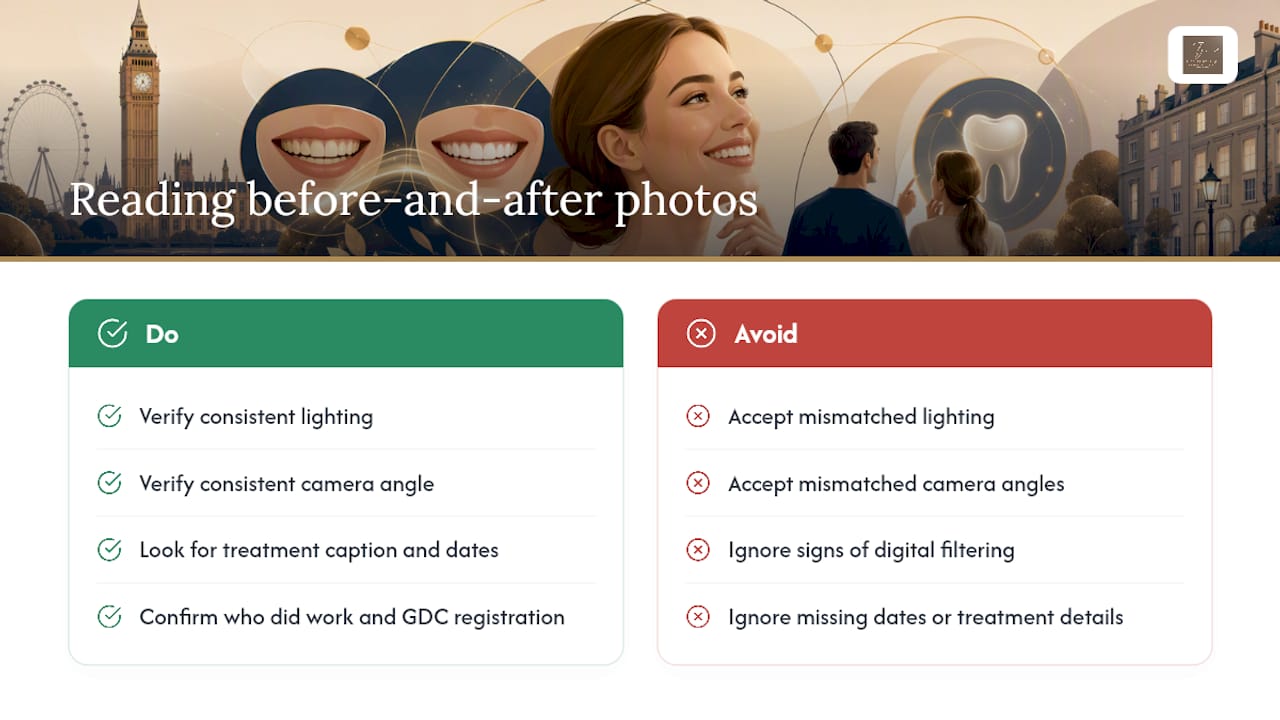
Ask the clinic directly who carried out the work and confirm the dentist is GDC-registered, since anyone providing tooth whitening or cosmetic dental work in the UK without that registration is acting illegally. A trustworthy gallery includes retracted intra-oral photos, showing the teeth close up, alongside full-face smiling shots that reveal how the gum line and lip line frame the result. That combination matters because a veneer can look perfect in close-up and still look wrong against an uneven gum line in a natural smile.
Pro Tip: Ask the clinic to show you a case with a starting point similar to yours, worn edges, gaps, or discoloured old fillings, rather than the single most dramatic transformation on their wall. A comparable case tells you far more about your own likely outcome than their best result ever will.
Typical treatment pathways and how long each one takes
The route from “before” to “after” varies enormously depending on whether the plan is single-visit or staged over months.
- Single-visit workflows, such as same-day hybrid veneers, use digital scanning and same-day fabrication to deliver a full set of veneers in one appointment, generally suited to patients who want a fast, dramatic change without staged orthodontics.
- Staged workflows typically start with alignment (weeks to months with aligners), followed by whitening once the bite is settled, then restorations like bonding or veneers layered on top over a further few weeks.
- Planning appointments almost always involve full records: photographs, shade matching, a digital mock-up so you can preview the likely shape change, and sometimes trial veneers or provisional restorations before anything permanent goes ahead.
- Overall timelines range from a single day for same-day hybrid veneers to several months for a combined aligner-and-restoration plan.
A digital smile makeover workflow, where mock-ups are built from scans before any tooth is touched, is what makes the difference between a genuine before-and-after preview and a surprise on the day of the reveal.
Risks, consent and aftercare that shape the final look
Before you commit to any cosmetic dental work in the UK, you’re legally entitled to a written treatment plan and cost estimate covering every procedure involved, as set out in GOV.UK guidance on choosing and paying for dental care. Recorded consent, with material risks explained clearly, is what protects both patient and dentist if a dispute ever arises, and the GDC’s own guidance treats that documentation as central to trust between patient and clinician.
Common clinical risks worth knowing before you compare photos:
- Sensitivity after whitening or bonding, usually temporary but occasionally more persistent.
- Staining or chipping on composite bonding over years of normal wear.
- Bonding failure or debonding that needs a repair visit rather than a full redo.
- Gum irritation if whitening trays don’t fit well.
Leeds Teaching Hospitals NHS Trust notes that whitening results vary between patients, and that sensitivity and transient gum changes are common enough that clinics routinely photograph shade before and after to track exactly what changed.
Aftercare is what keeps the “after” photo looking like the “after” photo years later: good oral hygiene, retainer wear after any orthodontic movement, and periodic maintenance visits. If you’re considering treatment abroad, check the performing dentist is GDC-registered and understand who’s responsible for aftercare once you’re back home.
How long do smile makeover results actually last?
Longevity differs sharply by material, which is worth knowing before you assume every “after” photo will age the same way.
- Composite bonding is the most conservative and easiest to repair, but it stains and chips earlier than ceramic, so expect touch-ups every few years.
- Porcelain veneers and crowns generally last longer before needing replacement, though nothing lasts indefinitely.
- Whitening fades gradually and needs periodic top-ups to hold its shade.
- Habits matter: smoking, heavily pigmented food and drink, and teeth grinding all shorten lifespans, while a night guard and regular hygiene visits protect the investment.
TJ Smile Studio’s approach: what a consultation actually gives you
Every treatment plan at TJ Smile Studio is led personally by Dr Tashfeen Jamil BDS, MFDS RCS Ed, AssocFCGDent (GDC 286427), using a fully digital workflow built around the same same-day hybrid veneer option referenced earlier. Digital mock-ups let patients preview shape and shade changes before committing, which is exactly the kind of documented, dated evidence a trustworthy before-and-after gallery should be built on.
A consultation typically includes:
- Clinical photographs and shade records taken as a baseline.
- A digital mock-up showing the likely shape and colour outcome.
- A written treatment plan and cost estimate before any work begins.
- Discussion of same-day versus staged pathways depending on your starting condition.
A lead clinician’s note on setting realistic goals
Every mouth starts from a different place, so no single before-and-after case predicts your own result precisely. Ask to see a comparable case, insist on a written plan, and always confirm your clinician is GDC-registered before treatment begins.
— Dr Tashfeen Jamil BDS, MFDS RCS Ed, AssocFCGDent - GDC 286427
Ready to see what’s possible for your own smile?
An advantage over simply browsing galleries online is that cases become personal, documented plans rather than generic promises, often built around a fully digital workflow led by an experienced dentist, with some same-day options and flexible appointment times.
A Smile Consultation costs £50 and gets you clinical photographs, a digital mock-up, and a written treatment plan with a cost estimate before you commit to anything. From there, options range from composite bonding from £200 per tooth to Same-Day Hybrid Veneers from £2,995, with full pricing details, including any booking deposit requirements, listed on the pricing page. Book a consultation to get your own before-and-after plan started, and if you want photography or styling advice for capturing your own results afterwards, Boost Beauty Lounge covers that ground well.
This article is general information, not a substitute for advice from a qualified doctor. Consult a qualified healthcare professional about your own circumstances before acting on anything here.
Sources
- Gov
- Tooth whitening and illegal practice — GDC
- Tooth whitening information for adult patients — Leeds Teaching Hospitals NHS Trust
FAQ
Is a smile makeover worth it?
For most patients, yes, particularly when the plan is bespoke and backed by a written treatment plan and cost estimate as required under UK guidance on cosmetic dental care. Whether it’s worth it for you depends on matching realistic expectations to the right combination of treatments.
What do veneers look like after 10 years?
Porcelain veneers generally hold their shape and shade well over a decade if properly maintained, though some may eventually need replacement due to wear or minor chipping. Composite veneers tend to show more staining and may need touch-ups sooner, as restorative dentistry guidance notes.
What does a smile makeover consist of?
A smile makeover typically combines two or more treatments, whitening, bonding, veneers, aligners or implants, chosen to address colour, shape, spacing and alignment together. The plan starts with full records, photographs and a digital mock-up, and it’s confirmed in a written treatment plan before any work begins.
Recommended
This article is general information, not personal dental advice. What’s right for your teeth depends on a clinical examination — the condition of your enamel, gums, bite and any existing dental work — and no article can assess that. Outcomes vary between patients, and all treatment at TJ Smile Studio is subject to assessment and clinical suitability.
- Dr Tashfeen Jamil BDS, MFDS RCS Ed, AssocFCGDent, PGDip Restorative and Aesthetic Dentistry — GDC registration 286427
This article is general information, not personal dental advice. What's right for your teeth depends on a clinical examination — the condition of your enamel, gums, bite and any existing dental work — and no article can assess that. Outcomes vary between patients, and all treatment at TJ Smile Studio is subject to assessment and clinical suitability.
Clinically reviewed by Dr Tashfeen Jamil BDS, MFDS RCS Ed, AssocFCGDent, PGDip Restorative and Aesthetic Dentistry — GDC registration 286427, Principal Dentist at TJ Smile Studio, 1 Spiersbridge Way, Thornliebank, Glasgow G46 8NG.
If you have dental pain, swelling or an injury, call the practice on 07728 808510. Out of hours in Scotland, call NHS 24 on 111.