
03 November 2026 · TJ Smile Studio
Sensitivity After Veneers: What's Normal and When to Call
Sensitivity after veneers is common and usually settles within days. Learn what it feels like, how to ease it safely and which signs mean you should call.
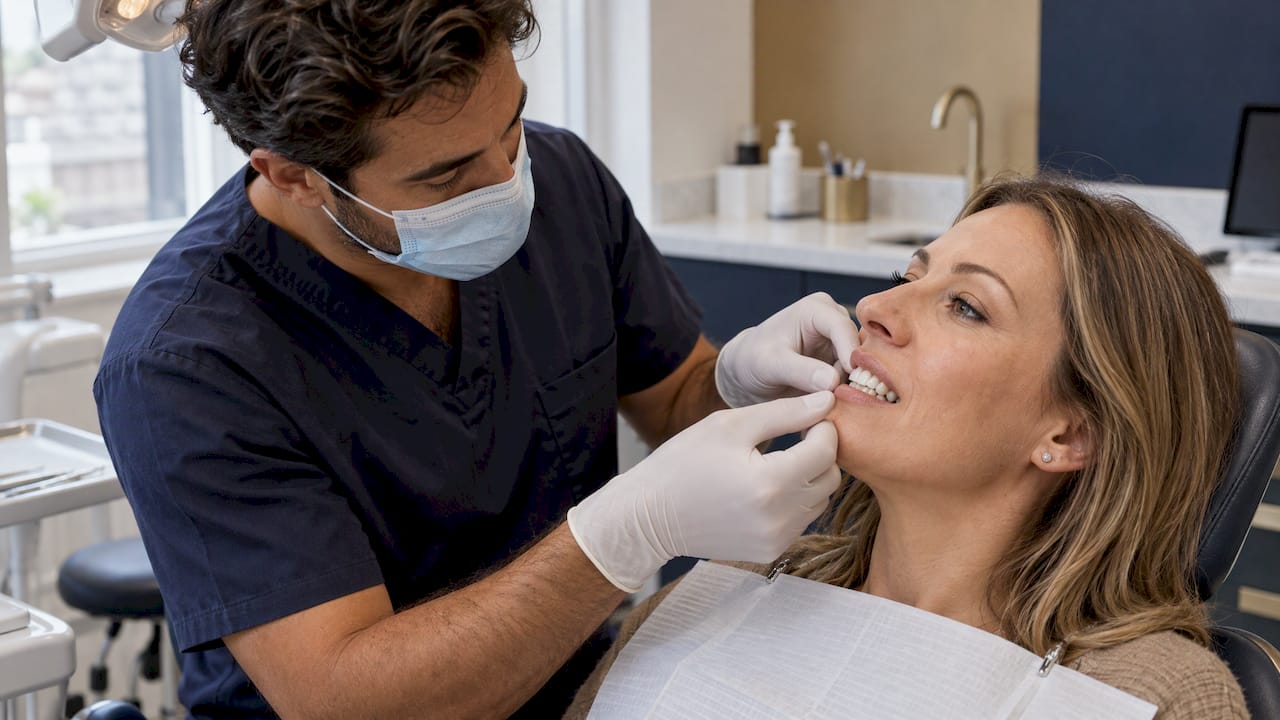
Some sensitivity after veneers is common. Hot drinks, cold air or biting down can feel sharper than usual for a few days, particularly if the tooth was shaped before the veneer went on. Sensitivity that is getting worse after two weeks, sharp pain, or a veneer that chips, cracks or comes loose is different, and that is the point to ring your dentist. This guide explains why it happens, what to expect, how to ease it and when to get checked.
TL;DR
- Mild sensitivity to hot, cold and biting is normal for a few days after veneers, especially where the tooth was shaped first.
- It happens because veneers can change how a tooth responds to temperature, and some natural enamel is removed during treatment.
- Use a soft brush, a gentle fluoride toothpaste and clean between teeth daily, and avoid extremes of temperature while things settle.
- Call your dentist if sensitivity worsens after two weeks, the bite feels very wrong after 3 to 4 days, you have a lot of pain, or a veneer is damaged.
Table of Contents
- Why teeth can feel sensitive after veneers
- What sensitivity after veneers feels like
- How long does it last?
- How to ease it safely
- Normal or call us? A quick guide
- When sensitivity is a sign to see a dentist
- Our perspective
- Reducing the chance of sensitivity before you start
- Veneers with Glasgow-based, single-dentist care
- FAQ
- Sources
Why teeth can feel sensitive after veneers
A tooth is not a solid block. Under the enamel sits dentine, which contains tiny channels leading towards the nerve. When dentine is exposed or stimulated, hot, cold, sweet or sour things can cause pain, because changes are transmitted along those channels.
Veneers touch that system in a few ways.
Enamel has been adjusted
Many veneer treatments involve taking away a thin layer of enamel so the veneer can sit naturally without looking bulky. Cleveland Clinic notes that at least some natural enamel is removed and that veneers can make teeth more sensitive to heat and cold. Australia’s national health information service, healthdirect, likewise says sensitivity can follow enamel removal, and that teeth may feel different at first while you adapt to the new shape. That guidance comes from Australia, but the biology of enamel and dentine is the same wherever you live.
Your tooth feels a new shape
Even when sensitivity is not about nerves, a veneer changes the surface your tongue, lips and opposing teeth meet. A slightly thicker edge or a changed contour can feel odd for several days. That is a sensation of difference rather than pain, and it usually fades as you get used to it.
Your bite needs to settle
If a veneer sits a fraction too high, that tooth takes more force than its neighbours when you close your teeth. That can feel like tenderness when biting. This is why a bite check matters, and why it is worth telling your dentist if things still feel uneven after a few days.
Something else may be going on
Sensitivity is not always the veneer. Cleveland Clinic lists gum disease, cavities and a cracked tooth among other causes of sensitive teeth. A veneer can bring a pre-existing problem to your attention simply because you are paying closer attention to that tooth. This is one reason a thorough check before treatment is worthwhile.
What sensitivity after veneers feels like
People describe the normal version in similar terms:
- A brief “zing” when cold water, ice cream or cold air hits the tooth.
- A dull awareness when you sip a hot tea or coffee.
- Mild tenderness when you bite firmly, or a slight ache that comes and goes.
- A general feeling that the tooth is “new” or slightly raised.
The UK aftercare leaflet from Nosht describes sensitivity to hot, cold and biting as normal for a few days, more likely when the tooth was shaped first. The key features of the ordinary kind are that it is short-lived, it is triggered by something (temperature or pressure) rather than arriving on its own, and it gradually becomes less noticeable instead of building.
How long does it last?
For most people, a matter of days. That fits the UK leaflet’s guidance, which treats ordinary sensitivity as a few-days issue and sets two weeks as the point at which worsening sensitivity should prompt contact with your practice.
The pattern matters more than the exact number of days. Think of it as a curve:
- Days 1 to 3: most noticeable. Cold drinks and biting are the usual triggers.
- Days 4 to 7: should be easing. Your bite feels more natural.
- Week 2 onwards: sensitivity should be minimal or gone. If it is getting worse rather than better, that is your cue to book a check.
Gillam, writing in a UK dental publication on diagnosing sensitivity, makes a related point: if pain after a cold stimulus lingers rather than gradually diminishing, the diagnosis may need to be reconsidered. In plain terms, a quick twinge that vanishes is one thing; pain that hangs around after the cold has gone deserves a proper look.
How to ease it safely
The aim while things settle is to avoid provoking the tooth and to keep it clean. Sensible steps:
- Brush gently. The UK aftercare leaflet recommends a soft toothbrush and a gentle, non-abrasive fluoride toothpaste. Scrubbing hard does not clean better and can irritate already tender gums.
- Clean between the teeth daily. The same leaflet advises daily interdental cleaning around veneer margins, where the veneer meets the gum. Plaque left there can cause gum soreness that adds to the discomfort.
- Keep brushing if gums bleed a little. Scottish Dental Clinical Effectiveness Programme advice is to use fluoride toothpaste and keep up regular brushing rather than stopping when gums bleed, and to seek advice from a dental professional about bleeding gums.
- Avoid extremes for a few days. Let hot drinks cool a little, and sip cold ones rather than gulping, so the tooth is not repeatedly shocked.
- Go easy on hard foods. Biting into crusty bread, apples or ice on a tender front tooth is asking for trouble. Cut food smaller and chew on the back teeth for the first days.
- Mention any desensitising toothpaste to your dentist first. Some are designed for sensitive teeth, but your dentist knows your teeth and can tell you whether one suits you and for how long.
Avoid improvising with strong home remedies, and do not take pain relief beyond the label directions. If you need painkillers regularly to get through the day, that in itself is a reason to call.
Normal or call us? A quick guide
| What you notice | Usually fine | Get it checked |
|---|---|---|
| Cold or hot drinks | Brief zing that fades within seconds | Pain that lingers after the drink has gone |
| Biting | Mild tenderness for a few days | Bite feels very wrong or uneven after 3 to 4 days |
| Overall trend | Gradually easing | Getting worse after two weeks |
| Pain level | Mild, comes and goes | A lot of pain, or pain that is sharp or constant |
| The veneer | Feels new or slightly bulky | Chipped, cracked or fallen off |
| Gums | Slightly tender | Swollen, red or bleeding persistently |
The check-in points in the right-hand column follow the UK aftercare leaflet, which says to contact the practice if a veneer chips, cracks or falls off, if the bite feels very wrong or very uneven after 3 to 4 days, if sensitivity is worsening after two weeks, if the gum is swollen, red or keeps bleeding, or if there is a lot of pain.
When sensitivity is a sign to see a dentist
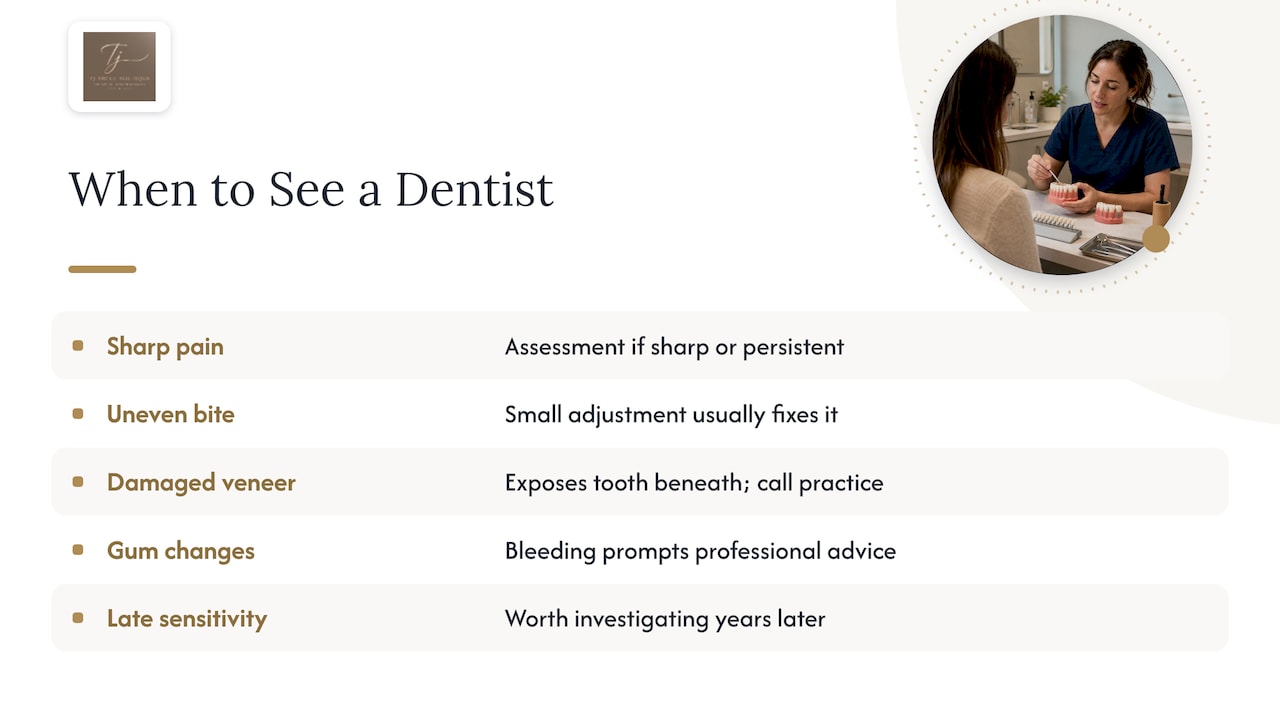
Do not wait it out in these situations.
Pain that is sharp, constant or keeps you awake. Cleveland Clinic advises a dental assessment when sensitivity is sharp or does not go away, because underlying causes can include infection, cavities or gum disease that will not resolve on their own.
A bite that still feels off. If one veneer takes the force when you close your teeth, a small adjustment usually fixes it quickly. Left alone, a high spot can leave the tooth sore and put the veneer under extra load.
A damaged veneer. A chip, crack or lost veneer exposes the tooth beneath and can make sensitivity worse. Keep the piece if you can, avoid chewing on that side, and call the practice. If you want to understand what repair involves, our guide to repairing veneers covers it.
Gums that are swollen, red or bleeding. This can mean plaque is collecting along the veneer edge, or that the gum is irritated. Bleeding gums should prompt advice from a dental professional, as the SDCEP leaflet says.
Sensitivity years later. Sudden sensitivity on a veneer you have had for a long time is worth investigating. Possible reasons include grinding or clenching, gum recession, decay at the margin or a small leak. Night-time grinding in particular can stress veneers, which we explain in our piece on veneers and bruxism.
If you are in Glasgow and something feels wrong, an emergency cosmetic appointment with us is £75.
Our perspective
Sensitivity after veneers is one of the most common worries we hear, and most of the time it comes down to how much a tooth has been touched and how well the bite has been finished. That is why we plan before we treat.
Every treatment at TJ Smile Studio is led personally by me, from consultation through to completion, so the person who planned your smile is the person who checks how it feels afterwards. Our fully digital workflow lets us design the result with you before anything is done, which helps us keep the plan precise and discuss how much shaping, if any, your case calls for. Where the aim can be reached conservatively, we say so.
We also think aftercare is part of the treatment, not an afterthought. If your bite feels high, or sensitivity is not following the pattern we described, we would much rather see you early than have you put up with it. Evening and weekend appointments are there so that a quick check does not mean taking time off work.
Dr Tashfeen Jamil BDS, MFDS RCS Ed, AssocFCGDent - GDC 286427
Reducing the chance of sensitivity before you start
You cannot control everything, but a few choices make a difference.
Ask how much of the tooth will be shaped
The more enamel is taken, the more likely a tooth is to feel sensitive afterwards. Ask your dentist how much shaping they expect and whether a mock-up is part of the plan. Our article on how mock-ups influence enamel shaping goes through this in more detail.
Choose the material with your teeth in mind
Porcelain and composite veneers behave differently, and the right one depends on your teeth, your bite and your budget. Our guide to composite or porcelain veneers lays out the trade-offs, and our comparison of same-day and traditional veneers helps if you are weighing a one-visit approach.
Sort out any existing problems first
Decay, gum inflammation and cracked teeth can all cause sensitivity on their own. A proper check beforehand means the cause of any later twinge is clearer. If you are straightening or whitening as well, the order of treatment matters; see whitening before veneers for how we think about sequencing.
Protect the result
Good habits keep both veneers and gums healthy. Our notes on veneer maintenance and how long veneers last cover daily care and what to expect over the years.
Veneers with Glasgow-based, single-dentist care
If you are considering veneers and want to talk through sensitivity before committing, start with a smile consultation for £50. We look at your teeth, discuss what you want and explain how much preparation, if any, we would expect.
Our veneers start from £399 per tooth, and Same-Day Hybrid Veneers start from £2,995, designed so that many patients leave with their new smile in a single visit. Additional 3D hybrid veneers are £350 per tooth. Evening and weekend appointments are available.
FAQ
Is it normal for veneers to hurt for a few days?
Mild sensitivity to hot, cold and biting is normal for a few days, particularly if the tooth was shaped first. It should ease rather than build. A lot of pain, or sensitivity that is worsening after two weeks, is a reason to contact your dentist.
Can sensitivity after veneers be permanent?
Most sensitivity is temporary and settles as the tooth adapts. Persistent or worsening sensitivity is not something to accept; it can point to a high bite, a gum problem, decay or another cause that your dentist can identify and treat. Book a check rather than waiting indefinitely.
What should I do if my bite feels wrong after veneers?
Give it a few days, as the sensation of a new shape fades quickly. If the bite still feels very wrong or very uneven after 3 to 4 days, contact your dentist. A small adjustment can often put it right.
Does sensitivity mean my veneers have failed?
Not usually. Early sensitivity is common and rarely means failure. Sensitivity that appears after a long time, or comes with a chipped, loose or lost veneer, bleeding gums or lingering pain, should be looked at promptly so the cause can be found.
Can I use sensitive-toothpaste after veneers?
Gentle, non-abrasive fluoride toothpaste is the usual advice. If you want a toothpaste designed for sensitive teeth, ask your dentist which suits you, because the best choice depends on your teeth and veneer type.
Sources
- After Composite Bonding or Veneers: Care Guide
- Veneers: What Are Dental Veneers? (Cleveland Clinic)
- Veneers (healthdirect)
- Sensitive Teeth: Causes, Treatment & Prevention (Cleveland Clinic)
- Information about gum health (SDCEP)
- Dentine hypersensitivity: diagnosis and management (Dentistry.co.uk)
Recommended
- Repairing Veneers
- Ease Whitening Sensitivity Within a Week
- Broken veneer?
- Sevenfold Fracture Risk Without a Splint
This article is general information, not personal dental advice. What’s right for your teeth depends on a clinical examination — the condition of your enamel, gums, bite and any existing dental work — and no article can assess that. Outcomes vary between patients, and all treatment at TJ Smile Studio is subject to assessment and clinical suitability.
- Dr Tashfeen Jamil BDS, MFDS RCS Ed, AssocFCGDent, PGDip Restorative and Aesthetic Dentistry — GDC registration 286427
This article is general information, not personal dental advice. What's right for your teeth depends on a clinical examination — the condition of your enamel, gums, bite and any existing dental work — and no article can assess that. Outcomes vary between patients, and all treatment at TJ Smile Studio is subject to assessment and clinical suitability.
Clinically reviewed by Dr Tashfeen Jamil BDS, MFDS RCS Ed, AssocFCGDent, PGDip Restorative and Aesthetic Dentistry — GDC registration 286427, Principal Dentist at TJ Smile Studio, 1 Spiersbridge Way, Thornliebank, Glasgow G46 8NG.
If you have dental pain, swelling or an injury, call the practice on 07728 808510. Out of hours in Scotland, call NHS 24 on 111.