
01 November 2026 · TJ Smile Studio
Post-Whitening Care: What to Do After Teeth Whitening
What to do after teeth whitening: the first hours, which foods and drinks to avoid, how to ease sensitivity and when to call your dentist.
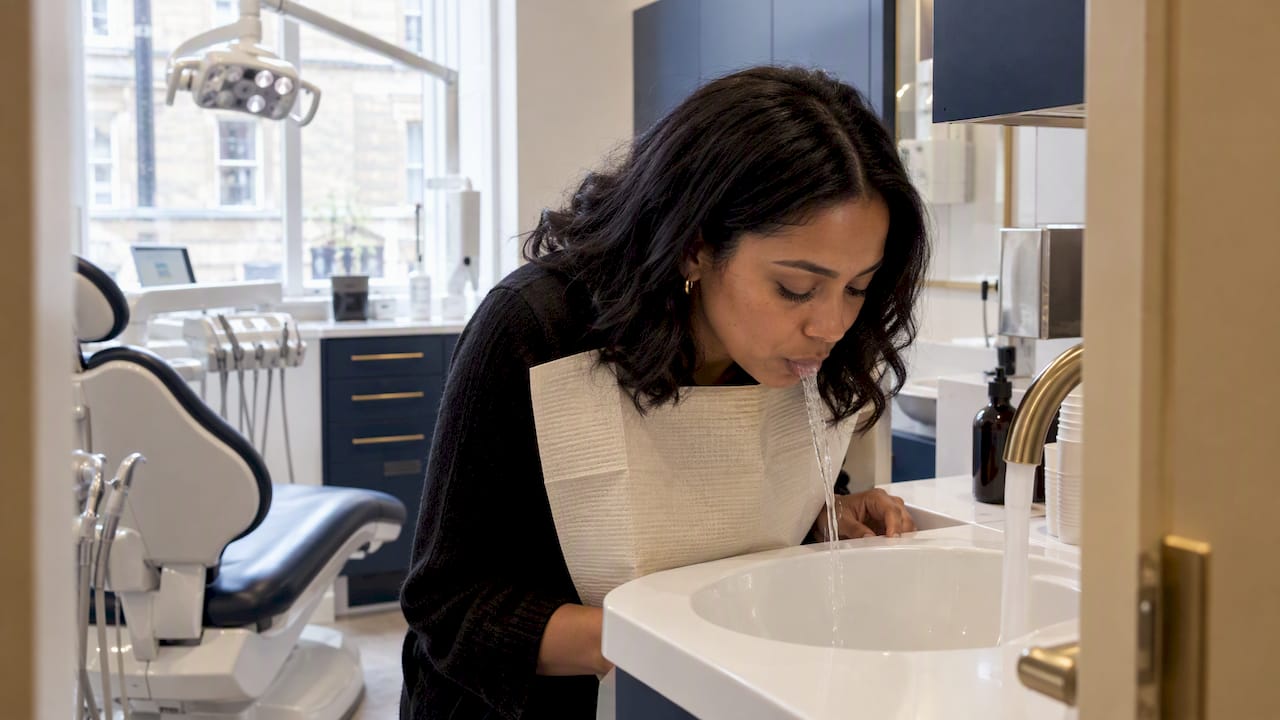
The first day or two after whitening is when your teeth are most exposed to stain and most likely to feel sensitive. Rinse with water, brush gently, keep to pale foods and clear drinks for 24 to 48 hours, and skip smoking altogether. Use a desensitising toothpaste if your teeth feel sharp or tingly. Below you will find what to do hour by hour, what the evidence says about the “white diet”, how to handle sensitivity, and the symptoms that mean you should call a dentist.
TL;DR
- Straight after whitening, rinse thoroughly with cold water and brush as normal, as NHS guidance from Leeds advises for tray-based whitening.
- For the first 24 to 48 hours, choose light-coloured food and clear drinks, and avoid anything that would stain a white T-shirt.
- Sensitivity to cold or sweet things is common and short-lived. A desensitising toothpaste and a softer routine usually help.
- Severe pain that disturbs your sleep, does not respond to painkillers, or comes with facial swelling needs a call to your dentist.
- Stopping smoking is one of the most effective ways to keep your smile white.
Table of Contents
- The first hour: what to do straight away
- The first 24 to 48 hours: the white diet
- How long after whitening can you eat?
- What to avoid doing after whitening
- Managing sensitivity after whitening
- When to contact a dentist
- Keeping your results in the weeks and months after
- Whitening with us in Glasgow
- FAQ
- Sources
The first hour: what to do straight away
What you do depends on how you were whitened. In both cases the aim is the same: remove every trace of gel and protect teeth that are temporarily more vulnerable.
After in-chair whitening. Your dentist will have protected your gums with a soft shield or paste and will remove the gel and rinse your mouth before you leave. Ask for the specific instructions that go with the product used, and for a desensitising product if you tend towards sensitive teeth. Do not be surprised if your lips or gums feel a little tender. Some people also notice white patches on the gums, which the NHS lists among the short-term effects of professional whitening.
After home whitening with custom trays. Once you take the trays out, rinse your mouth thoroughly with cold water and brush as normal. Then clean the trays under cold water, dry them and put them away. The same NHS guidance says unused bleaching gel belongs in the fridge, out of reach of children.
Two habits are worth building from the very first night:
- Keep to water for a while after removing your trays or leaving the chair. Plain water rinses away gel residue and does not stain.
- Brush with a soft brush and light pressure. Your enamel has not been “damaged”, but your teeth may feel more reactive, and aggressive scrubbing will only make that more obvious.
The first 24 to 48 hours: the white diet
The traditional advice is the “white diet”: for 24 to 48 hours, eat and drink only pale, non-staining things. A Harper’s Bazaar UK interview with a cosmetic dentist gives the common reasoning: for around 48 hours afterwards the pores of the teeth are at their most open. Examples he gives are chicken, rice, fish, bread, pasta and potatoes.
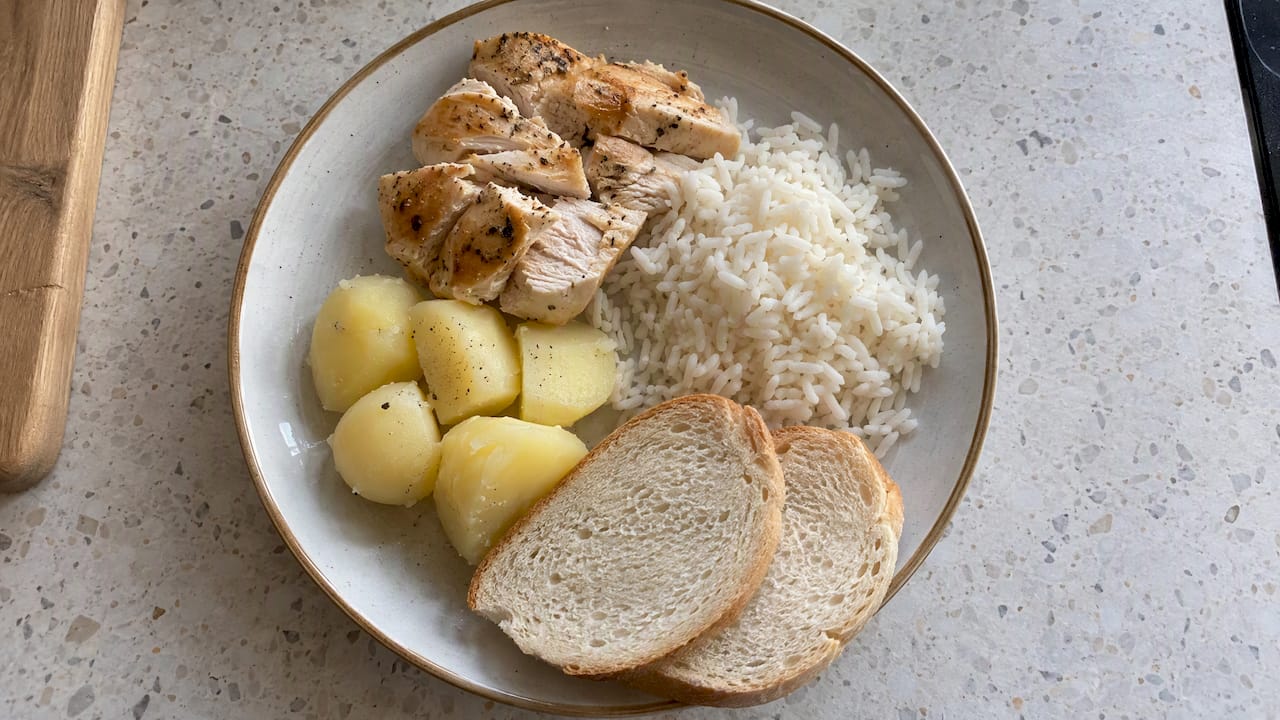
NHS sources give the same practical steer in plainer terms. Leeds Teaching Hospitals tells patients to avoid highly coloured food and drink, such as curry, red wine and tomato-based foods. A London NHS pharmacy dental fact sheet offers a rule of thumb you can use anywhere: if it would stain a white T-shirt, it can stain your teeth.
What the research says about it
This is where the picture gets more interesting. A 2024 systematic review in PMC found that dietary restrictions were not statistically necessary to achieve the colour change from bleaching. A 2024 meta-analysis on PubMed reached a similar conclusion: coffee, tea and wine did not significantly affect how well bleaching worked compared with a white diet.
What this tells us is that a cup of coffee on day one is unlikely to undo the lightening itself. It does not make the advice pointless. The studies look at the colour change achieved; they say nothing about whether you will enjoy a freshly whitened smile for longer if you avoid deep pigments while your teeth are most sensitive. A sensible reading is this: the white diet is a cheap, low-effort precaution, not a rule that will make or break your result. Follow it for the first day or two if you can, and do not panic if you slip.
A practical food and drink guide
| Safer choices | Better to avoid for 24 to 48 hours |
|---|---|
| Water, still or sparkling and plain | Red wine, coffee, black tea, cola |
| Milk, plain yoghurt, white cheese | Curry, soy sauce, tomato-based sauces |
| Chicken, white fish, eggs | Beetroot, berries, dark chocolate |
| Rice, pasta, bread, potatoes | Balsamic vinegar, ketchup, brown sauce |
| Cauliflower, banana, peeled apple | Coloured sweets, ice lollies and fizzy drinks |
A few points make the table easier to live with:
- Cold and hot extremes. If your teeth feel sensitive, ice-cold drinks and very hot soup can set them off. Lukewarm is kinder.
- Acidic items. Fruit juices, pickles and citrus can sting on sensitive teeth. Some clinics also advise avoiding them for 48 hours.
- Sauces and dressings. A white pasta dish with a tomato sauce is not a white diet. Check what is on the plate, not only the base.
- Straws. If you cannot give up a stronger-coloured drink, a straw keeps it away from the front of your teeth.
How long after whitening can you eat?
You can generally eat after whitening, because the wait is about what you eat, not whether you eat. The thing to avoid is staining and strongly acidic or very cold food during the first day or two.
With tray-based whitening, the sensible approach is to remove the trays, rinse and brush, and then eat a light-coloured meal. After in-chair treatment, ask your dentist about timing as it can depend on the product used. Clinic advice commonly runs between 24 and 48 hours of colour avoidance, and the 48-hour figure is the one in the Harper’s Bazaar interview. If your dentist gave you a written aftercare sheet, that is the instruction to follow, since they know which gel and strength they used.
If you have eaten something dark within the window, rinse your mouth with water straight after and brush gently once the meal has settled. Do not worry about one lapse.
What to avoid doing after whitening
Beyond food and drink, a short list of habits matters most.
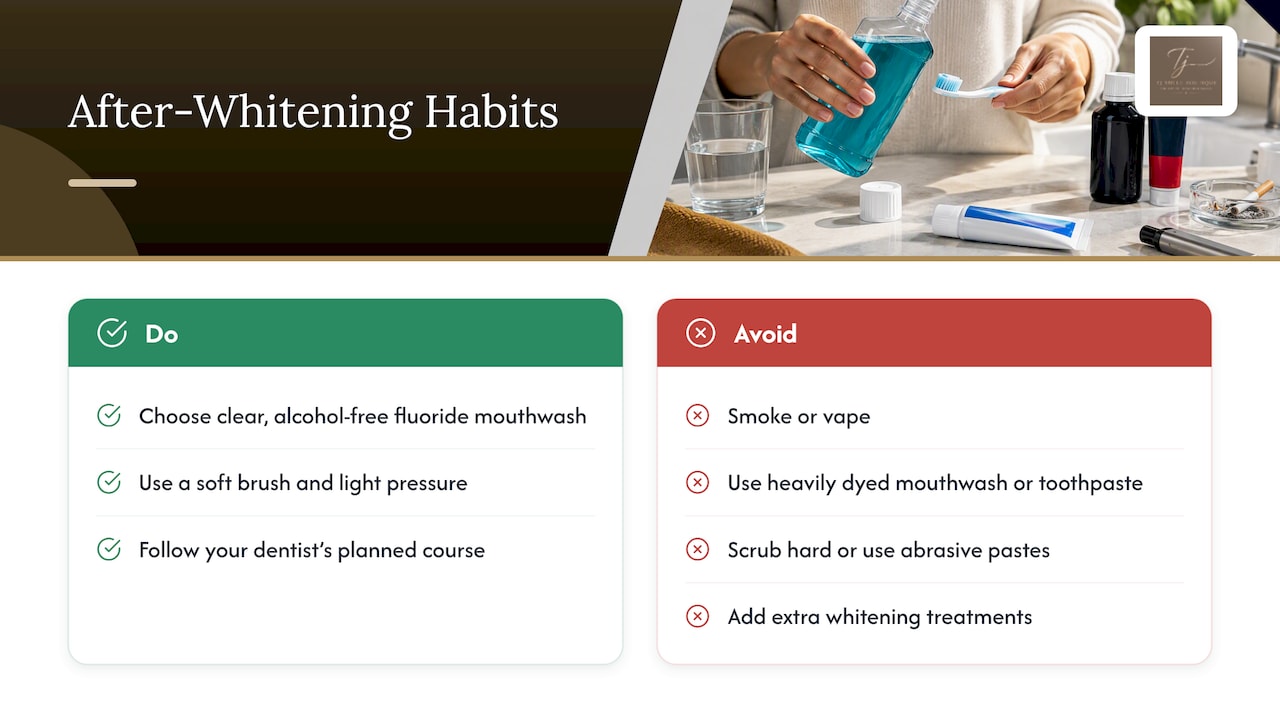
Smoking and vaping. The British Dental Bleaching Society advises giving up smoking to keep a whiter smile, because it causes staining both on the surface and within the tooth structure. Even if you intend to smoke again later, the first 48 hours are the least forgiving.
Coloured mouthwash and toothpaste. Heavily dyed rinses can leave a tint. A clear, alcohol-free fluoride mouthwash is a safer choice while your teeth are sensitive.
Hard scrubbing and abrasive pastes. Charcoal powders and “whitening” pastes with coarse grit will not improve your result and can aggravate sensitive teeth. Soft brush, fluoride toothpaste, light pressure.
Extra whitening on top. Do not add shop-bought strips, kits or beauty-salon treatments to a course your dentist has planned. In the UK, products containing or releasing 0.1% to 6% hydrogen peroxide may only be supplied through a registered dental professional. A London NHS pharmacy fact sheet warns that illegal whitening, such as kits bought online or treatment from a non-dentist, carries risks including severe chemical burns, scarring and tooth loss.
Whitening while other work is planned. If you are about to start or finish other treatment, timing matters. We cover this in whitening after Invisalign and whitening after braces.
Managing sensitivity after whitening
Sensitivity is the most common side effect and the main reason people ask about aftercare. The British Dental Bleaching Society notes that it affects at least 50% of patients during treatment and can be managed with desensitising products recommended by a dental professional. The NHS describes it as short-term sensitivity to cold or sweet food and drink, sometimes with sore gums or throat.
Colgate explains that the sensitivity is usually temporary and happens because peroxide passes through enamel to reach the dentine. That is why the sensation tends to be a brief zing rather than constant pain.
What helps, in order of how often it is the answer:
- Desensitising toothpaste. Colgate says pastes containing potassium nitrate or stannous fluoride help block the pathways to the nerve. Use it twice a day, and let it sit on the teeth rather than rinsing it away aggressively.
- Pause or space out home whitening. Leeds Teaching Hospitals says that if teeth become very sensitive, patients may be advised to use the gel on alternate nights and put sensitive toothpaste in the tray on the off nights. Do this on your dentist’s say-so, not by improvising.
- Avoid triggers. Ice, very hot drinks, fizzy drinks and sharp fruit can all provoke a twinge during the first couple of days.
- Ask for a different gel strength. Starting lower and building up is a standard way of keeping comfort high. Our guide to whitening gel strengths explains how that works.
If you already know you have sensitive teeth, it is worth reading how to whiten sensitive teeth without lasting discomfort and how to ease whitening sensitivity within a week before you start.
When to contact a dentist
Mild, passing sensitivity is expected. These are not.
- Severe, ongoing pain that affects your sleep or does not respond to painkillers.
- Facial swelling, which the same fact sheet also lists as a reason to contact your dentist.
- Side effects that are troublesome, as the NHS puts it, such as sore gums or throat or white patches that do not settle.
Call the clinic that treated you first. If you cannot reach them and the pain is severe or swelling is spreading, contact NHS 111 or an emergency dental service. If whitening was done by a non-dentist or with a kit bought online, tell the dentist exactly what was used.
Our view: aftercare is part of the treatment
We do not treat whitening as a one-hour appointment. It is a plan, and the first two days are part of it. Every treatment at our studio is personally led by me, so the person who assesses your teeth is the person who tells you what to expect afterwards.
The research on the white diet is genuinely mixed, and we say so to patients. A coffee will not wipe out your result. But a freshly whitened tooth feels different, and most people are happier for 48 hours of simple eating while it settles. We think a short, easy routine that you can actually follow beats a long list that you ignore.
We also think the choice of whitening method shapes aftercare. A bespoke home kit lets you adjust the pace if your teeth feel reactive. In-office whitening gives a faster lift. A combination gives you both. That is why we assess your teeth, gums and existing dental work at a consultation before we recommend one, and why we explain the sensitivity plan before the first application, not after the first twinge.
Patients come back to us with questions weeks later, and we would rather hear from you than have you guess. A quick whitening review is there for exactly that.
Dr Tashfeen Jamil BDS, MFDS RCS Ed, AssocFCGDent - GDC 286427
Keeping your results in the weeks and months after
After the first 48 hours your routine can relax, but a few habits decide how long the brightness lasts.
- Brush twice a day and clean between teeth daily. Plaque holds stain. Brushing and flossing reduces build-up and keeps the surface smooth.
- Rinse with water after coffee, tea and red wine. It takes seconds and washes away much of the pigment before it settles.
- Use a straw for iced coffee, cola or juice.
- Stay smoke-free. As the BDBS notes, smoking stains both the surface and the inside of the tooth.
- Keep your hygiene appointments. A professional polish removes the surface stain that daily brushing leaves behind.
- Plan top-ups with your dentist. Whitening is not permanent. Our article on how long teeth whitening lasts goes through what affects it, and a bespoke home kit makes occasional top-ups straightforward.
Fillings, bonding and veneers
Whitening only changes natural tooth structure. Leeds Teaching Hospitals states that it does not change the colour of existing fillings or veneers, and that old fillings may need replacing if they no longer match. That has a practical consequence: if you are planning composite bonding or veneers, the usual order is to whiten first and choose the shade of restorations afterwards, so everything matches. If you are weighing the options, see teeth whitening vs veneers. A single tooth that has darkened from within may need a different approach, covered in internal tooth whitening.
Whitening with us in Glasgow
If you are in or near Glasgow and want a plan that includes your aftercare from the start, we offer three whitening routes, all explained at your consultation:
- Bespoke Home Teeth Whitening: £299
- Professional In-Office Teeth Whitening: £399
- Professional In-Office + Home Teeth Whitening: £499
A Smile Consultation is £50, and a Whitening Review is £35 if you want a check on how your teeth are responding. Not sure which suits you? Our comparison of home vs in-office whitening sets out the differences. We also offer evening and weekend appointments for people who cannot easily get away in the working day.
You can see all of our current prices on our pricing page or read about teeth whitening in Glasgow before you book.
FAQ
Do I really have to wait 48 hours after teeth whitening?
Not as a hard rule, but it is a sensible precaution. Two 2024 reviews, one in PMC and one on PubMed, found dietary restriction was not needed for the colour change itself. Many dentists still recommend 24 to 48 hours of pale food because teeth feel more sensitive then. Follow the advice your own dentist gave you.
Can I eat normally 24 hours after teeth whitening?
Mostly, yes, but be gradual. After a day, bring back normal meals, and reintroduce coffee, tea and red wine slowly, rinsing with water afterwards. If you are still sensitive, keep to lukewarm food and drink for another day. Your dentist may suggest a longer window depending on the treatment you had.
What should I use on my teeth if they feel sensitive?
A desensitising toothpaste containing potassium nitrate or stannous fluoride is the usual first step. Avoid very cold or very hot food and drink, and brush gently. If it persists, ask your dentist about desensitising products or adjusting your home whitening schedule.
Can I smoke after whitening?
It is best not to. Smoking stains the surface and the inside of the tooth, according to the British Dental Bleaching Society. Avoid it completely for at least the first 48 hours, and ideally cut it out to protect your result long term.
When is sensitivity after whitening a problem?
Call your dentist if pain is severe, keeps you awake, does not ease with painkillers, or comes with facial swelling, as the NHS fact sheet advises. Ordinary sensitivity to cold or sweet things should settle within a few days.
Sources
- Tooth Whitening, Leeds Teaching Hospitals NHS Trust
- Pharmacy Dental Fact Sheet: Tooth Whitening, London NHS Pharmacy
- Teeth whitening, NHS
- Is a White Diet Necessary for Tooth Bleaching Procedures?, PMC
- White diet is not necessary during dental bleaching, PubMed
- British Dental Bleaching Society patient information
- Tooth whitening, British Dental Association
- Managing Sensitive Teeth After Whitening, Colgate
- A guide to teeth whitening, Harper’s Bazaar UK
Recommended
- Up to Three Years
- Ease Whitening Sensitivity Within a Week
- Internal Tooth Whitening
- Home vs In-Office Teeth Whitening
This article is general information, not personal dental advice. What’s right for your teeth depends on a clinical examination — the condition of your enamel, gums, bite and any existing dental work — and no article can assess that. Outcomes vary between patients, and all treatment at TJ Smile Studio is subject to assessment and clinical suitability.
- Dr Tashfeen Jamil BDS, MFDS RCS Ed, AssocFCGDent, PGDip Restorative and Aesthetic Dentistry — GDC registration 286427
This article is general information, not personal dental advice. What's right for your teeth depends on a clinical examination — the condition of your enamel, gums, bite and any existing dental work — and no article can assess that. Outcomes vary between patients, and all treatment at TJ Smile Studio is subject to assessment and clinical suitability.
Clinically reviewed by Dr Tashfeen Jamil BDS, MFDS RCS Ed, AssocFCGDent, PGDip Restorative and Aesthetic Dentistry — GDC registration 286427, Principal Dentist at TJ Smile Studio, 1 Spiersbridge Way, Thornliebank, Glasgow G46 8NG.
If you have dental pain, swelling or an injury, call the practice on 07728 808510. Out of hours in Scotland, call NHS 24 on 111.