
06 October 2026 · TJ Smile Studio
No Prep Veneers: 9 Year Survival, Who Qualifies and UK Costs from £200
Evidence backed UK guide to no prep veneers: who qualifies, GDC consent essentials, realistic prices from £200 and a clinician checklist.
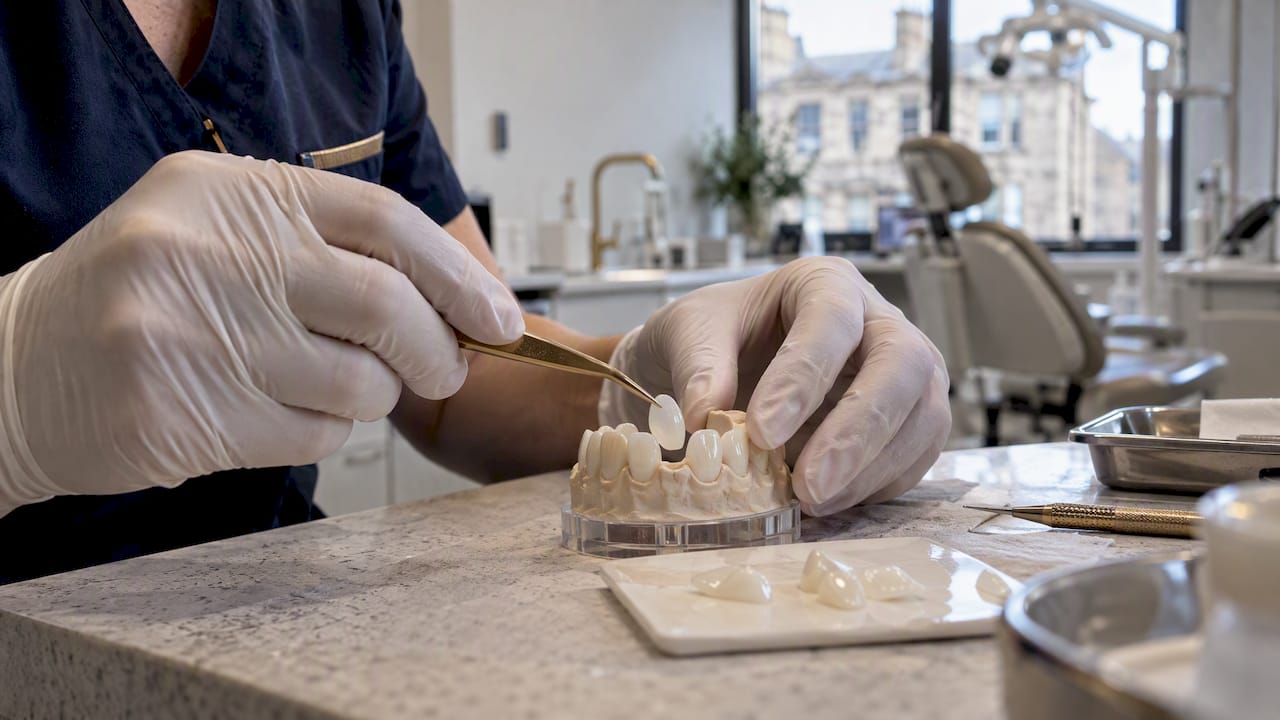
No prep veneers suit people with reasonably healthy, well-aligned teeth who want a conservative way to improve colour or shape without losing enamel, but they demand strict case selection and real skill from the clinician fitting them. The main trade-off is aesthetic: push the technique onto the wrong tooth and you risk a bulky, unnatural result. Suitability, cost and long-term care all hinge on getting that selection right.
TL;DR:
- No-prep veneers are suitable only for patients with sufficient healthy enamel and minor cosmetic concerns, not for heavily misaligned or damaged teeth.
- Proper case selection is crucial, as over-contouring and hygiene issues around margins can compromise aesthetics and longevity.
- The typical cost for porcelain no-prep veneers starts from around £399 per tooth in the UK, with composite options being cheaper at about £200 per tooth.
- Long-term survival rates are high when the technique is applied correctly, but results heavily depend on clinician skill and appropriate case selection.
- Regular maintenance, good oral hygiene, and careful monitoring are essential to maximize the lifespan of no-prep veneers, which can last around ten years or more.
Table of Contents
- What are no prep veneers and what are they made from?
- Benefits and limitations of no prep veneers
- Who is a suitable candidate for no prep veneers?
- What happens during the procedure, from consultation to fitting?
- How much do no prep veneers cost and what drives the price?
- How long do no prep veneers last and what maintenance do they need?
- Choosing a clinician: credentials, consent and what the GDC expects
- A clinician’s view on when no prep veneers earn their place
- Exploring same-day and digital veneer options with us
- FAQ
- Sources
What are no prep veneers and what are they made from?
No prep veneers are thin shells bonded directly onto the enamel surface without the tooth reduction that conventional veneers need. Where a traditional porcelain veneer typically requires grinding down 0.3 to 0.5mm of enamel to make room for the restoration, the no prep approach bonds straight onto the existing tooth structure, provided there is enough room and the right shape to work with.
A few material options come up at consultation:
- Ultrathin lab-made porcelain, hand-layered by a ceramist for natural translucency.
- Branded ultrathin ceramic systems, marketed under names such as Lumineers or DURAthin.
- Direct composite veneers, built up chairside from resin rather than fabricated in a lab.
Thinner porcelain tends to look more lifelike but offers less room to mask heavily discoloured teeth, so the material choice is really a trade-off between translucency and coverage. Composite and porcelain veneers differ in cost, durability and how they’re fitted, which is worth understanding before choosing a route.
Benefits and limitations of no prep veneers
The appeal is straightforward: enamel stays intact, anaesthetic is often unnecessary, and the process can sometimes be reversed if a patient changes their mind, something a ground-down tooth can never offer. A 2021 prospective analysis following patients for a mean of nine years found a 100% survival rate for no prep and minimally invasive veneers when the technique was used in appropriate clinical situations, which is a strong result for a conservative approach.
That figure comes with a condition attached: appropriate case selection. The limitations are real.
- Over-contouring is the most common complaint, since bulk has to go somewhere when no enamel is removed.
- Heavy crowding, significant misalignment or a deep bite can make a natural emergence profile difficult to achieve.
- Margins sit on enamel rather than tucked below the gumline, so hygiene around the edge matters more.
A broader systematic review and meta-analysis on veneer preparation methods found ceramic laminate veneers generally associated with positive periodontal outcomes, though results varied across the studies included.
Pro Tip: Ask to see a digital mock-up before committing. It’s the clearest way to judge whether added bulk will look natural on your specific teeth.
Who is a suitable candidate for no prep veneers?
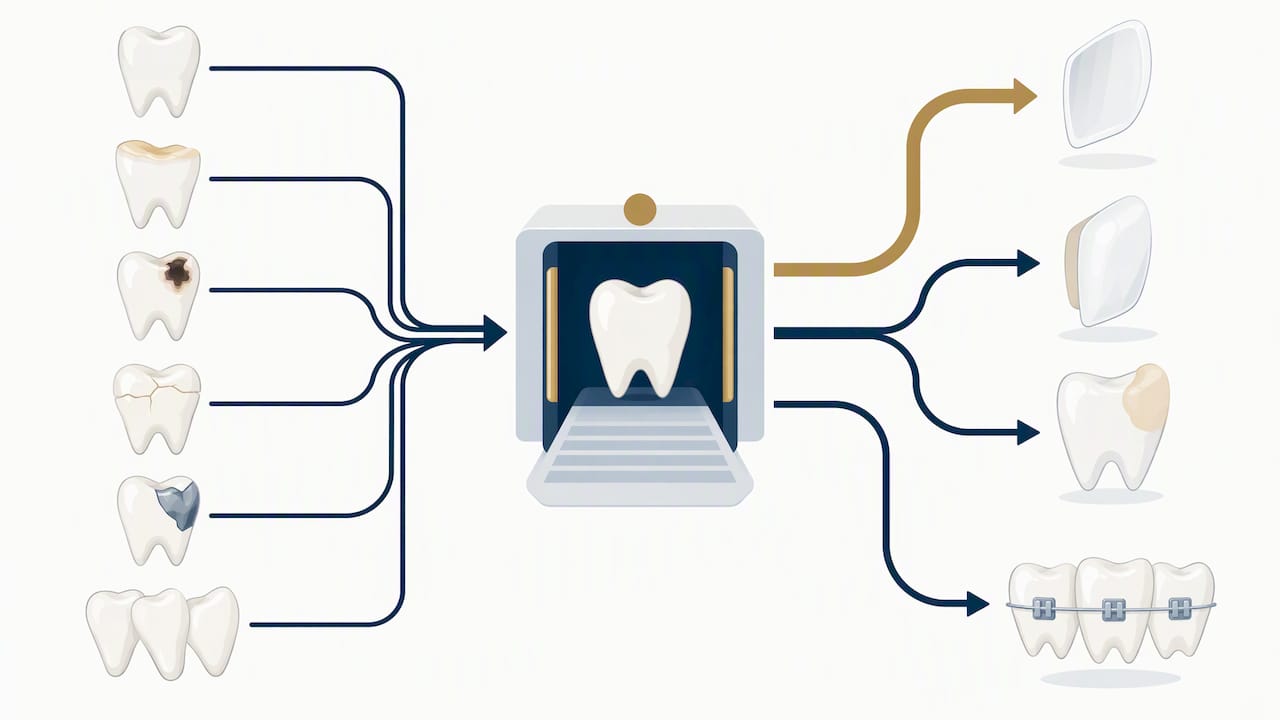
Suitability comes down to what’s already there: enough healthy enamel, a stable bite and teeth that need cosmetic refinement rather than structural correction.
- Healthy gums and enamel with no active decay, large fillings or structural damage.
- A favourable bite without significant overcrowding, severe misalignment or a deep overbite.
- Cosmetic concerns that are mild to moderate, such as small gaps, minor chips, slight discolouration or uneven edges rather than major positional problems.
A retrospective clinical evaluation of a no prep porcelain veneer protocol reported a 97.4% survival rate over a mean 43 months, with the authors stressing that careful patient selection around bite, enamel thickness and alignment was central to that result.
Contraindications include heavy tooth wear, bruxism, large existing restorations, active decay and advanced crowding. Where any of these apply, a dentist will usually discuss minimal-prep veneers, composite bonding or orthodontic alignment as better-matched alternatives.
What happens during the procedure, from consultation to fitting?
The process typically runs across a small number of visits, though digital workflows have shortened this considerably for suitable cases.
- Initial consultation: photographs, intraoral scans and a discussion of goals, with a written treatment plan and cost estimate provided before anything is committed to, in line with GDC consent guidance.
- Digital smile design: the scan feeds into software that previews the proposed shape and size, letting a patient see a mock-up before any veneer is made.
- Production: depending on the clinic’s setup, veneers are produced chairside on the same day or sent to a dental laboratory, which usually adds a short wait.
- Fitting and bonding: each veneer is bonded to the enamel surface using an adhesive protocol, checked for fit and bite, then polished.
- Early aftercare: mild sensitivity in the first 48 to 72 hours is common; sticking to softer foods and avoiding staining drinks during that window helps the bond settle.
Clinics offering a digital smile makeover can sometimes complete the entire journey, from scan to finished veneers, in a single visit.
How much do no prep veneers cost and what drives the price?
Price depends heavily on material and workflow, and UK quotes vary a good deal between clinics. Composite veneers sit at the more affordable end since they’re built directly in the mouth without a laboratory fee, while ultrathin porcelain, hand-layered by a ceramist, sits higher due to the skill and lab time involved. A same-day digital workflow, where scanning, design and fitting happen in one visit, often commands a premium over a multi-appointment lab-based process.
Several factors move the final figure:
- Material: composite resin is typically cheaper per tooth than porcelain.
- Number of teeth treated: a full smile costs proportionally more than one or two teeth.
- Laboratory skill and turnaround: hand-finished ceramic work from an experienced technician costs more than standardised branded systems.
- Aftercare and repairs: reviews, polishing and any repair work are sometimes priced separately from the initial fitting.
A broad literature review found that veneer survival is rarely 100% once preparation extends into dentine, reinforcing why staying within enamel, as no prep techniques aim to do, tends to support better long-term outcomes.
When comparing quotes, check whether the estimate includes the consultation, any digital mock-up, the fitting itself and a defined period of aftercare, since clinics bundle these differently. Composite bonding at TJ Smile Studio starts from £200 per tooth, while porcelain veneers start from £399 per tooth, giving a sense of where composite and porcelain options typically sit relative to each other.
How long do no prep veneers last and what maintenance do they need?
Lifespan depends on material, bite forces and how well margins are maintained, but the evidence is reassuring for well-selected cases. Beyond the 9-year and 43-month survival data already cited, NHS patient information notes that porcelain veneers generally need replacing after roughly ten years, which gives a useful benchmark across veneer types generally, not just no prep designs.
Common problems to watch for include:
- Debonding: a veneer lifting away from the enamel, usually at the margin.
- Chipping: more likely in composite than porcelain, especially under bite forces.
- Marginal staining: discolouration creeping in at the edge over time.
- Secondary decay: decay developing beneath or around a veneer if hygiene around the margin slips.
A simple maintenance routine, consistent brushing and flossing, a night guard for anyone who grinds their teeth, and regular dental reviews, does most of the work in keeping veneers on track for their expected lifespan. Those using home teeth whitening alongside veneers should be aware that whitening gels affect natural enamel but not porcelain or composite, so colour matching needs planning in advance.
Choosing a clinician: credentials, consent and what the GDC expects
No prep veneers are technically harder to get right than conventional ones, since there’s no room to hide behind tooth reduction if margins aren’t placed with precision. A protocol paper on no prep ultrathin veneers notes that success depends heavily on meticulous margin placement at the tooth’s point of maximum convexity, which is a skill that varies considerably between practitioners.
Before committing, check for:
- GDC registration, which every practising dentist in the UK must hold.
- A portfolio of comparable cases, ideally with honest before-and-after photos rather than only flattering angles.
- A clear written treatment plan and cost estimate, provided before treatment starts.
GDC standards on communication and consent set out that patients must be given all reasonable treatment options, including the option of no treatment, and must receive a signed plan with realistic costs before work begins. A clinician who skips this step, or can’t clearly explain why no prep suits your teeth specifically, is a reasonable red flag.
Pro Tip: Ask directly how many no prep cases the clinician has completed and what happens if a veneer needs replacing early. A confident, specific answer says more than any marketing photo.
A clinician’s view on when no prep veneers earn their place
I’d recommend no prep veneers when the bite is stable, enamel is sufficient, and the cosmetic concern is genuinely minor, not as a universal shortcut to a different smile. Expectation-setting matters as much as the bonding protocol itself: a patient who understands the maintenance routine and accepts the limits of what conservative treatment can achieve tends to be far happier years later than one sold a transformation the technique was never designed to deliver.
— Dr Tashfeen Jamil BDS, MFDS RCS Ed, AssocFCGDent - GDC 286427
Exploring same-day and digital veneer options with us
When no prep veneers are the right fit, we build the entire process around a fully digital workflow, from intraoral scanning through to a finished smile, often completed in a single visit through our Same-Day Hybrid Veneers. Every plan is led personally by Dr Tashfeen Jamil, so the same clinician who designs your mock-up is the one bonding the final result.
A consultation is where we work out whether no prep, minimal-prep or composite bonding suits your teeth, using scans and a digital preview before anything is committed to.
- A Smile Consultation is a focused first step to assess suitability and talk through realistic options.
- Our Veneers page sets out the materials and approach we use for porcelain and hybrid veneer cases.
- Pricing for consultations, veneers and related reviews is listed on our pricing page.
If you’re weighing up whether your teeth are a good match for a conservative, enamel-preserving approach, book a Smile Consultation and we’ll give you a straight answer.
This article is general information, not a substitute for advice from a qualified doctor. Consult a qualified healthcare professional about your own circumstances before acting on anything here.
FAQ
Are no-prep veneers any good?
They’re a strong option for well-selected patients: a 2021 prospective analysis reported a 100% survival rate over a mean nine years when used appropriately. Outcomes depend heavily on case selection and the skill of the clinician placing them, so they aren’t equally suited to everyone.
Do teeth rot under no-prep veneers?
Decay can develop beneath any veneer if the margin isn’t kept clean, but no prep veneers sit on enamel rather than extending below the gumline, which generally makes hygiene more manageable. Regular reviews and consistent brushing and flossing around the margin are the main ways to prevent secondary decay.
How much does a no-prep veneer cost?
Cost depends on material and workflow: composite veneers sit at the more affordable end, while hand-layered ultrathin porcelain costs more due to laboratory skill and time. At TJ Smile Studio, porcelain veneers start from £399 per tooth and composite bonding starts from £200 per tooth.
How much do no-prep veneers cost in the UK?
UK pricing varies by clinic, material and number of teeth treated, with composite generally cheaper than porcelain and same-day digital workflows sometimes carrying a premium. Getting a written estimate that separates consultation, fitting and aftercare costs is the clearest way to compare quotes fairly.
Sources
- Prospective analysis reporting long‑term survival of no‑prep/minimally invasive veneers
- Systematic review and meta‑analysis on veneer preparation methods and periodontal status
- How patient consent can help build trust and confidence — GDC blog
- Retrospective clinical evaluation of a no‑prep porcelain veneer protocol
Recommended
This article is general information, not personal dental advice. What’s right for your teeth depends on a clinical examination — the condition of your enamel, gums, bite and any existing dental work — and no article can assess that. Outcomes vary between patients, and all treatment at TJ Smile Studio is subject to assessment and clinical suitability.
- Dr Tashfeen Jamil BDS, MFDS RCS Ed, AssocFCGDent, PGDip Restorative and Aesthetic Dentistry — GDC registration 286427
This article is general information, not personal dental advice. What's right for your teeth depends on a clinical examination — the condition of your enamel, gums, bite and any existing dental work — and no article can assess that. Outcomes vary between patients, and all treatment at TJ Smile Studio is subject to assessment and clinical suitability.
Clinically reviewed by Dr Tashfeen Jamil BDS, MFDS RCS Ed, AssocFCGDent, PGDip Restorative and Aesthetic Dentistry — GDC registration 286427, Principal Dentist at TJ Smile Studio, 1 Spiersbridge Way, Thornliebank, Glasgow G46 8NG.
If you have dental pain, swelling or an injury, call the practice on 07728 808510. Out of hours in Scotland, call NHS 24 on 111.