
07 September 2026 · TJ Smile Studio
Same Day Hybrid Veneers in Glasgow: Two Types, Which Suits You
Compare the two hybrid veneer approaches — prefabricated composite shells and CAD/CAM hybrid ceramic — and find when a same-day treatment in Glasgow is...
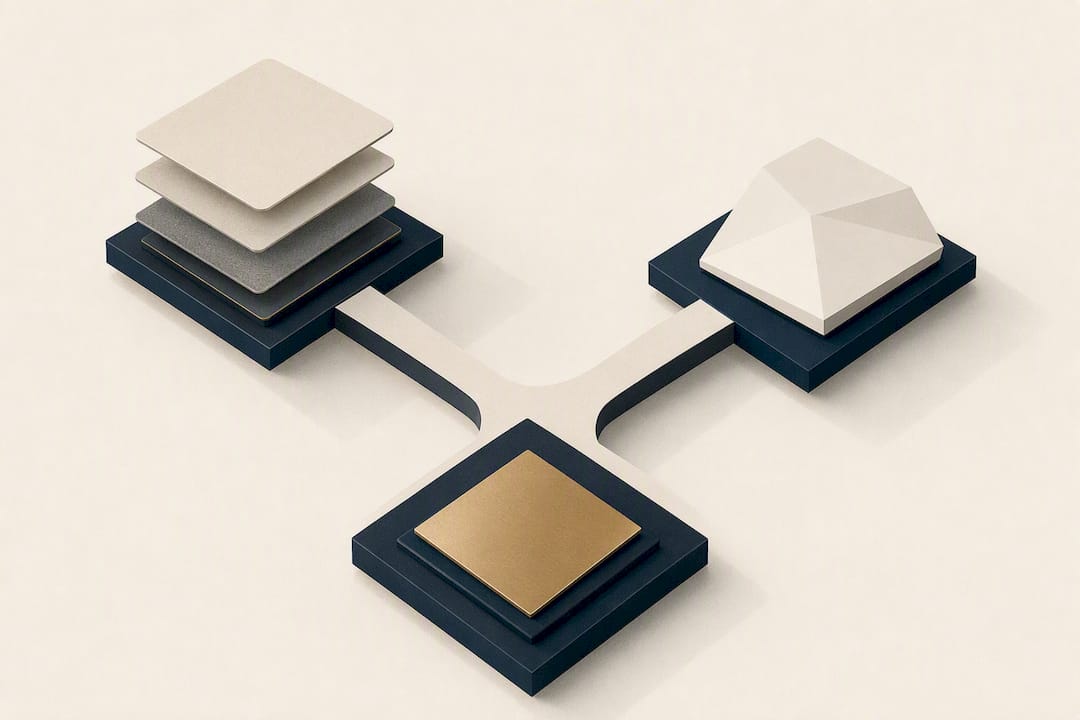
Hybrid veneers cover two distinct products, prefabricated composite shells and CAD/CAM hybrid ceramic restorations, both bonded onto teeth with minimal preparation, often in a single visit. They suit patients wanting a quick, conservative smile upgrade on a moderate budget. The trade-off is colour stability over years, which porcelain still edges out.
TL;DR:
- Hybrid veneers include prefabricated composite shells and milled hybrid ceramics, each with different bonding, trimming, and fit properties.
- Hybrid ceramics offer a more durable, color-stable option than composite shells but do not yet have confirmed long-term longevity like porcelain.
- The procedure typically involves minimal prep, digital planning, and can often be completed in a single appointment with careful case selection.
- Heavy grinding or bruxism increases the risk of wear and chipping, making a night guard or alternative materials more suitable for such patients.
- Costs range between direct composite bonding and porcelain, with material choice and case complexity influencing the final price; detailed quotes are essential.
Table of Contents
- What are hybrid veneers, and what are the two types?
- How do hybrid veneers compare with composite and porcelain?
- What happens during a same-day hybrid veneer appointment?
- Durability, maintenance, and what actually shortens lifespan
- Who actually suits hybrid veneers, and who should think twice?
- What do hybrid veneers cost compared with composite and porcelain?
- The clinical view on hybrid veneers in practice
- Why “hybrid” gets oversimplified, and what to focus on instead
- Considering same-day hybrid veneers in Glasgow?
- Sources
- FAQ
What are hybrid veneers, and what are the two types?
“Hybrid veneers” is not one product. It is a category, and mixing up the two families inside it causes most of the confusion patients bring into a consultation.
The first type is the prefabricated composite shell, best known through the Componeer system from Coltène. These are thin, pre-polymerised nano-hybrid composite shells manufactured off-site, then trimmed and bonded chairside to the tooth. No lab, no milling machine, just a dentist selecting a shape and shade, adjusting the fit, and bonding.
The second is the hybrid ceramic, a CAD/CAM material such as VITA Enamic. This is a resin-ceramic network, not a coating of one over the other, milled from a solid block to an exact digital design.
The clinical difference matters:
- Prefabricated shells favour speed and tooth conservation but rely on the clinician’s manual trimming skill for the final fit.
- Hybrid ceramics offer digitally precise fit and can be milled to wall thicknesses as thin as 0.2mm while staying edge-stable.
- Both polish up well chairside, which matters more than it sounds, since a rough margin is where staining and plaque start.
How do hybrid veneers compare with composite and porcelain?
Every material here sits on a spectrum, not in separate boxes. Hybrids were engineered to occupy the middle ground between fully direct composite bonding and traditional feldspathic or lithium disilicate porcelain, and they mostly succeed, with one clear exception.
Durability and lifespan lean toward porcelain for anyone wanting decades, not years. A 2016 materials review found hybrid ceramics show encouraging short-term survival with genuinely improved damage tolerance over brittle glass-ceramics, but the same review flags that independent long-term data are still thin. Nobody should quote you a confident 20-year figure for a hybrid ceramic veneer, because that data simply does not exist yet.
Aesthetics and shade stability are where the trade-off actually bites. Hybrid ceramics hold colour better than composite shells because the resin content is lower and the network is denser. Prefabricated composite shells, by contrast, stain more over time than glass-ceramic porcelain, particularly with red wine, coffee, or smoking.
Invasiveness and repairability flip the advantage back toward hybrids. Both hybrid types need less tooth reduction than porcelain, and both are far easier to repair chairside than a cracked porcelain veneer, which usually means a full remake.
Here’s how the priorities stack up:
| Priority | Best fit |
|---|---|
| Maximum lifespan, minimal staining | Porcelain |
| Same-day treatment, easiest repair | Prefabricated composite shells |
| Precise digital fit, better colour hold than composite | Hybrid ceramic (CAD/CAM) |
| Lowest cost, most conservative option | Direct composite bonding |
Heavy bite forces push the decision toward hybrid ceramic or porcelain over composite shells, which wear faster under grinding.
What happens during a same-day hybrid veneer appointment?
Same-day is the whole point of hybrid veneers, and the workflow, while it varies slightly between prefabricated shells and milled ceramic, follows a similar arc.
- Assessment and digital planning. A scan or shade and shape selection happens first. CAD/CAM cases get a full intraoral scan sent to a milling unit on-site; prefabricated cases involve choosing from a shell library matched to tooth size and desired shape.
- Minimal preparation. Both approaches typically need only light enamel contouring, not the significant reduction porcelain veneers often demand.
- Trial fit. Shells are trimmed to fit; milled ceramic pieces are checked against the model before bonding.
- Bonding and finishing. Adhesive cement locks the restoration in place, followed by polishing to blend the margins.
- Aftercare briefing. Mild sensitivity to temperature is common for a day or two. Straightforward cases are typically finished within a single appointment lasting a few hours, depending on how many teeth are involved.
Durability, maintenance, and what actually shortens lifespan
Lifespan estimates for hybrid veneers deserve a caveat before a number. Case reports show strong short-term satisfaction and fit, but independent, long-term survival data remain limited, so treat any precise “lasts X years” claim with scepticism, whichever clinic makes it.
Failure tends to follow a pattern rather than happen randomly:
- Composite shells stain gradually at the margins and surface, faster than porcelain.
- Hybrid ceramics wear less on opposing teeth than harder glass-ceramics do, because hybrid materials sit closer to dentine in hardness, a genuine advantage for people who grind.
- Chipping and debonding are the main risks for both hybrid types under heavy load, more so than for porcelain.
Pro Tip: If you grind your teeth at night, ask specifically about a protective night guard before treatment, not after a veneer chips. The polymer content in hybrid materials makes them more wear-prone than porcelain under sustained clenching, and a guard is far cheaper than a repair.
Routine polishing at check-ups, ordinary tooth-friendly hygiene, and avoiding biting hard objects (ice, pen lids) all extend the working life of either hybrid type.
Who actually suits hybrid veneers, and who should think twice?
Hybrid veneers work best for people correcting one tooth or a small group at the front of the mouth, who want speed and minimal drilling over maximum permanence.
They suit:
- Patients wanting a same-day result for a specific event or deadline.
- Anyone prioritising tooth conservation over the absolute best possible shade match.
- Budget-conscious patients who want more durability than direct bonding without paying full porcelain prices.
Red flags worth raising at consultation:
- Significant bruxism or heavy grinding without a night guard plan in place.
- Very high aesthetic demands where a lifetime of flawless colour matters more than convenience.
- Extensive structural tooth damage that needs more than a thin facing to fix.
Ask directly: which hybrid material is being used, what’s the repair pathway if it chips, is a night guard included, and what lifespan does the clinician actually expect, in writing.
What do hybrid veneers cost compared with composite and porcelain?
Hybrid veneers generally price above direct composite bonding and below full porcelain, though the exact position shifts with lab involvement and shading complexity.
Cost drivers to expect on a quote:
- Whether the restoration is a prefabricated shell (less lab time) or a milled CAD/CAM piece (more digital design work).
- Bespoke shading and translucency matching for a natural, blended smile.
- Number of teeth treated, since per-tooth cost drops slightly on larger cases.
Composite shells sit closer to bonding prices; hybrid ceramics sit closer to porcelain, without quite reaching it. Ask for an itemised written treatment plan before booking, including what happens if a tooth needs adjustment later, and check whether a deposit is refundable. Full detail on pricing and packages should be available before you commit to anything.
The clinical view on hybrid veneers in practice
Dr Tashfeen Jamil BDS, MFDS RCS Ed, AssocFCGDent (GDC 286427) applies both hybrid families within a fully digital, same-day workflow. In practice, the choice between prefabricated composite and CAD/CAM ceramic depends on how many teeth need correcting, the bite pattern, and how much the patient values speed against long-term colour stability, with same-day digital planning making either route achievable in one appointment.
Why “hybrid” gets oversimplified, and what to focus on instead
The biggest problem with how hybrid veneers get discussed online is the assumption that “hybrid” means one predictable, middle-ground product. It doesn’t. A prefabricated composite shell and a milled hybrid ceramic restoration behave differently enough, in staining resistance, wear pattern, and repair strategy, that lumping them together does patients a disservice.
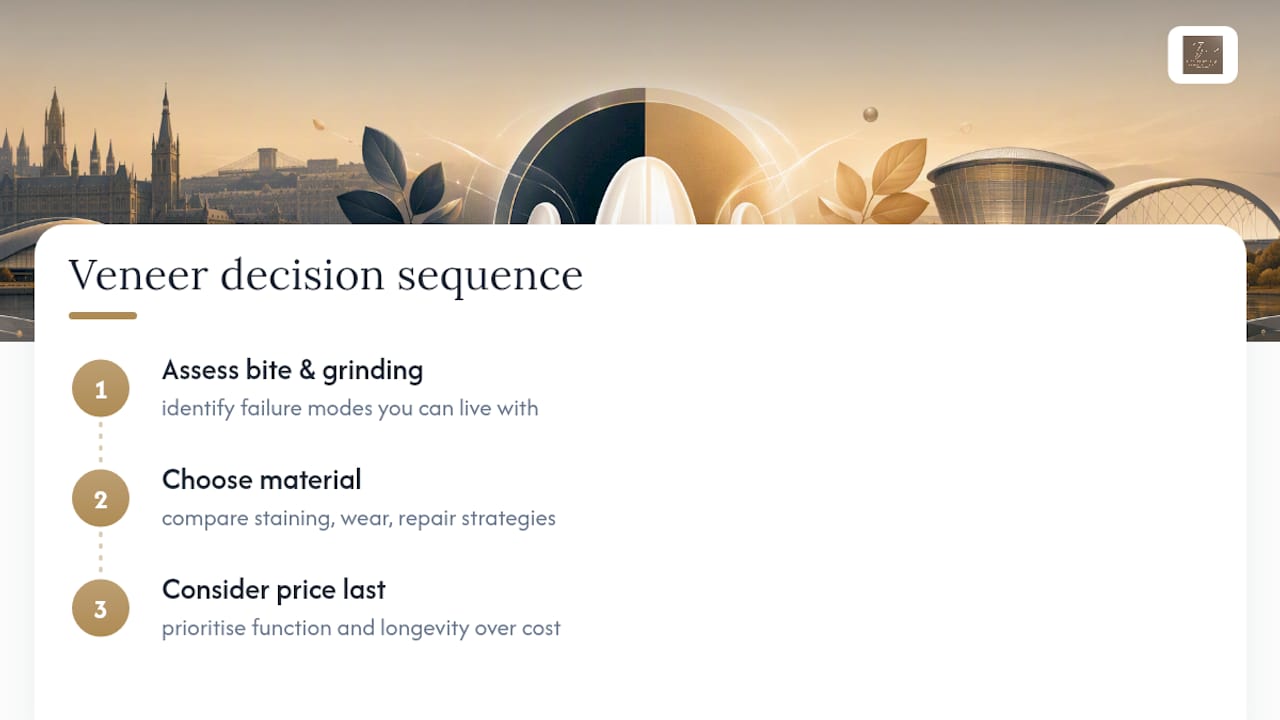
Conventional advice tends to frame the decision as porcelain versus “everything else,” ranking materials purely by price. That misses the more useful question: what failure mode can you live with? Colour drift from a composite shell is a cosmetic annoyance fixed with a touch-up. A cracked porcelain veneer is usually a full remake. For patients who grind, hardness that’s too close to natural enamel or ceramic can actually work against the opposing teeth, which is why hybrid materials, sitting closer to dentine in hardness, have a genuine mechanical argument in their favour for bruxists, not just a budget one.
My honest priority order for anyone weighing this up: identify your bite pattern and grinding habits first, then decide on material, then worry about price last. Getting that sequence backwards is how people end up disappointed by a technically well-made restoration.
— Dr Tashfeen Jamil BDS, MFDS RCS Ed, AssocFCGDent - GDC 286427
Considering same-day hybrid veneers in Glasgow?
Some clinics offer same-day hybrid veneer treatment through a fully digital workflow, allowing many patients to walk out with a finished smile the same day rather than waiting weeks for lab-made porcelain. This can reduce chair time, waiting, and allow a conservative approach to tooth preparation.
Alongside same-day hybrid veneers, the clinic offers digital smile makeovers and composite bonding for patients whose goals suit a simpler fix. Before booking, browse real before-and-after cases to see how hybrid and composite results compare on actual patients. If you’re ready to find out which approach fits your bite and budget, book a consultation to get a personalised plan and a written quote before any treatment begins.
Sources
For deeper technical detail, see VITA Enamic’s minimally invasive veneer case reports, the Compendium review of hybrid CAD/CAM materials, and Coltène’s Componeer product data. For general dental marketing insight, see Honey Badger SEO’s dental practice guidance.
This article is general information, not a substitute for advice from a qualified doctor. Consult a qualified healthcare professional about your own circumstances before acting on anything here.
- Key parameters of hybrid materials for CAD/CAM-based restorative dentistry | Compendium
- Minimally invasive veneer restoration with hybrid ceramic VITA ENAMIC multiColor
- Componeers Vs Porcelains (Coltène product brief / IJSR extract)
FAQ
What is a hybrid veneer?
A hybrid veneer is either a prefabricated composite shell (like Componeer) or a milled hybrid ceramic restoration (like VITA Enamic), both bonded to the tooth with minimal preparation, often in one visit.
How much does a full set of composite veneers cost in the UK?
Prices vary by clinic, number of teeth, and material choice, with composite-based options generally cheaper than porcelain. Ask any UK clinic for an itemised written quote before committing, since per-tooth and full-set pricing differ significantly.
Which veneers look the most natural?
Porcelain still edges out other materials on long-term colour depth and translucency, but hybrid ceramics like VITA Enamic come close thanks to integrated shade and translucency gradients built into the milled block.
What are the three main types of veneers?
The three broad categories are direct composite bonding, hybrid veneers (prefabricated composite shells or CAD/CAM hybrid ceramic), and traditional porcelain veneers, each differing in cost, invasiveness, and durability.
How long do hybrid veneers last?
Case reports show strong short-term results, but independent long-term survival data are still limited, so no clinic can honestly promise a precise number of years upfront.
Recommended
This article is general information, not personal dental advice. What’s right for your teeth depends on a clinical examination — the condition of your enamel, gums, bite and any existing dental work — and no article can assess that. Outcomes vary between patients, and all treatment at TJ Smile Studio is subject to assessment and clinical suitability.
- Dr Tashfeen Jamil BDS, MFDS RCS Ed, AssocFCGDent, PGDip Restorative and Aesthetic Dentistry — GDC registration 286427
This article is general information, not personal dental advice. What's right for your teeth depends on a clinical examination — the condition of your enamel, gums, bite and any existing dental work — and no article can assess that. Outcomes vary between patients, and all treatment at TJ Smile Studio is subject to assessment and clinical suitability.
Clinically reviewed by Dr Tashfeen Jamil BDS, MFDS RCS Ed, AssocFCGDent, PGDip Restorative and Aesthetic Dentistry — GDC registration 286427, Principal Dentist at TJ Smile Studio, 1 Spiersbridge Way, Thornliebank, Glasgow G46 8NG.
If you have dental pain, swelling or an injury, call the practice on 07728 808510. Out of hours in Scotland, call NHS 24 on 111.