30 September 2026 · TJ Smile Studio
UK Hybrid Veneers: £350–£550 Per Tooth Now, Cost Over 20 Years
Compare UK hybrid veneer prices (£350–£550 per tooth) and 10–20 year lifetime costs. Clinician insight and how to get a same day quote from TJ Smile Studio.

Hybrid veneers usually cost more than simple composite bonding but less than porcelain, sitting at roughly £350 to £550 per tooth as a private UK price band. The NHS does not cover cosmetic veneers in almost any circumstance, so this is a private-pay decision. That lower upfront price can reverse over time, since hybrid materials tend to need replacing sooner than porcelain.
TL;DR:
- Hybrid veneers typically cost between £350 and £550 per tooth in the UK, but their longer-term costs may surpass simpler composite bonding due to shorter replacement intervals.
- The material used—pre-formed composite, milled hybrid-ceramic, or porcelain—significantly influences the price, durability, and tooth preparation required.
- Replacing composite or hybrid veneers every 5 to 7 years can add up over two decades, making porcelain veneers more cost-effective long-term despite higher initial prices.
- Same-day hybrid veneers are prepared and fitted within a single appointment through in-house digital workflows, whereas porcelain veneers require multiple visits over several weeks.
- A detailed treatment plan including scans, follow-ups, warranty, and financing options is essential to avoid unexpected costs and make an informed decision.
Table of Contents
- 1. Cost breakdown: per-tooth prices and package totals
- 2. What hybrid veneers are and how they differ from composite and porcelain
- 3. What drives the price: clinician skill, materials and guarantees
- 4. Longevity and long-term cost: replacement cycles over 10 to 20 years
- 5. Treatment process: same-day hybrid versus multi-visit porcelain
- 6. How to budget and finance veneers without surprises
- 7. Clinician perspective: choosing between hybrid, composite and porcelain
- 8. Getting a same-day hybrid veneer quote from TJ Smile Studio
- Sources
- FAQ
1. Cost breakdown: per-tooth prices and package totals
Composite veneers typically run £150 to £400 per tooth, porcelain veneers £500 to £1,200 per tooth, and hybrid materials sit between the two because they use denser, more stain-resistant composite or a milled hybrid-ceramic block rather than layered resin applied by hand. The exact figure depends on whether your dentist is using a pre-formed hybrid shell fitted in one visit or a CAD/CAM milled block that needs lab time.
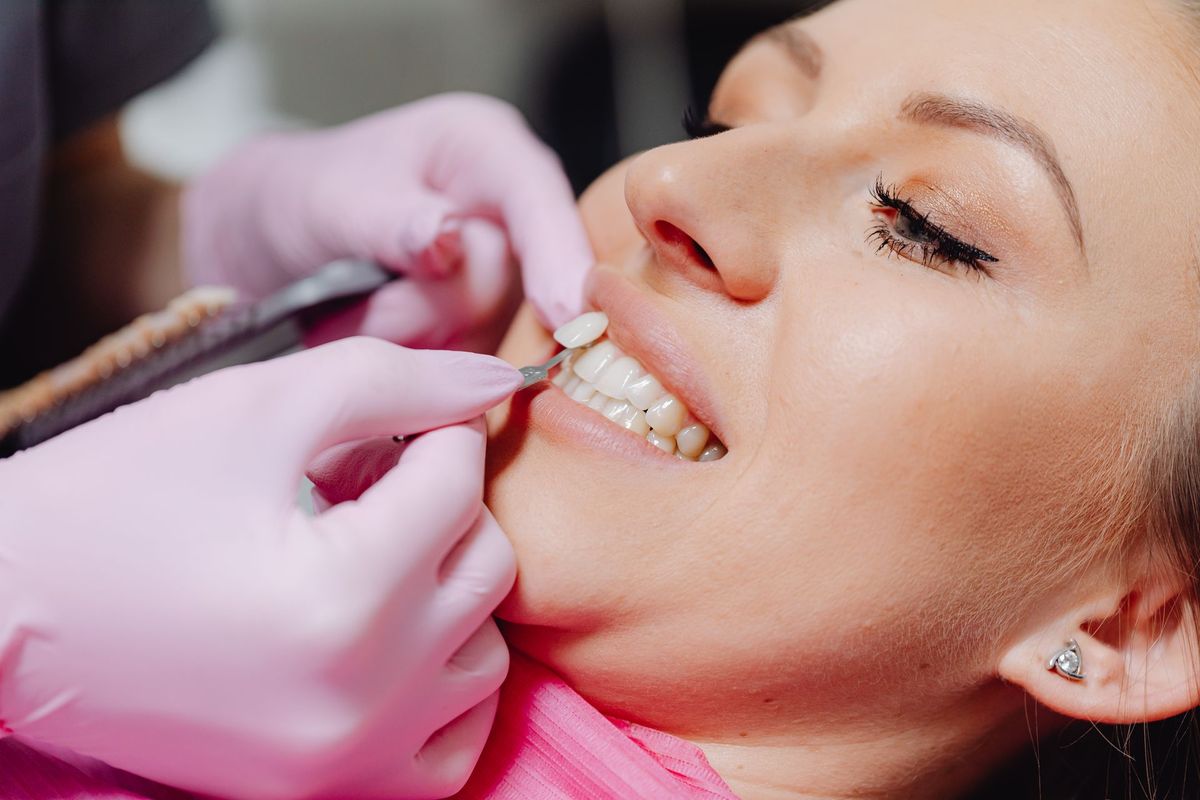
Regional location changes the maths too. Private dental prices in London and the South East typically carry a 5% to 15% premium over the rest of the country, while porcelain veneers outside London can run as low as £450 to £900 per tooth.
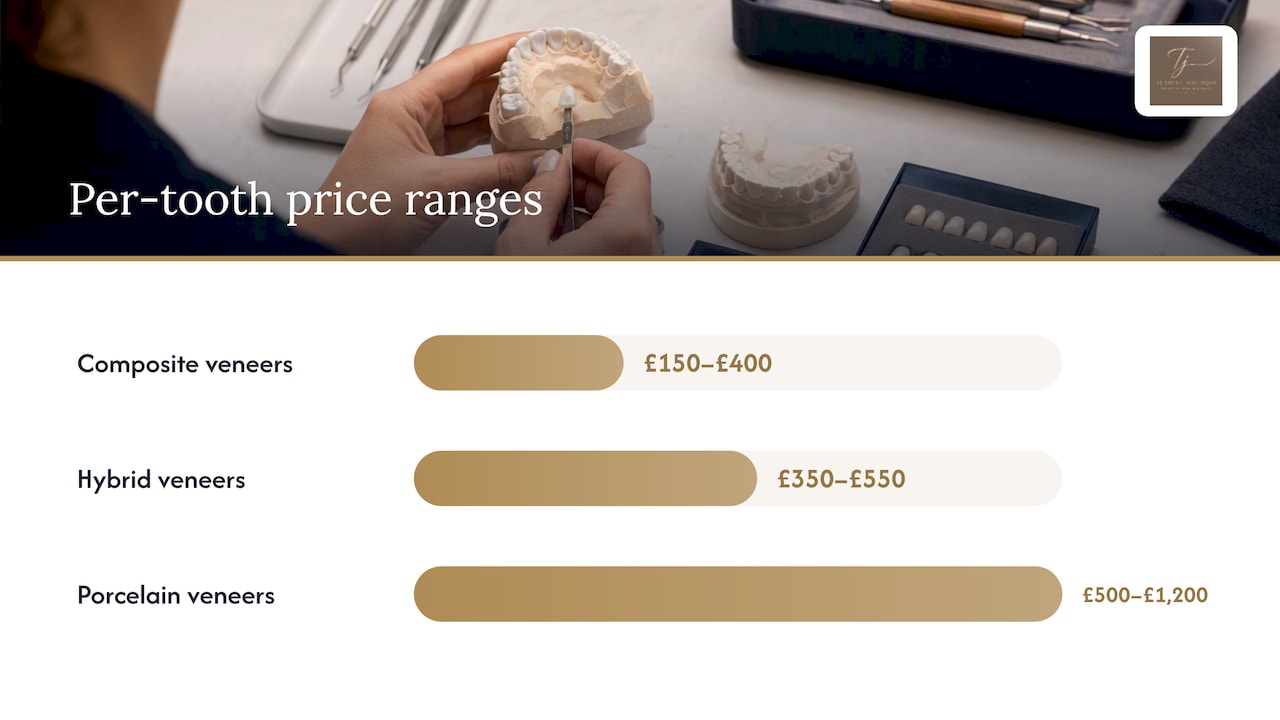
*Full smile makeover totals reflect the combined market range for larger cases, which varies heavily by material mix and region.
A quoted “from” price rarely covers everything. Before you commit, check whether these are included:
- Digital scans or impressions needed to plan the case.
- Temporary veneers worn while permanent ones are made.
- Follow-up appointments to check fit and bite.
- Laboratory fees for milled or hand-layered restorations.
2. What hybrid veneers are and how they differ from composite and porcelain
Direct composite bonding is resin applied and shaped by hand, chairside, in a single sitting. Porcelain veneers, often made from lithium disilicate (Emax), are thin ceramic shells fabricated in a lab and bonded on in a second visit. Hybrid veneers fall in between: the term covers both pre-formed nano-hybrid composite shells fitted in one visit and hybrid-ceramic veneers milled from a CAD/CAM block, so the material and process behind the word “hybrid” can vary from one clinic to another.
The practical differences matter more than the label. Porcelain generally needs more tooth preparation and is not reversible, while composite and most hybrid approaches are more conservative of natural tooth structure. Lab involvement, chair time, and stain resistance all shift depending on which hybrid material a dentist actually uses.
- Ask exactly which material is being used: pre-formed composite, milled hybrid-ceramic, or something else.
- Ask how the price compares with straightforward composite bonding and with porcelain.
- Ask what warranty or guarantee period applies to the finished result.
Pro Tip: Ask your dentist to write the exact material name on your treatment plan, not just “hybrid veneers”: it is the only way to compare quotes between clinics fairly.
3. What drives the price: clinician skill, materials and guarantees
Two quotes for what sounds like the same treatment can differ by hundreds of pounds per tooth, and the gap usually comes down to a few factors.
- Clinician experience: specialist or senior cosmetic dentists typically charge more than general practitioners doing occasional veneer work.
- Workflow: in-house CAD/CAM same-day systems cut lab fees but require expensive equipment, which some clinics price into the treatment. Lab-made restorations add a separate lab bill on top of chair time.
- Material grade: higher-grade composites and ceramics with better stain resistance and translucency cost more than basic materials.
- Pre-treatment needs: orthodontic alignment, whitening or restorative work before veneers are fitted adds separate costs that a headline veneer price will not include.
- Warranty and aftercare: a longer guarantee period, with reviews and repairs included, reflects a different value proposition than a one-off price with no aftercare built in.
Reading a quote for what it actually includes, not just the headline number, is the single most useful habit when comparing clinics.
4. Longevity and long-term cost: replacement cycles over 10 to 20 years
Composite and hybrid veneers generally last 5 to 7 years before needing repair or replacement, while porcelain veneers typically last 10 to 20 years or more with good care. That gap changes the maths considerably once you look beyond the first bill.
Over 20 years, repeated composite or hybrid work can end up costing as much as, or more than, a single porcelain set placed once and maintained. This is borne out in UK cost comparisons that model replacement cycles against a one-time porcelain cost.
- Composite/hybrid on 6 teeth: initial cost plus 2 to 3 replacement cycles over 20 years.
- Porcelain on 6 teeth: one initial cost, plus occasional repairs or a single replacement.
- Maintenance such as polishing and small repairs adds modest recurring costs to either material.
- Habits like teeth grinding, staining foods and drinks, and oral hygiene routines all affect how long either material actually lasts.
5. Treatment process: same-day hybrid versus multi-visit porcelain
The biggest practical difference between hybrid and porcelain is time, not just money.
- Consultation and digital scan: both pathways start here, mapping the smile design and agreeing on shade and shape.
- Same-day hybrid route: shells or milled restorations are prepared, fitted and adjusted in a single appointment, often a few hours, using an in-house digital workflow.
- Porcelain route: teeth are prepared, temporary veneers fitted, impressions sent to a lab, and the finished porcelain veneers bonded in at a second visit, typically 2 to 3 weeks later.
- Follow-up: both pathways usually include a check appointment shortly after fitting, with further reviews recommended over the following year.
A step-by-step overview of veneer appointments is useful background if you want more detail on how clinics typically sequence preparation and fitting.
6. How to budget and finance veneers without surprises
Getting a reliable estimate before you commit protects you from add-on costs later. GDC standards require that dentists obtain valid consent and provide a written treatment plan with a realistic cost estimate before starting work, so ask for this in writing.
Before booking, ask a clinic:
- What is the total cost including scans, temporaries and follow-ups?
- Who actually performs the treatment: the dentist you met, or someone else?
- What warranty period applies if a veneer chips or comes loose?
- Are there 0% finance options, and what would monthly repayments look like for your case?
Pro Tip: If the full price feels out of reach, ask whether starting with limited composite bonding on 2 to 4 teeth, or a course of whitening first, gets you most of the visual improvement at a fraction of the cost.
7. Clinician perspective: choosing between hybrid, composite and porcelain
Dr Tashfeen Jamil BDS, MFDS RCS Ed, AssocFCGDent, GDC 286427, leads treatment planning at TJ Smile Studio, and the clinical picture is rarely just about price. Composite suits patients wanting a reversible, lower-cost starting point. Hybrid materials fit those who want faster turnaround and better stain resistance without the full porcelain commitment. Porcelain remains the choice for anyone prioritising permanence and the lowest cost per year over two decades. Cost and value are discussed openly at consultation, before any treatment plan is agreed.
— Dr Tashfeen Jamil BDS, MFDS RCS Ed, AssocFCGDent - GDC 286427
8. Getting a same-day hybrid veneer quote from TJ Smile Studio
TJ Smile Studio offers Same-Day Hybrid Veneers built on a fully digital workflow, so many patients leave with a finished smile in a single visit rather than waiting weeks for lab-made porcelain. Every case is personally planned by Dr Tashfeen Jamil, which means the same clinician who scans your teeth is the one shaping and fitting the final result.
Getting a quote starts with a consultation, where you will see:
- A digital smile scan and proposed design.
- A written treatment plan with total cost, not just a per-tooth “from” figure.
- Available finance options for larger cases.
If composite bonding or a fuller Digital Smile Makeover suits your goals better, those are covered in the same consultation. Full pricing and packages are listed on the clinic site, alongside the veneers service page for treatment details.
Sources
- NHS — how much NHS dental treatment costs
- Veneers cost UK 2026 — DentistCost
- NHSBSA — NHS dental charges (Band guidance)
- General Dental Council — principle 3: obtain valid consent
FAQ
Does Kate Middleton have porcelain veneers?
There is no verified dental information publicly available on this. Speculation about public figures’ cosmetic dental work is common, but it is not something this guide can confirm.
What’s the cheapest type of veneers?
Direct composite bonding is generally the cheapest option, at £150 to £400 per tooth privately. It is also reversible and needs less tooth preparation than porcelain or most hybrid options.
How much do 2 front teeth veneers cost?
For 2 teeth, composite bonding typically runs £300 to £800, while porcelain runs £1,000 to £2,400. Hybrid options generally sit between these two ranges, depending on the exact material and clinic.
What is a cheaper alternative to veneers?
Composite bonding is the most common lower-cost alternative, reshaping and covering teeth without the lab work porcelain needs. Professional teeth whitening can also improve a smile’s appearance at a lower cost when discolouration, rather than shape, is the main concern.
Are hybrid veneers worth the cost compared with composite?
Hybrid veneers cost more upfront than basic composite bonding but tend to offer better stain resistance and a faster same-day fit than lab-made porcelain. Whether they are worth it depends on how much you value speed and durability against the lowest possible starting price.
Recommended
This article is general information, not personal dental advice. What’s right for your teeth depends on a clinical examination — the condition of your enamel, gums, bite and any existing dental work — and no article can assess that. Outcomes vary between patients, and all treatment at TJ Smile Studio is subject to assessment and clinical suitability.
- Dr Tashfeen Jamil BDS, MFDS RCS Ed, AssocFCGDent, PGDip Restorative and Aesthetic Dentistry — GDC registration 286427
This article is general information, not personal dental advice. What's right for your teeth depends on a clinical examination — the condition of your enamel, gums, bite and any existing dental work — and no article can assess that. Outcomes vary between patients, and all treatment at TJ Smile Studio is subject to assessment and clinical suitability.
Clinically reviewed by Dr Tashfeen Jamil BDS, MFDS RCS Ed, AssocFCGDent, PGDip Restorative and Aesthetic Dentistry — GDC registration 286427, Principal Dentist at TJ Smile Studio, 1 Spiersbridge Way, Thornliebank, Glasgow G46 8NG.
If you have dental pain, swelling or an injury, call the practice on 07728 808510. Out of hours in Scotland, call NHS 24 on 111.