
03 October 2026 · TJ Smile Studio
96.81% Survival at 10.4 Years: Fluorosis Veneers for UK Patients
A UK patient guide to when veneers are the right fix for fluorosis. Compares conservative options, cites 96.81% survival at 10.4 years, and explains...
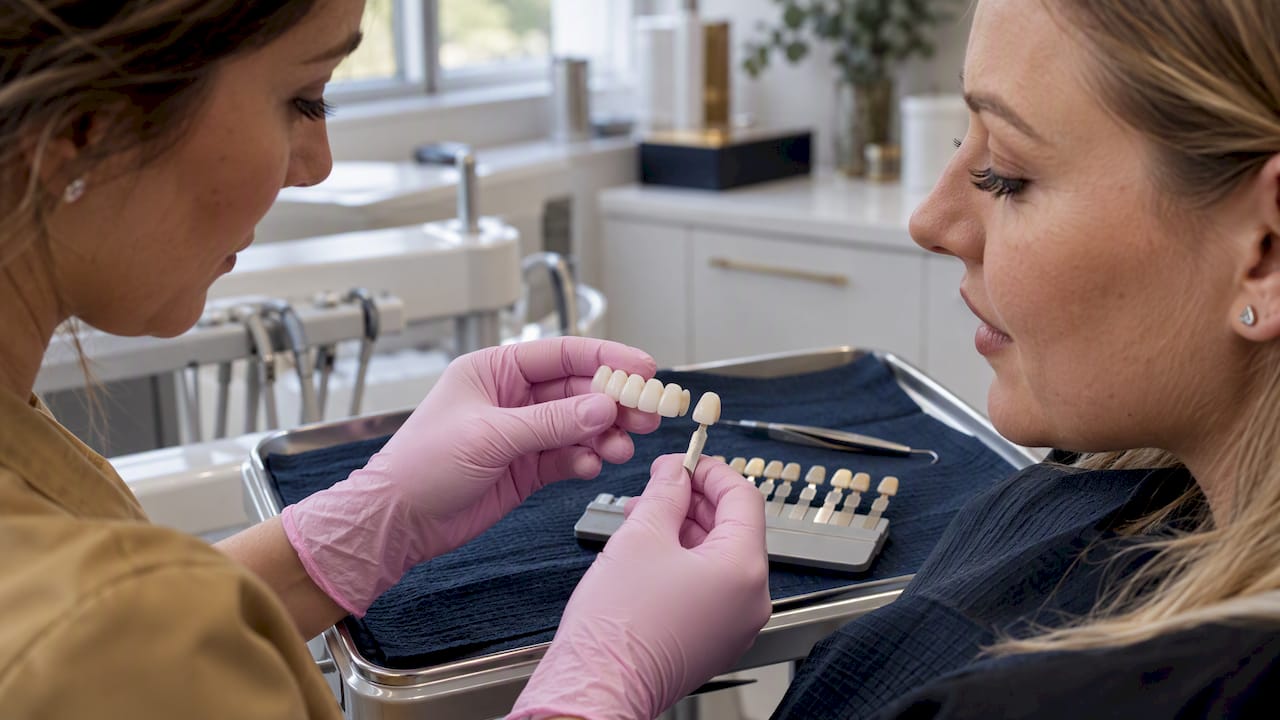
Veneers are a reliable solution for moderate to severe dental fluorosis, particularly where staining runs deep or enamel is pitted. Mild cases often respond well to microabrasion, resin infiltration or bleaching without the need for restorative work. When veneers are indicated, lithium-disilicate and porcelain options bonded correctly to healthy enamel offer strong long-term results.
TL;DR:
- Conservative treatments like resin infiltration combined with bleaching can significantly improve mild fluorosis aesthetics and potentially reduce the need for veneers.
- Bonding to intact enamel using etch-and-rinse techniques and possibly deproteinization is critical for long-term veneer success on fluorosed teeth.
- Patient-specific factors, including age, habits, and enamel condition, influence veneer longevity and require ongoing maintenance like hygiene and habit management.
- Clinicians should prioritize microabrasion, infiltration, or bleaching for mild cases before recommending veneers and ensure case planning considers the severity and bonding protocols.
Table of Contents
- What is dental fluorosis and how do clinicians grade it?
- When are veneers recommended versus conservative options first?
- Which veneer materials work best for fluorosis discolouration?
- What happens during a fluorosis veneer treatment?
- How long do fluorosis veneers last and what maintenance do they need?
- Can conservative treatments reduce the need for veneers?
- How do you choose a clinician for fluorosis veneers?
- What the evidence actually tells us about fluorosis veneers
- Booking a fluorosis assessment at TJ Smile Studio
- FAQ
- Sources
What is dental fluorosis and how do clinicians grade it?
Dental fluorosis develops when a child’s forming teeth are exposed to excess fluoride, leaving enamel hypomineralised from the inside out. It is not a surface stain that wipes away, it is a structural change in the enamel itself, formed years before the tooth ever erupts.
The appearance varies hugely between patients:
- Fine white flecking or lacy patches, often barely noticeable
- Diffuse white opacities covering larger areas of the tooth
- Brown or yellow-brown staining in more affected enamel
- Pitting or surface irregularity where mineralisation was severely disrupted
The severity band, and whether the enamel surface is intact or pitted, determines which treatment path makes sense. A patient with faint flecking has very different options to one with pitted, deeply stained enamel.
When are veneers recommended versus conservative options first?
Clinicians generally work from least invasive to most invasive, reserving veneers for cases where conservative measures cannot deliver an acceptable result.
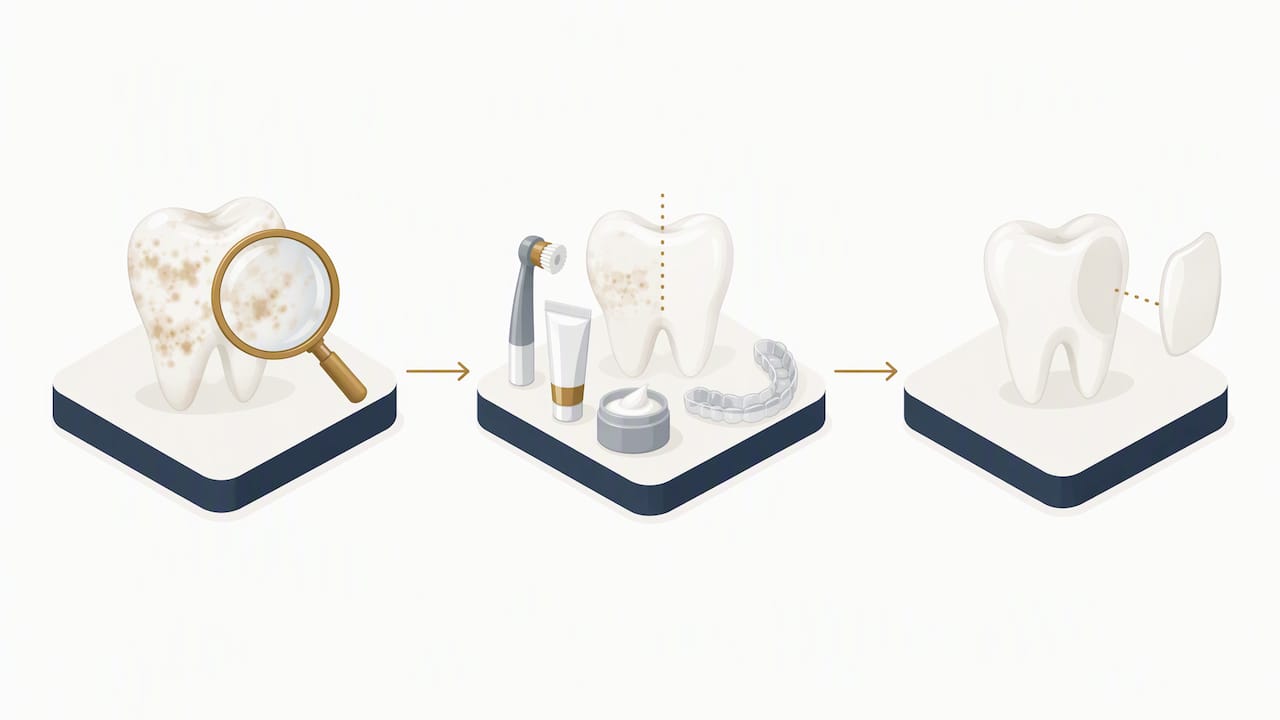
For mild fluorosis, the usual first steps are microabrasion, bleaching or resin infiltration. These approaches address surface and near-surface opacities without removing healthy tooth structure, and they carry no long-term maintenance burden beyond normal hygiene.
For moderate to severe fluorosis with deep staining or enamel pitting, veneers or composite restorations are usually indicated because conservative treatments cannot mask the depth or correct the surface irregularity.
- Mild: microabrasion, bleaching or resin infiltration first
- Moderate to severe: veneers or composite bonding to restore shade and contour
- Age and long-term planning matter, since adhesive bonding to intact enamel preserves tooth structure and supports better long-term outcomes
Bonding protocols that rely on etch-and-rinse techniques to intact enamel are a key factor in how well veneers perform on developmental enamel defects like fluorosis, sometimes supported by a deproteinisation step to improve bond strength.
Pro Tip: Ask your dentist to photograph your teeth under different lighting before deciding on treatment, fluorosis staining often looks different in daylight versus clinical lighting, and this affects shade planning.
Which veneer materials work best for fluorosis discolouration?
Material choice affects how well a veneer disguises intrinsic staining and how long the result lasts.
Lithium-disilicate and heat-pressed porcelain veneers offer high colour stability and strong long-term data. A 2024 meta-analysis found a survival rate of about 96.81% for lithium-disilicate veneers at 10.4 years, making them a dependable choice for persistent fluorosis staining.
Within ceramic options, CAD/CAM milled veneers and heat-pressed veneers both perform well, though heat-pressed techniques often show better marginal adaptation in complex anterior cases, which matters when matching shade across a mottled fluorosis pattern.
- Lithium-disilicate or heat-pressed porcelain: excellent colour stability, strong survival data
- CAD/CAM milled veneers: efficient workflow, slightly more variable marginal fit in complex cases
- Composite veneers: more conservative, repairable chairside, but need more frequent polishing and replacement
- Hybrid same-day veneers: combine speed with a conservative approach to tooth preparation, balancing immediate results against the longevity ceramic can offer
Composite veneers remain a reasonable choice for patients who want a reversible, lower-cost route, while ceramic options suit those prioritising longevity over a single visit.
What happens during a fluorosis veneer treatment?
The pathway from first consultation to finished smile generally follows the same sequence, whether using same-day digital techniques or a traditional multi-visit approach.
- Assessment: history taking, clinical photographs, vitality tests and a close look at enamel thickness and surface texture.
- Preparatory treatment: microabrasion, bleaching or resin infiltration where these might reduce the extent of restorative work needed.
- Digital scan or impression, combined with a mock-up so you can preview the planned shape and shade before any tooth is touched.
- Tooth preparation, kept minimal when bonding to enamel, followed by final impressions or digital scans and either temporaries or same-day provisional veneers.
- Bonding appointment, where the definitive veneers are fitted, followed by aftercare instructions and a scheduled review visit.
A patient-facing walkthrough of this typical veneer process confirms the same broad sequence across most clinics, though same-day digital workflows compress several stages into a single visit.
How long do fluorosis veneers last and what maintenance do they need?
Veneers placed on fluorosed enamel can last well over a decade when material choice and bonding technique are right, but outcomes vary with patient factors.
A 2024 meta-analysis reported survival of about 96.81% for lithium-disilicate veneers at 10.4 years, and a separate 10-year clinical follow-up of ceramic laminate veneers placed specifically for fluorosis reported very high survival, supporting ceramic veneers as an effective long-term option for advanced cases.
Not every historical dataset shows the same figures. An older study of porcelain veneers recorded in general dental practice found survival rates at 10 years without reintervention were modest, just over half, a reminder that bonding technique, material choice and patient habits all influence longevity.
- Chipping or marginal staining are the most common complications, usually manageable with polishing or localised repair
- Parafunctional habits such as grinding reduce veneer lifespan and may warrant a nightguard
- Periodic reviews catch marginal breakdown early, before it affects the underlying tooth
- Good oral hygiene and avoiding staining habits like heavy tea, coffee or tobacco use help maintain the result
Can conservative treatments reduce the need for veneers?
Several staged or combined approaches can improve fluorosis aesthetics enough that full veneers become unnecessary, particularly for mild to moderate cases.
A systematic review of fluorosis interventions found that resin infiltration, especially combined with bleaching, produced better aesthetic improvement than bleaching alone across multiple trials. Extending infiltration time appeared to improve results further, and this staged approach can reduce the depth and visibility of intrinsic stains enough to avoid full-coverage restorations.
- Resin infiltration with bleaching: often the best-performing conservative combination for mild to moderate staining
- Microabrasion: effective for superficial surface lesions, limited for deeper or pitted enamel
- Composite bonding: a conservative camouflage that can serve as either a long-term solution or an interim step before considering ceramic veneers
Combined treatments work best when planned early, before deciding that ceramic veneers are the only route to an acceptable result.
How do you choose a clinician for fluorosis veneers?
Choosing the right clinician matters as much as choosing the right material, since bonding technique and case planning drive long-term success.
Check qualifications, ask to see a portfolio of comparable before-and-after cases, and confirm the clinician has specific experience bonding to enamel affected by developmental defects rather than general cosmetic cases alone.
- Bring photographs of your teeth in natural light so the clinician can assess true colour and extent
- Ask about material options, whether a mock-up will be provided, and what the maintenance plan looks like
- Request survival data for the materials proposed and ask who manages repairs if something chips
- Get a written treatment plan with itemised costs before committing
Clinics offering same-day digital workflows, such as TJ Smile Studio, illustrate how modern scanning and hybrid veneer techniques can compress a traditionally multi-visit process into a single appointment, though this suits some fluorosis cases better than others depending on severity.
Pro Tip: Ask specifically how the clinic plans to manage colour transition at the gumline, this is often the hardest part of matching veneers to fluorosis-affected adjacent teeth.
What the evidence actually tells us about fluorosis veneers
The strongest message from the research is that material and technique matter more than brand or marketing claims. A 96.81% survival figure at 10.4 years for lithium-disilicate veneers sounds reassuring, but it sits alongside an older dataset showing only 53% survival at 10 years for porcelain veneers placed under different conditions. The gap between those numbers is bonding protocol, case selection and maintenance, not the ceramic itself.
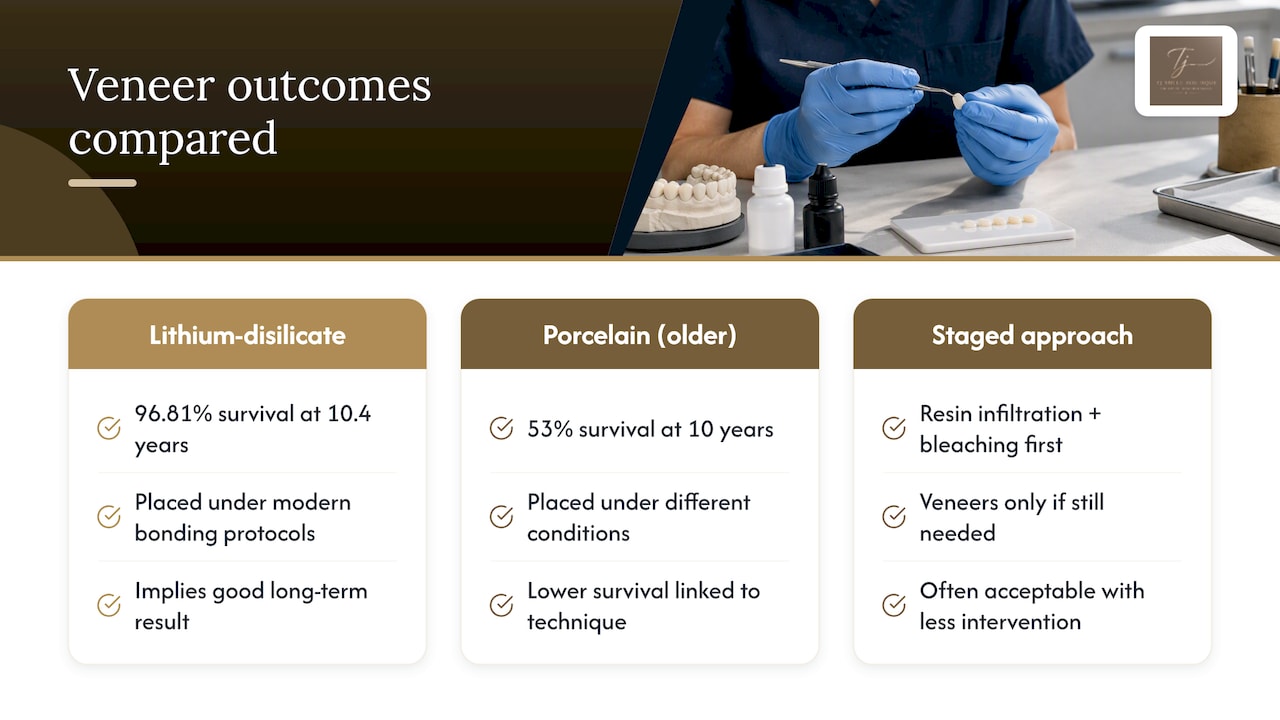
Conventional advice tends to jump straight to veneers as the fluorosis fix, when a staged approach, resin infiltration with bleaching first, then veneers only if needed, often delivers an acceptable result with far less intervention. Readers should prioritise an honest severity assessment before any cosmetic decision gets made. A clinician who proposes veneers without first discussing microabrasion or resin infiltration for a mild case is skipping a step the evidence supports.
What matters most is not which veneer material looks best in a brochure, but whether the clinician has a clear plan for bonding to your specific enamel condition and a realistic answer for what happens in year eight or nine, not just year one.
— Dr Tashfeen Jamil BDS, MFDS RCS Ed, AssocFCGDent - GDC 286427
Booking a fluorosis assessment at TJ Smile Studio
We offer personalised cosmetic dentistry in Glasgow, including veneers from £399 per tooth and Same-Day Hybrid Veneers from £2,995, both planned around your specific fluorosis pattern rather than a one-size approach.
Every treatment is led directly by our dental team, using a fully digital workflow that lets many patients leave with a finished result in a single visit. If you are weighing conservative options against full veneers, a Smile Consultation at £50 gives you a clear, written plan before you commit to anything. Book an assessment to find out which approach actually fits your enamel.
This article is general information, not a substitute for advice from a qualified doctor. Consult a qualified healthcare professional about your own circumstances before acting on anything here.
FAQ
Why do dentists sometimes advise against veneers for fluorosis?
Dentists may recommend against veneers when fluorosis is mild, since conservative options like resin infiltration or bleaching can achieve an acceptable result without removing tooth structure. Veneers also require healthy enamel for strong bonding, so a dentist might advise against them if enamel is too thin or compromised elsewhere.
Does fluorosis ever resolve on its own?
No, fluorosis is a permanent structural change in the enamel formed before the tooth erupted, so it does not resolve naturally over time. Any improvement in appearance comes from treatment, whether conservative measures like microabrasion and resin infiltration, or restorative options like veneers.
Can dental fluorosis be removed completely?
Mild fluorosis can often be significantly improved or made nearly invisible using resin infiltration combined with bleaching, which outperformed bleaching alone in multiple trials. Deeper staining or pitted enamel usually needs veneers or composite bonding to fully mask the discolouration, since conservative treatments cannot reach that depth.
How much does it cost to treat fluorosis with veneers?
Costs depend on severity, material choice and how many teeth need treatment. At TJ Smile Studio, veneers start from £399 per tooth and Same-Day Hybrid Veneers start from £2,995, with a Smile Consultation available for £50 to establish a personalised plan.
Sources
- Meta-analysis reporting long-term survival of lithium-disilicate veneers (2024)
- Review on bonding protocols for developmental enamel defects
- Interventions in management of dental fluorosis: systematic review (2019)
- Laminate veneer ceramics in aesthetic rehabilitation of teeth with fluorosis: a 10-year follow-up study
Recommended
This article is general information, not personal dental advice. What’s right for your teeth depends on a clinical examination — the condition of your enamel, gums, bite and any existing dental work — and no article can assess that. Outcomes vary between patients, and all treatment at TJ Smile Studio is subject to assessment and clinical suitability.
- Dr Tashfeen Jamil BDS, MFDS RCS Ed, AssocFCGDent, PGDip Restorative and Aesthetic Dentistry — GDC registration 286427
This article is general information, not personal dental advice. What's right for your teeth depends on a clinical examination — the condition of your enamel, gums, bite and any existing dental work — and no article can assess that. Outcomes vary between patients, and all treatment at TJ Smile Studio is subject to assessment and clinical suitability.
Clinically reviewed by Dr Tashfeen Jamil BDS, MFDS RCS Ed, AssocFCGDent, PGDip Restorative and Aesthetic Dentistry — GDC registration 286427, Principal Dentist at TJ Smile Studio, 1 Spiersbridge Way, Thornliebank, Glasgow G46 8NG.
If you have dental pain, swelling or an injury, call the practice on 07728 808510. Out of hours in Scotland, call NHS 24 on 111.