
27 September 2026 · TJ Smile Studio
UK Patients: 4 Questions to Protect You With Digital Smile Design
UK patient guide to digital smile design: how it works, GDC consent essentials, evidence on accuracy, and 4 consultation questions to ask.
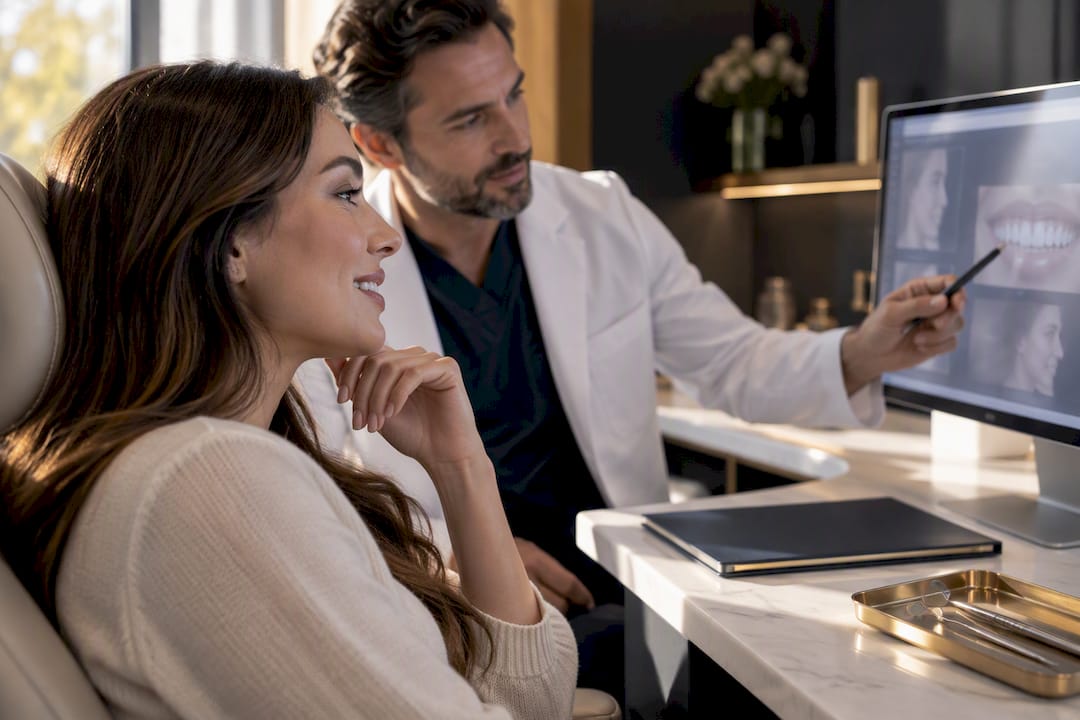
Digital smile design is a computer-assisted planning process that lets you preview and approve a proposed smile before any irreversible treatment begins. It combines photographs, videos and 3D scans of your teeth to build a visual blueprint your dentist can adjust with you. It plans and communicates the treatment; it does not replace the clinical skill needed to deliver it.
TL;DR:
- Digital smile design allows patients to see and approve a virtual smile before irreversible procedures, reducing the risk of dissatisfaction.
- The process combines photographs, videos, and 3D scans, with software suggesting initial designs that dentists review and adjust based on clinical judgment.
- Outcomes depend heavily on clinician expertise, with design accuracy influenced by scanner quality, lab work, and material finishing.
- Consent should be documented in writing, including treatment plans, costs, risks, and what happens if adjustments are needed.
- Digital workflows can speed up procedures and improve patient involvement but do not guarantee perfect results without proper clinician oversight.
Table of Contents
- What digital smile design is and how it works
- The patient journey from consultation to finished smile
- Why patients find digital smile design reassuring
- Limitations, risks and what informed consent should look like
- The software behind the design and what actually drives accuracy
- How to choose a clinician and what to ask at consultation
- What treatments cost to run and maintain over time
- A dentist’s approach to digital smile design in practice
- What the evidence actually tells us about digital smile design
- Ready to see your own smile design before you commit
- Sources
- FAQ
What digital smile design is and how it works
Digital smile design, often shortened to DSD, is a planning method rather than a treatment in itself. It draws on several types of patient records, combines them digitally, and gives both dentist and patient a shared reference point before drilling, bonding or whitening ever starts.
The typical record set includes:
- Standardised facial and dental photographs, taken at set angles to capture proportion and symmetry.
- A short smile video, used to assess how your lips and teeth move when you speak and smile naturally.
- An intraoral scan, replacing the need for traditional putty impressions in most cases.
- An optional CBCT scan, used when bone structure or tooth roots need assessment.
- Laboratory CAD/CAM integration, which carries the design through to the milled or printed restoration.
Software aligns these records to a facial and dental reference grid, then proposes tooth proportions, edge positions and gum-line adjustments based on established aesthetic principles. Systematic reviews describe this as a computer-assisted way to let patients and dentists visualise and agree an outcome before anything irreversible happens.
The software’s suggestion is a starting point, not a finished plan. Your dentist reviews every proposed change against your bite, facial structure and the realistic limits of the materials available, then adjusts the design accordingly. That clinical judgement, not the software, is what determines whether a design will actually work in your mouth.
The patient journey from consultation to finished smile
A DSD-led treatment tends to follow a consistent sequence, though the pace varies depending on how many procedures you need.
- Initial consultation: your dentist discusses your goals, reviews your medical and dental history, and takes baseline photographs.
- Record collection: an intraoral scan, and a CBCT scan if bone or root assessment is needed, are usually completed within the same or a following appointment.
- Design and review: the dentist builds a digital mock-up from your records and talks you through proposed changes to shape, length and alignment.
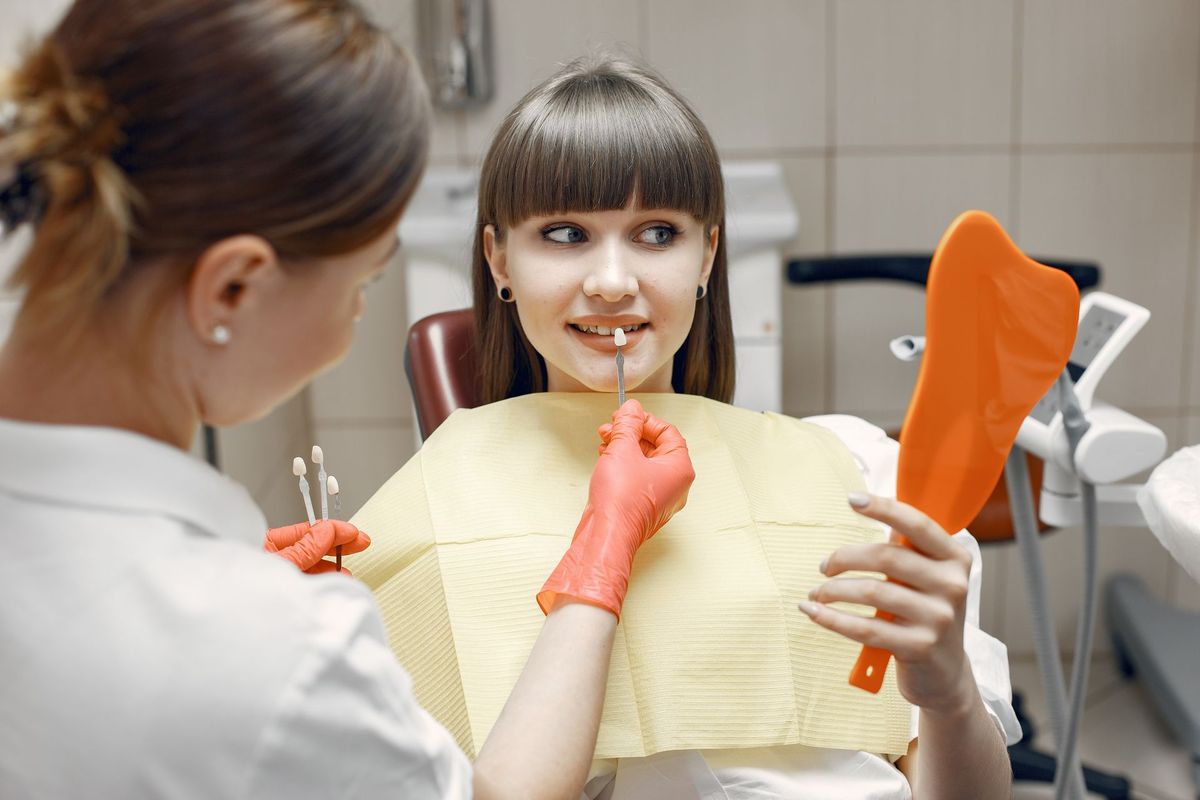
- Trial and sign-off: some clinics show the design as a physical trial restoration or temporary mock-up in the mouth, so you can see and feel the proposed change before committing.
- Treatment sequencing: once approved, treatment proceeds in the planned order, whether that is veneers, composite bonding, whitening, aligners or, where needed, implants.
Timelines differ sharply by case. A cosmetic case limited to bonding or veneers can sometimes be planned and delivered within a single visit using a fully digital workflow, as seen in same-day hybrid veneer treatments. A case involving orthodontics, implants or multiple specialists is staged over months, with the digital design acting as the shared reference point across each phase.
Why patients find digital smile design reassuring
The technical process matters less to most patients than what it changes about the experience of getting cosmetic work done.
- You see a version of your future smile before agreeing to treatment, rather than relying on description alone.
- You can ask for changes to the digital design, correcting a shape or proportion you dislike before it becomes permanent.
- Digital scans tend to be more comfortable than traditional impression trays, which some patients find uncomfortable or trigger a gag reflex.
- A shared visual plan reduces the back-and-forth of misunderstood expectations that can otherwise stretch a treatment over extra appointments.
Digital workflows have been shown to reduce mean procedure time by around 4.28 minutes compared with conventional impression methods, while producing comparable restorative accuracy, according to a meta-analysis of digital workflow outcomes. The same body of evidence reports high implant survival rates for both digital and conventional approaches, suggesting the digital route does not trade accuracy for speed.
The bigger shift is psychological. Patients who see and approve a design tend to feel more involved in the outcome, rather than simply hoping the result matches what they imagined in the consultation room.
Limitations, risks and what informed consent should look like
Digital smile design plans the outcome; it does not guarantee it. The final result depends on tooth structure, gum health, material choice and, above all, the clinician’s execution. A design that looks perfect on screen can still require adjustment once your dentist begins working in your mouth.
Several risks apply whenever cosmetic treatment involves altering natural tooth structure:
- Enamel removal for veneers or crowns is irreversible and can increase sensitivity.
- Some procedures affect gum position or health, particularly where tooth proportions change significantly.
- Restorations occasionally need retreatment or adjustment as materials settle or wear.
Regulatory standards exist precisely because these risks are real. UK guidance requires cosmetic dental work to be carried out by a GDC-registered professional, with patients given clear written information on costs, risks, benefits and alternatives before treatment begins. Documentation matters here: failure to obtain and record valid informed consent still features in a small proportion of dental professional hearings, which is a reminder that a verbal chat is not the same as documented consent.
Treat any red flags seriously: a clinician who will not put a plan in writing, who pushes you towards a decision before you have had time to consider it, or who cannot explain what happens if something goes wrong afterwards.
Pro Tip: Ask for your treatment plan and cost estimate in writing before you agree to anything irreversible, and take it away to read before you sign.
The software behind the design and what actually drives accuracy
DSD tools fall into a few broad categories. Simple 2D mock-up apps overlay a proposed smile on a photograph, useful for early conversations but limited in clinical detail. 3D CAD/CAM platforms integrate scans directly with laboratory fabrication, carrying the design from screen to physical restoration. Newer AI-assisted services automate parts of the design process, though with trade-offs.
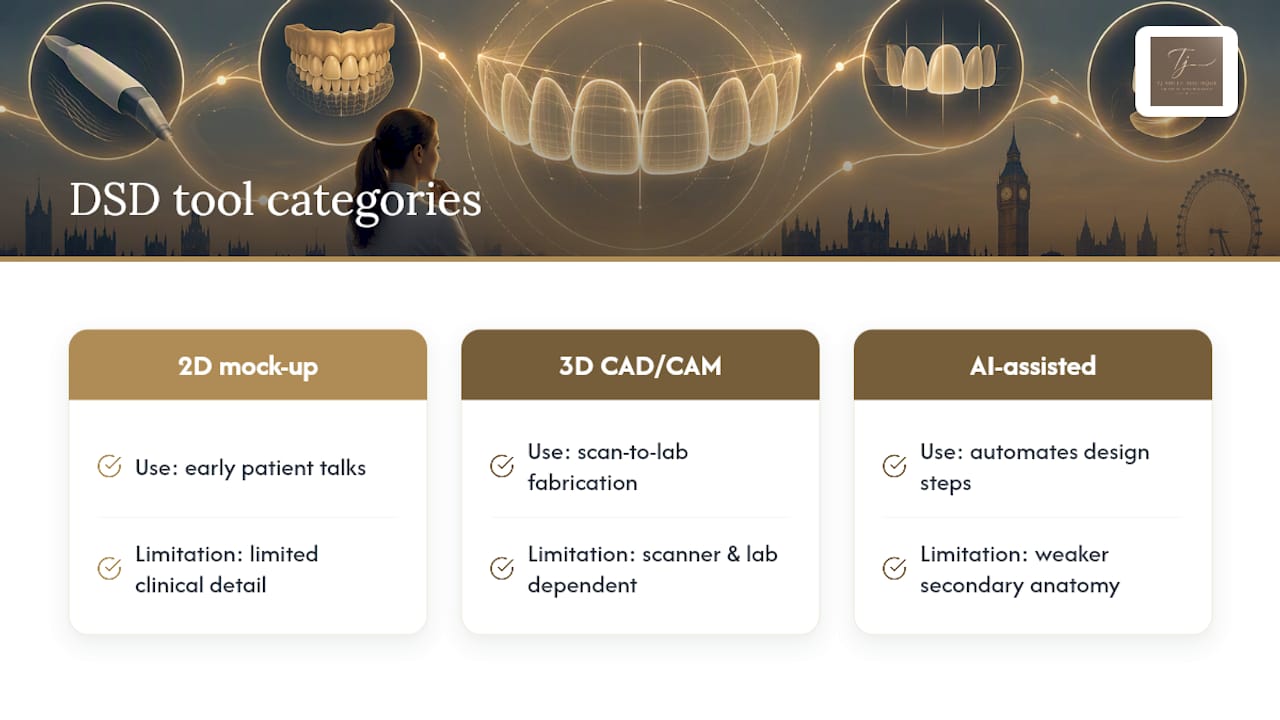
Comparative studies of AI-assisted and conventional DSD methods find AI tools can reach acceptable accuracy, with one study reporting an RMS deviation of around 0.29 mm, though clinicians still rate AI-generated secondary anatomy lower than conventionally designed detail, according to research comparing AI and conventional digital smile design. In practice, this means most designs still need a clinician’s manual refinement, particularly around the finer surface texture that makes a restoration look natural rather than uniform.
Accuracy in any digital workflow depends on the scanner used, whether the lab mills or 3D prints the final restoration, and the quality of that laboratory’s finishing work. It is reasonable to ask your dentist which system they use and how they check that a restoration fits and functions correctly before it is placed.
How to choose a clinician and what to ask at consultation
The technology matters less than the person interpreting it. A design is only as good as the clinician who reviews, adjusts and delivers it.
- Confirm the clinician is GDC-registered and ask what specific training they have in cosmetic dentistry.
- Ask to see documented cases they have treated themselves, including before and after photographs and digital mock-ups.
- Ask directly about tooth preparation, the materials proposed, expected lifespan, any warranty, and what happens if a restoration fails early.
- Notice how they respond to questions about risk. Evasive answers, no written plan, or pressure to book immediately are all reasons to pause.
Pro Tip: A dentist confident in their plan will happily let you take a written estimate home to think it over, rather than asking for a decision on the spot.
Reputable guidance on choosing a cosmetic dentist covers this in more depth if you want a fuller checklist before your first consultation.
What treatments cost to run and maintain over time
Cosmetic restorations vary widely in how long they last, and the design phase does not change that arithmetic. Composite bonding typically needs the most frequent maintenance, porcelain veneers tend to last longest with good care, and hybrid restorations sit somewhere between the two depending on material and wear.
- Diet, grinding habits and oral hygiene all affect how long any restoration lasts.
- A night guard is often recommended for patients who grind their teeth, to protect both natural teeth and restorations.
- Routine hygiene visits catch early signs of wear or gum changes before they become bigger problems.
- Ask for a written cost estimate that separates the initial treatment from likely future costs, such as repairs, replacement restorations or retainers.
A design that looks flawless on day one still depends on what you and your dentist do to look after it afterwards.
A dentist’s approach to digital smile design in practice
Dr Tashfeen Jamil BDS, MFDS RCS Ed, AssocFCGDent, GDC 286427, applies digital smile design at TJ Smile Studio using a fully digital workflow that allows many cosmetic cases, including same-day hybrid veneers, to be planned and completed within a single visit. Records are captured, reviewed and adjusted digitally before any irreversible step, giving patients a clear preview of the proposed result. The clinic’s digital smile makeover service applies this same principle: facial analysis and digital records inform a plan the patient reviews and approves before treatment begins.
What the evidence actually tells us about digital smile design
The strongest case for digital smile design is not that it produces a flashier result. It is that it forces a documented conversation about expectations before anything irreversible happens, which is exactly where cosmetic dentistry has historically gone wrong. Patients agree to a vague verbal description, then feel blind sided by a result that technically matches what was said but not what they pictured.
Where the conventional advice falls short is treating DSD software as the guarantee of quality itself. It is not. The evidence on AI-assisted design shows tools can be accurate on the numbers while still needing a clinician to correct the fine detail that makes a smile look natural rather than manufactured. The software is a communication device, not a substitute for a dentist’s eye.
If you take one thing from this into a consultation, make it this: ask to see the design, ask what happens if the result needs adjusting, and get the plan in writing. That single habit does more for your outcome than any particular piece of software.
— Dr Tashfeen Jamil BDS, MFDS RCS Ed, AssocFCGDent - GDC 286427
Ready to see your own smile design before you commit
If you are weighing up veneers, bonding or a fuller smile makeover, the next sensible step is a consultation where your own records are reviewed and a written treatment plan and cost estimate are prepared for you.
Some clinics use a fully digital workflow, allowing many patients to see a proposed design and, where suitable, complete treatment in a single visit rather than waiting through multiple stages. You can review pricing and packages or look at the digital smile makeover service directly to see whether it fits what you are considering. If a virtual first step suits you better, some clinics, including partner virtual consultation services, now offer remote review before an in-person visit.
Sources
- Systematic review on Digital Smile Design (2025)
- How patient consent can help build trust and confidence — GDC (2026)
- Meta-analysis of digital workflows’ efficiency and outcomes (2026)
- Artificial intelligence versus conventional methods in digital smile design: an accuracy study (2025)
FAQ
What is a digital smile design?
Digital smile design is a computer-assisted process that combines photographs, video and 3D scans to let you preview and approve a proposed smile before treatment begins. It is a planning and communication tool rather than a treatment itself, according to systematic review evidence.
Is digital smile design worth it?
For most patients considering veneers, bonding or a wider smile makeover, seeing and approving a design before committing to irreversible treatment reduces the risk of an unwanted result. Reviews of digital workflows report comparable restorative accuracy to conventional planning alongside reduced procedure time, as shown in meta-analysis findings on digital workflows.
How much does a digital smile design cost?
Cost depends on which treatments follow the design phase, since digital smile design itself is usually part of a wider consultation and treatment package rather than a standalone fee. At TJ Smile Studio, a Smile Consultation costs £50, with treatment costs such as veneers or composite bonding quoted separately once a plan is agreed.
What is the best digital smile design software?
There is no single best system: 2D mock-up apps, 3D CAD/CAM platforms and AI-assisted tools each suit different stages of planning. Comparative research finds AI-assisted systems can reach acceptable accuracy but that clinicians often still refine designs manually, particularly for fine anatomical detail, according to accuracy research comparing AI and conventional methods.
Recommended
This article is general information, not personal dental advice. What’s right for your teeth depends on a clinical examination — the condition of your enamel, gums, bite and any existing dental work — and no article can assess that. Outcomes vary between patients, and all treatment at TJ Smile Studio is subject to assessment and clinical suitability.
- Dr Tashfeen Jamil BDS, MFDS RCS Ed, AssocFCGDent, PGDip Restorative and Aesthetic Dentistry — GDC registration 286427
This article is general information, not personal dental advice. What's right for your teeth depends on a clinical examination — the condition of your enamel, gums, bite and any existing dental work — and no article can assess that. Outcomes vary between patients, and all treatment at TJ Smile Studio is subject to assessment and clinical suitability.
Clinically reviewed by Dr Tashfeen Jamil BDS, MFDS RCS Ed, AssocFCGDent, PGDip Restorative and Aesthetic Dentistry — GDC registration 286427, Principal Dentist at TJ Smile Studio, 1 Spiersbridge Way, Thornliebank, Glasgow G46 8NG.
If you have dental pain, swelling or an injury, call the practice on 07728 808510. Out of hours in Scotland, call NHS 24 on 111.