02 November 2026 · TJ Smile Studio
Clear Aligners for Crowding: What They Can Fix
Can clear aligners fix crowded teeth? Learn how they make space, which cases suit them, how long it takes and what to expect in Glasgow, with costs.
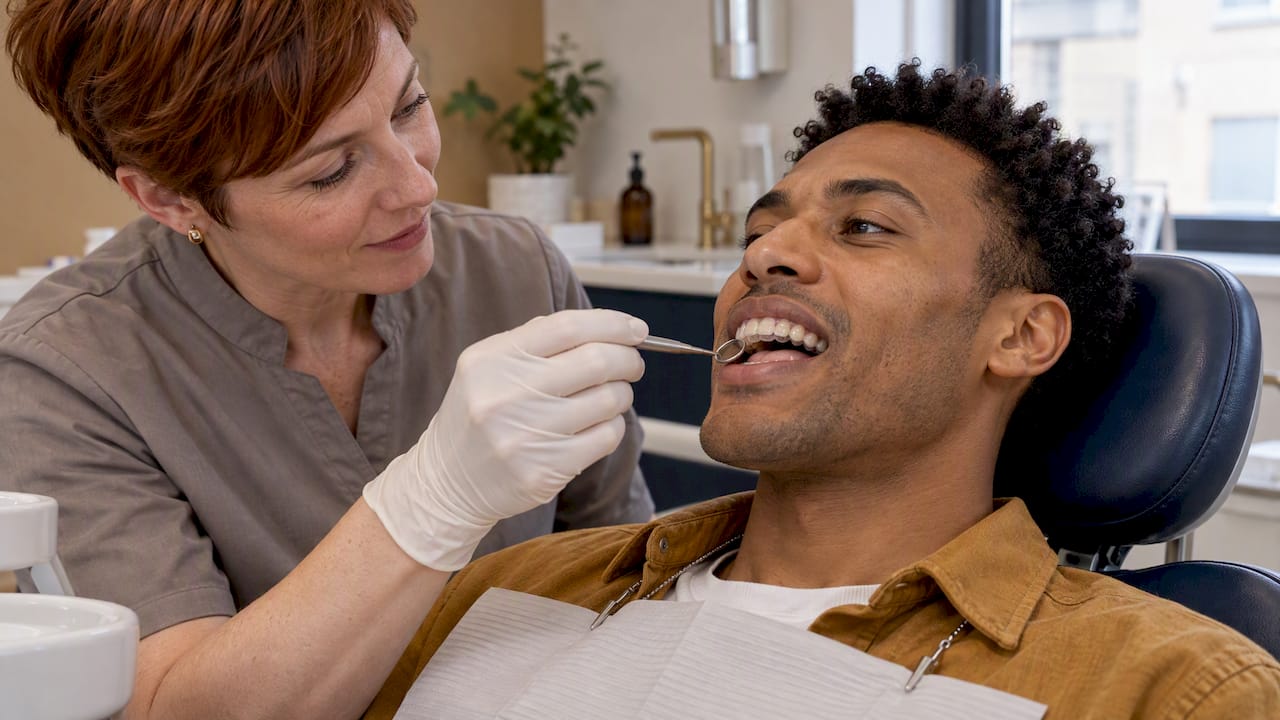
Yes, clear aligners can straighten crowded teeth, and crowding is one of the most common reasons adults choose them. The British Orthodontic Society says aligners can treat mild to moderate crowding when the problem can be solved with modest arch expansion or careful slenderising between teeth. Whether your own teeth fall into that group depends on a proper assessment. This guide explains how aligners create room, which cases suit them, what affects timing and cost, and what to ask before you start.
TL;DR
- Clear aligners are an established way to treat mild to moderate crowding, using a series of custom-made trays that move teeth step by step.
- Room for crowded teeth comes from arch expansion, small amounts of enamel reshaping (IPR), moving back teeth backwards, or tilting front teeth forward. Your dentist chooses the mix.
- Severe crowding, jaw discrepancies or complex movements may need fixed appliances alongside aligners, which is why an assessment comes first.
- Total time varies from case to case, and refinements are a normal part of planning. Retainers afterwards keep the result in place.
- At TJ Smile Studio in Glasgow, an Invisalign consultation is £50 and Invisalign treatment starts from £1,800.
Table of Contents
- Why crowded teeth respond well to aligners
- How aligners make room for crowded teeth
- Which crowding cases suit clear aligners
- How long treatment takes and what changes the timeline
- Why a proper assessment matters
- What clear aligner treatment for crowding costs
- Risks, limits and what happens afterwards
- Aligners, bonding and veneers for crowding
- Start with a consultation in Glasgow
- FAQ
- Sources
Why crowded teeth respond well to aligners
Crowding means your teeth are bigger than the space available for them. They overlap, twist or sit in front of or behind their neighbours. It is often more than a cosmetic issue: overlapping teeth are harder to clean, and many adults notice it most in photographs or when smiling at work.
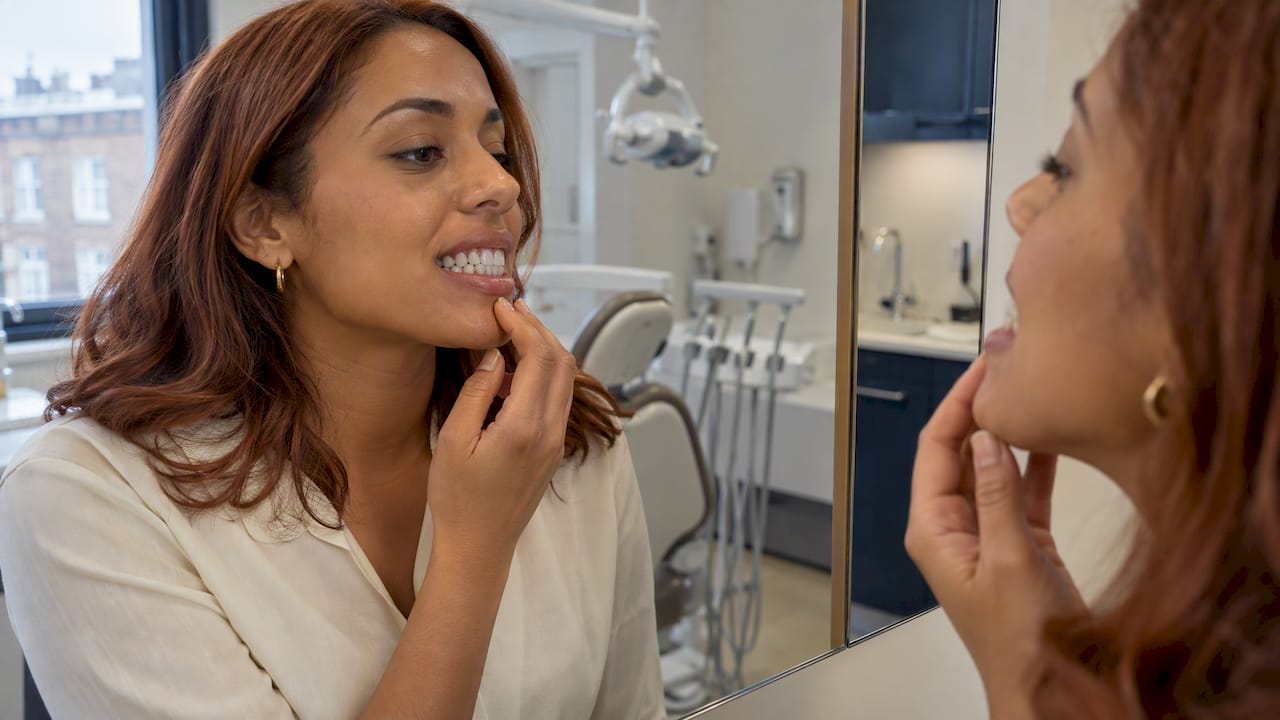
Clear aligners are thin, clear, flexible plastic trays that fit closely over the teeth. According to the British Orthodontic Society, a series of them moves teeth in small steps following a treatment plan. You wear one set for a period, then move to the next, and each set is shaped slightly differently from the last.
The appeal for crowding is practical:
- Discreet. The trays are clear, which matters if you meet clients or work in front of people. A clear aligner review in PMC notes they can suit people who rely on appearance professionally when the misalignment is not severe, and people with active lifestyles.
- Planned in advance. With a digital scan and planning software, you can see the intended movement before treatment begins.
- Removable. You take the trays out to eat and to brush and floss, so cleaning around crowded teeth stays straightforward.
The last point comes with a responsibility. Aligners only work when worn as prescribed. A 2025 expert consensus paper lists poor compliance among the situations where aligners are not recommended. If you can commit to wearing them for the hours your dentist sets, you are already in a good position.
How aligners make room for crowded teeth
Straightening crowded teeth is a space problem first and an alignment problem second. Aligners move teeth by a gentle pushing force that comes from the plastic springing back towards its shape, as described in the 2025 International Journal of Oral Science consensus. Before teeth can line up, there has to be somewhere for them to go. The same paper lists the main ways of creating that space.
Arch expansion
The dental arch is gently widened, usually at the sides, so the teeth spread into a broader curve. Research published in Seminars in Orthodontics in 2025 found that transverse arch expansion is highly predictable with clear aligners. It is often the first tool considered for mild crowding where the arch is a little narrow.
Interproximal reduction (IPR)
IPR, sometimes called slenderising, removes a very thin layer of enamel from the contact points between teeth. Each step frees a fraction of a millimetre, and together the steps can give enough room to resolve a small to moderate amount of overlap. The same Seminars in Orthodontics review reports that space gained through IPR has low predictability compared with expansion. In practice, that is a reason for careful planning: your dentist measures, builds in checkpoints and adjusts if the teeth do not follow the plan exactly.
Moving back teeth backwards
Molar distalization shifts the back teeth slightly rearward to open space in front of them. It suits some cases and not others, and your dentist decides after looking at your bite and jaw.
Tilting front teeth forward
Incisor proclination moves the front teeth a little forward, which increases the length of the arch. Done in a measured way, it can resolve crowding at the front while keeping the smile balanced. The facial profile and the bite both guide whether this is appropriate.
Extractions in selected cases
The consensus paper also lists extraction as a method where necessary. This is a decision for more significant crowding, and it belongs in the assessment conversation, not in a guess made from a photo.
Which crowding cases suit clear aligners
The British Orthodontic Society points to mild to moderate crowding as the sweet spot. Beyond that, the plan may need extra tools. This table summarises what the research and professional guidance say, so you can see roughly where you might sit.
| Situation | Typical outlook with clear aligners |
|---|---|
| Mild crowding, slight overlap or rotation | Well suited. Often managed with expansion and small amounts of IPR. |
| Moderate crowding with a narrow arch | Often suitable with careful planning, expansion and staged space creation. |
| Severe crowding | May need fixed appliances in addition to aligners to reach an ideal result. |
| Crowding with an underlying jaw discrepancy | May need fixed appliances alongside aligners, and a specialist opinion. |
| Cases needing extractions | Possible, but the 2025 evidence describes less favourable control of incisor angle and bite contacts. |
| Clinically short crowns or large backward-to-forward tooth movement | The 2025 consensus advises that aligners are not recommended. |
For severe crowding, extraction cases, complex tooth movements or a jaw discrepancy, the BOS explains that fixed appliances may be needed alongside aligners. That is not a failure of aligners. It is a combined plan, and a good dentist will say so at the start, so there are no surprises midway.
Crowding rarely arrives alone. If you also have a crossbite, our article on when Invisalign fixes a crossbite explains how that is handled. If you are weighing aligners against metal braces, Invisalign vs braces: pros, cons and cost sets out the practical differences.
How long treatment takes and what changes the timeline
The honest answer is that it depends on your teeth. Experts in a 2025 consensus study reported that there is no agreement on whether aligner treatment duration differs from fixed appliances, and systematic reviews have shown inconsistent results. Any provider promising an exact number of months before seeing your mouth is guessing.
What tends to affect the timeline:
- How much space is needed. More crowding means more steps or more stages of space creation.
- How the space is made. Movements that are less predictable raise the chance of adjustments.
- Refinements. The same paper reports an average of 2.5 refinements where unpredictable movements are planned, which adds time and cost. A refinement is a new set of aligners to finish what the first series did not quite achieve. Our guide to Invisalign refinements explains why they are a normal part of planning, not a sign that something went wrong.
- Wear time. Trays worn for fewer hours than prescribed slow everything down.
- Attachments. Small tooth-coloured shapes bonded to teeth help aligners grip and rotate crowded teeth. Read about Invisalign attachment types to see what they look like and why they are used.
For a visit-by-visit picture, see what to expect from aligner treatment.
Why a proper assessment matters
Crowded teeth need a diagnosis, not just a scan and a box in the post. The British Orthodontic Society says a proper assessment, diagnosis and treatment plan are essential and recommends getting an orthodontic specialist’s opinion on your options.
The Care Quality Commission, which regulates dental services in England, sets out what it expects: a GDC-registered dentist responsible for assessing, diagnosing, prescribing and supervising aligner treatment, with full information on risks, benefits, alternatives and costs before you begin. The same guidance says the dentist needs enough information to form a plan, which may include a face-to-face examination, an oral health assessment, intra-oral scans, radiographs and photographs. Scotland has its own regulator, Healthcare Improvement Scotland, but the principle for patients is the same: your plan should come from a registered dentist who has examined you.
A good first appointment should cover:
- Your gum and tooth health, since aligners should only move healthy teeth.
- How much space you need and which methods will create it.
- Whether any part of your case may need fixed appliances.
- What refinements, attachments and retainers are likely to involve.
- The full cost, including what happens afterwards.
Our perspective on crowding and aligners
When someone comes to us about crowding, the first thing we do is separate the question of how the teeth look from the question of why they sit that way. Is the arch narrow, are the teeth large, or is the bite pulling them out of line? The answer tells us which space-creating tools to use, and in what order.
We favour a fully digital workflow because it lets us show you the planned movement before anything starts. Crowding responds best to planning that is specific to you: where expansion is gentle enough, where a little IPR is sensible, and where attachments will do the work of rotating a stubborn tooth. Every treatment here is personally led by one dentist, from consultation to completion, so the person who plans your case is the person who reviews your progress.
We also think the finish matters as much as the straightening. If crowding has left a tooth slightly worn or a different shape, aligners can be combined with other cosmetic options, such as composite bonding, to refine the final look. That joined-up approach is the reason many adults choose a boutique clinic rather than a high-volume one. Flexible appointments, including evenings and weekends, mean treatment fits around work, not the other way around.
Dr Tashfeen Jamil BDS, MFDS RCS Ed, AssocFCGDent - GDC 286427
What clear aligner treatment for crowding costs
Costs depend on the amount of crowding, the number of aligners, the number of refinements and the clinic’s approach. A 2025 expert panel reported in Progress in Orthodontics that reduced chair time during aligner visits is accepted as a justification for potentially higher costs, although the topic remains under-researched.
At TJ Smile Studio, these are our published prices:
| Item | Price |
|---|---|
| Invisalign consultation | £50 |
| Invisalign treatment | from £1,800 |
| Retainer review | £35 |
The consultation is where we assess your teeth and give you a plan and a quote for your case, so you know the full figure before you commit. Our page on Invisalign in Glasgow has the details, and larger packages can be financed.
It is worth asking any provider the same questions: what is included, are refinements covered, and what do retainers cost? A lower headline price that excludes these is not the same as a lower total.
Risks, limits and what happens afterwards
Good treatment starts with knowing the edges of what aligners do well. A 2025 systematic review in Dentistry states that aligner treatment is still considered behind fixed appliances for torque control and contact point relations. In practice that means the final finishing details on some teeth may call for refinements, or for fixed appliances in a combined plan. The same review notes that few adverse effects have been reported, while flagging potential concerns about microplastics and a decrease in condyle bone volume, and calling for more high-quality research.
The practical steps that keep treatment safe and on track:
- Have a registered dentist examine you before you start.
- Wear the trays as prescribed and attend your review appointments.
- Clean your teeth and trays as advised.
- Tell your dentist promptly if a tray stops fitting or a tooth feels loose or sore beyond the usual tightness.
Retainers are part of the plan
The BOS states that after any aligner treatment, retainers are required to keep teeth in their corrected positions. Crowded teeth have a tendency to drift back, so plan for retainers from the beginning and keep your retainer review appointments.
Aligners, bonding and veneers for crowding
Sometimes people ask if bonding or veneers could fix crowding faster. They can change the look of a mildly uneven smile, but they alter tooth shape and do not move teeth into a healthier position. Our comparisons of Invisalign vs composite bonding and aligners vs veneers explain which goal each one suits. For many patients, the best result is a staged one: aligners to bring the teeth into position, then bonding or whitening to polish the finish. For wider context on your choices, read adult orthodontics options in the UK and Invisalign for UK adults.
Start with a consultation in Glasgow
If you are considering aligners for crowded teeth, the first step is a conversation and a digital assessment. At TJ Smile Studio, your Invisalign consultation costs £50. Dr Jamil will look at your teeth and bite, explain how the space would be created, discuss whether any part of your case may need extra support, and give you a clear plan and price before you decide anything. Evening and weekend appointments are available.
You can see our current prices and book through our pricing page, or read more about Invisalign at TJ Smile Studio.
FAQ
Can clear aligners fix severely crowded teeth?
Sometimes, but severe crowding is where plans most often need extra tools. The British Orthodontic Society says fixed appliances may be needed alongside aligners for severe crowding, extractions, complex movements or a jaw discrepancy. An assessment will tell you which group you fall into.
Do clear aligners work better than braces for crowding?
Neither is better for everyone. Aligners suit mild to moderate crowding and offer a discreet, removable option. A 2025 review still considers fixed appliances ahead for some fine finishing movements, so complex cases are planned individually.
Will I need teeth removed or filed down?
Not necessarily. Space can come from arch expansion, moving back teeth, tilting front teeth or IPR, which removes a very thin layer of enamel between teeth. Extraction is reserved for selected cases and is discussed at assessment.
Do I need a retainer after aligners for crowding?
Yes. The British Orthodontic Society states that retainers are required after any aligner treatment to keep teeth in their corrected positions. We include retainer reviews at £35 so you can keep checking the fit.
How much does Invisalign for crowding cost in Glasgow?
At TJ Smile Studio, Invisalign starts from £1,800, and the Invisalign consultation is £50. Your exact quote depends on how much movement your teeth need, and you will have it in writing before you start.
Sources
- Clear aligners, British Orthodontic Society
- The predictability of tooth movement with clear aligners, Seminars in Orthodontics
- Expert consensus on the clinical strategies for orthodontic treatment with clear aligners, International Journal of Oral Science
- Clear Aligner Therapy: up to date review article, PMC
- Indications and limits of clear aligner therapy, Progress in Orthodontics
- Clear Aligner Treatment: Indications, Advantages and Disadvantages, Dentistry Journal
- Dental mythbuster 39: Direct-to-consumer orthodontics, Care Quality Commission
Recommended
- Invisalign Midline Correction
- When Invisalign Fixes a Crossbite
- Can Invisalign fix an open bite, or do
- 1.3–1.79 mm Overbite Reduction With
This article is general information, not personal dental advice. What’s right for your teeth depends on a clinical examination — the condition of your enamel, gums, bite and any existing dental work — and no article can assess that. Outcomes vary between patients, and all treatment at TJ Smile Studio is subject to assessment and clinical suitability.
- Dr Tashfeen Jamil BDS, MFDS RCS Ed, AssocFCGDent, PGDip Restorative and Aesthetic Dentistry — GDC registration 286427
This article is general information, not personal dental advice. What's right for your teeth depends on a clinical examination — the condition of your enamel, gums, bite and any existing dental work — and no article can assess that. Outcomes vary between patients, and all treatment at TJ Smile Studio is subject to assessment and clinical suitability.
Clinically reviewed by Dr Tashfeen Jamil BDS, MFDS RCS Ed, AssocFCGDent, PGDip Restorative and Aesthetic Dentistry — GDC registration 286427, Principal Dentist at TJ Smile Studio, 1 Spiersbridge Way, Thornliebank, Glasgow G46 8NG.
If you have dental pain, swelling or an injury, call the practice on 07728 808510. Out of hours in Scotland, call NHS 24 on 111.