07 November 2026 · TJ Smile Studio
Broken Tooth: What to Do Right Now and What Happens Next
Broken or chipped tooth? Follow these first-aid steps, learn when to call 111 or go to A&E, and see how a dentist repairs it, including a broken crown.
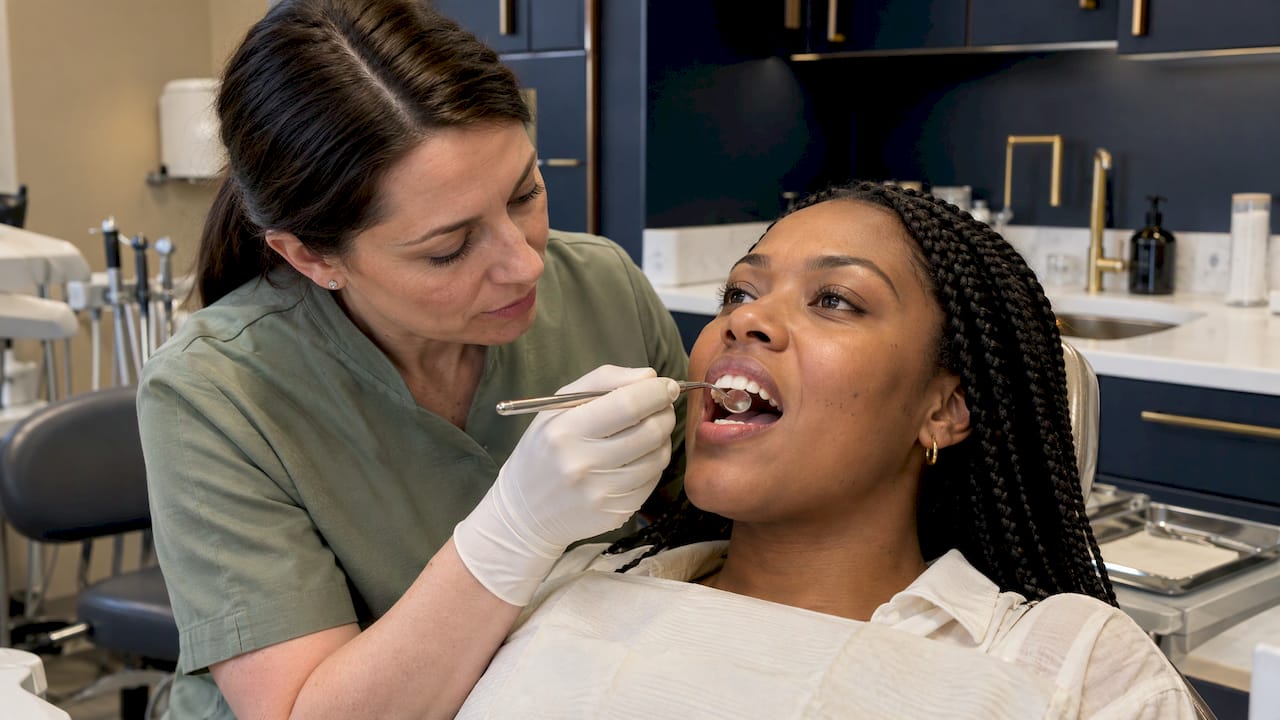
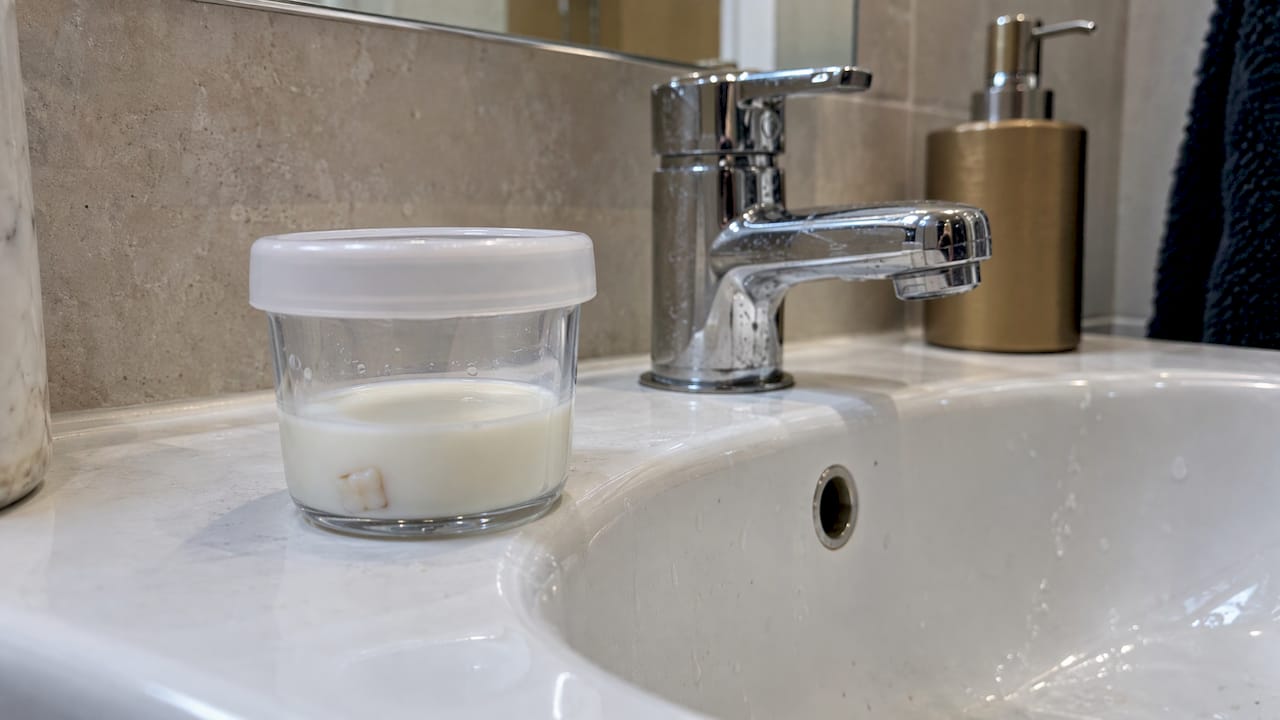
If you have broken a tooth, find any piece that came off, rinse your mouth gently with warm water, keep the fragment in milk, and book a dentist as soon as you can. In Scotland, NHS inform says breaking or chipping a tooth is not a dental emergency in itself. It still needs a dentist during normal working hours. Call 111 if you are in severe pain, or if the damage is to a crown, filling, bridge or veneer, or if a tooth has been knocked out. This guide covers what to do in the first hour, how to get through the first night, how dentists repair different breaks, and what to do when a crown or veneer breaks.
TL;DR
- Save any fragment in milk (or your own saliva in a clean container) and take it to the dentist. It may be possible to glue it back on.
- A small chip is usually not an emergency. Severe pain that painkillers do not ease, heavy bleeding, a knocked-out adult tooth or a badly broken tooth means calling your dentist or 111 the same day.
- Swelling that affects your breathing, swallowing or vision, or a head injury with vomiting or loss of consciousness, means A&E or 999.
- Repairs range from smoothing and bonding to a crown or root canal treatment. The right one depends on how much tooth is left and whether the nerve is exposed.
- At our Glasgow studio, an emergency cosmetic appointment costs £75, and many chips and breaks can be rebuilt in a single visit.
Table of Contents
- What to do in the first hour
- Is it an emergency? How to judge it
- How long can you leave a broken tooth?
- Getting through until your appointment
- How a dentist repairs a broken tooth
- If a crown or veneer breaks or comes off
- Our perspective
- Emergency cosmetic care in Glasgow
- Will it cost me?
- FAQ
- Sources
What to do in the first hour
Stay calm and work through these steps in order.
- Check for serious injury first. If you hit your face or head hard, check how you feel overall. Loss of consciousness, vomiting, double vision or a suspected broken jaw is an A&E or 999 matter, not a dentist matter (NHS).
- Rinse your mouth with warm water. This clears blood, dirt and debris so you can see what has happened.
- Find the fragment. The NHS advises that if a piece has broken off, you put it in milk or saliva and take it to a dentist, who may be able to glue it back on. If it is your own tooth, spit into a clean container and place the piece in it.
- Handle it carefully. If a whole tooth is involved, hold it by the crown (the white part) and not the root.
- Protect the area. A cold pack held against the outside of your cheek helps with swelling. Over-the-counter painkillers such as paracetamol can ease pain, following the pack instructions.
- Phone a dentist. Say you have a broken tooth, whether you have the piece, and how much it hurts. That tells the practice how quickly to see you.
The NHS also says that a knocked-out or badly broken adult tooth should be treated as soon as possible, ideally within 30 minutes to an hour. If the tooth is whole and clean, it can be placed back in the socket without touching the root. If it does not go in easily, store it in milk or hold it in your mouth between cheek and gum. Never put a baby tooth back in, as it could damage the adult tooth growing underneath.
Is it an emergency? How to judge it
Most broken teeth fall into one of three groups. Use this table as a guide, and phone if you are unsure.
| What has happened | How urgent | What to do |
|---|---|---|
| Small chip, rough edge, no pain | Non-urgent | Book the next available appointment. The NHS says a chipped tooth can be smoothed down and filled or fitted with a crown. |
| Larger piece missing, sensitivity to hot or cold, sharp edge cutting your tongue | Same or next working day | Phone your dentist, keep the fragment in milk, and use pain relief. |
| Severe pain not helped by painkillers, bleeding that won’t stop, knocked-out adult tooth, broken crown, bridge, veneer or filling | Urgent | Ask for an urgent appointment or contact NHS 111. |
| Swelling that makes it hard to breathe, swallow or speak, swelling near the eye or neck, serious face or jaw injury | Emergency | A&E or 999. Do not drive yourself. |
The SDCEP guidance used by Scottish dentists puts the dividing line simply: if painful symptoms are not relieved by painkillers, seek urgent dental care. If the pain settles or is minor, non-urgent care is appropriate. The same guidance says that if you think you may have inhaled a piece of tooth or filling, you should go straight to emergency care through NHS 24 or 111.
NHS 111 can help find a dentist or an emergency dentist where one is available in your area. 111 online is for people aged 5 and over, and you should phone 111 for a child under 5. Do not go to your GP for this: they cannot give dental treatment (NHS).
How long can you leave a broken tooth?
A small, painless chip can usually wait a few days for a routine appointment. Waiting for weeks is a bad idea even then, because rough edges can cut your tongue and cheek, and a broken tooth is easier to rebuild before further pieces go.
If the break is deep, the nerve inside the tooth may be exposed. The NHS says a badly broken tooth with exposed nerves may need root canal treatment, so do not leave that one.
See a dentist promptly if toothache goes on for more than two days, is not eased by painkillers, or comes with a high temperature, pain when biting, red gums, a bad taste, or a swollen cheek or jaw. All of those are listed by the NHS toothache guidance. If swelling spreads towards your eye or neck or affects your breathing, go to A&E.
In short: a painless small chip, days. Anything painful, sharp, sensitive or swollen, today.
Getting through until your appointment
- Eat on the other side and avoid very hot, cold, hard or sticky foods.
- Keep the area clean. Brush gently as normal, floss carefully around it and rinse with warm salty water.
- Cover a sharp edge. SDCEP notes that if there is an open cavity, a temporary repair kit bought at a pharmacy can protect it until you are seen.
- Skip superglue. Household adhesive is not a safe way to reattach a fragment or crown. Keep the piece safe and let a dentist deal with it.
- Avoid biting into the damaged tooth even if it feels fine. Cracks can run deeper than they look.
Our own write-up on what to do about an emergency chipped tooth walks through the same steps, and our guide to a cracked front tooth explains why speed matters when the damage shows when you smile.
How a dentist repairs a broken tooth
What you need depends on how much of the tooth is gone, where it is, and whether the nerve is involved. The NHS lists the main options: gluing the fragment back on, a filling, a crown, or root canal treatment for a badly broken tooth.
Reattaching the fragment
If you kept the piece and it is intact, a dentist may be able to bond it back. That is why the milk matters. If you cannot find it, NHS inform says the dentist can build the tooth up with tooth-coloured filling material.
Bonding and fillings
For small to medium breaks, especially at the front, tooth-coloured composite is built up and shaped in one appointment, then polished to match the neighbouring teeth. At our studio, composite bonding starts from £200 per tooth, and edge bonding for a chipped edge is £199 per additional tooth. If you have bonding that has chipped, our composite repair guide explains what is involved, and a repair assessment is £75.
Crowns
The NHS describes a crown as a cap that completely covers a real tooth, and says crowns are fitted where a tooth has broken, decayed or been damaged. NHS inform says part of a back tooth that is broken may need a filling or a crown.
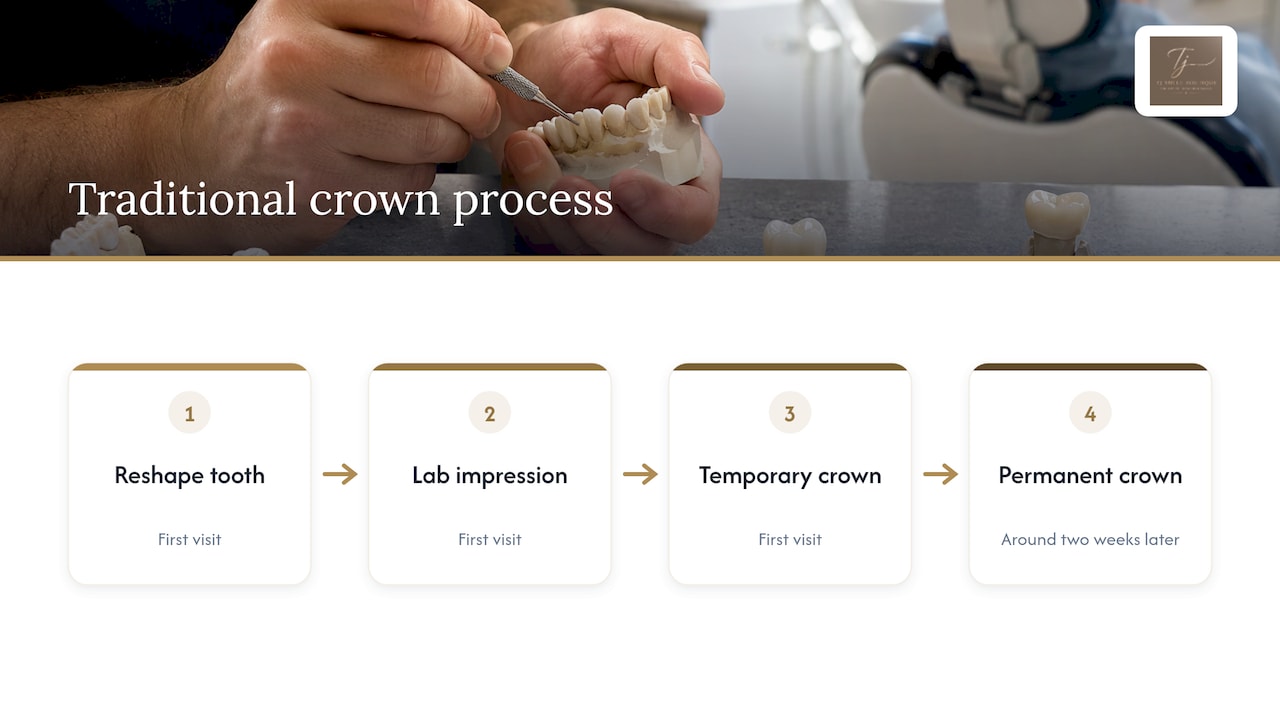
In a traditional route, the process takes two visits. Leeds Teaching Hospitals explains that the first visit involves reshaping the tooth, taking an impression for the laboratory and fitting a temporary crown. The permanent crown is fitted around two weeks later. Where a root canal has removed the nerve, a post may be cemented in to rebuild a severely broken-down tooth before the crown is made.
Veneers
Leeds Teaching Hospitals also notes that teeth can sometimes be rebuilt with white filling material, and that a porcelain veneer may suit a front tooth where the bite is not heavy. If the damage is to a front tooth and you want a lasting cosmetic result, veneers are one route. Our veneers start from £399 per tooth. If you are weighing the options, our comparison of composite bonding vs veneers sets out the differences.
Root canal treatment or removal
If the break reaches the nerve, SDCEP lists pulp therapy as a follow-on step. In rare cases where a tooth cannot be restored, extraction is the outcome. Early assessment gives you the best chance of keeping the tooth.
If a crown or veneer breaks or comes off
A broken or loose crown is a different problem from a chipped natural tooth, and it is treated as more urgent. The NHS lists a broken or loose filling, denture, crown, bridge or veneer among the problems for which you should ask for an urgent appointment or get advice from 111.
While you wait:
- Keep the crown safe and bring it with you.
- Check whether it sits back comfortably. An NHS pharmacy fact sheet suggests asking whether the crown goes back on without falling off, whether the tooth has broken off inside the crown, and whether the remaining tooth is sharp enough to cause an ulcer.
- Use a pharmacy temporary kit only for short-term protection. NHS inform says you can buy an emergency dental kit from a pharmacy or supermarket, and if you are registered with a dentist, contact them the next working day.
- Do not use household glue.
- Do not ignore it. The same fact sheet lists pain, swelling and infection as the risks of a lost crown or filling, with severe symptoms needing urgent assessment.
What comes next depends on what the dentist finds. SDCEP lists recementing, temporary coverage or permanent replacement as the options for crowns, bridges and veneers.
Broken front crown options
For a front crown, the choice usually comes down to repairing, recementing or replacing, and the appearance matters as much as the function. Depending on the tooth underneath and your bite, a dentist may suggest a new crown, a veneer or a tooth-coloured rebuild. If it is a veneer that has cracked or come off, our guides on a broken veneer and repairing veneers explain the choices, and what to do if a temporary crown falls off covers that situation.
Our perspective
Most people who phone us with a broken tooth are worried about two things: the pain, and how they will look at work on Monday. Both are reasonable, and both can usually be dealt with quickly.
Our view is that a broken front tooth should be treated as a design problem as well as a repair. A tooth that is merely patched can still look wrong next to its neighbours. That is why we plan every case digitally and why Dr Jamil personally leads each treatment, from the first look to the final polish. Our digital workflow means many patients can leave with their tooth rebuilt in one visit instead of waiting weeks with a temporary.
If you can, bring the fragment, keep it in milk, and tell us when the tooth broke. If it is the evening or the weekend, we offer flexible appointment times, so do not assume you must wait until Monday for an assessment.
Dr Tashfeen Jamil BDS, MFDS RCS Ed, AssocFCGDent - GDC 286427
Emergency cosmetic care in Glasgow
If your break is on a front tooth and you want it assessed and rebuilt by one dentist, we see emergency cosmetic cases at TJ Smile Studio. An emergency cosmetic appointment is £75, and we can often discuss repair options at the same visit.
Depending on the tooth, the options we offer include composite bonding from £200 per tooth, veneers from £399 per tooth and Same-Day Hybrid Veneers from £2995. Our pricing page lists each fee, and if you would rather talk through a larger smile plan first, a smile consultation is £50. If your tooth is knocked out, you have severe swelling or you are struggling to breathe, use 111, A&E or 999 first, then come to us for the cosmetic rebuild.
Will it cost me?
NHS urgent appointments carry the usual dental charge unless you are eligible for free treatment, and you do not need to be registered with an NHS dentist to get urgent care through 111, according to one NHS integrated care board. That guidance is from England, so check the current charges that apply in Scotland through NHS inform. Private cosmetic repairs are priced per treatment, and the fees we publish are on our pricing page.
FAQ
What should I do if a piece of my tooth has broken off?
Rinse your mouth with warm water, find the piece and put it in milk or saliva. Phone a dentist the same day if you can. The dentist may be able to glue the piece back on, or rebuild the tooth with filling material if you cannot find it.
Is a chipped tooth a dental emergency?
On its own, no. NHS inform says breaking or chipping a tooth is not a dental emergency, and you should see a dentist during normal working hours. It becomes urgent if you have severe pain that painkillers do not ease, bleeding that will not stop, or swelling.
Can I live with a broken tooth?
A tiny, painless chip can wait for a routine appointment, but it should not be left indefinitely. Sharp edges can injure your tongue, and a deeper break can expose the nerve. Persistent pain, a bad taste, fever or a swollen cheek means seeing a dentist promptly.
What should I do if my crown breaks or falls out?
Keep the crown and contact your dentist, or 111 if you cannot reach one. A pharmacy temporary kit can give short-term cover, but household glue should be avoided. A dentist can then recement, cover or replace it.
Can a broken front tooth be fixed in one visit?
Often, yes, if the damage is limited enough for a tooth-coloured rebuild. A crown made in a laboratory usually takes two visits, around two weeks apart. At our studio, many cases are completed in one visit using our digital workflow, once Dr Jamil has examined the tooth.
Sources
- Chipped, broken or cracked tooth - NHS
- Dental emergencies - NHS inform
- Broken or knocked-out tooth - NHS inform
- How to find an NHS dentist in an emergency - NHS
- Dental treatments - NHS
- When to use NHS 111 online or call 111 - NHS
- Toothache - NHS
- Cracked, fractured, loose or displaced tooth fragments and restorations - SDCEP
- Crowns - Leeds Teaching Hospitals NHS Trust
- Lost fillings or crowns pharmacy dental fact sheet
- Urgent dental care - Surrey and Sussex ICB
Recommended
This article is general information, not personal dental advice. What’s right for your teeth depends on a clinical examination — the condition of your enamel, gums, bite and any existing dental work — and no article can assess that. Outcomes vary between patients, and all treatment at TJ Smile Studio is subject to assessment and clinical suitability.
- Dr Tashfeen Jamil BDS, MFDS RCS Ed, AssocFCGDent, PGDip Restorative and Aesthetic Dentistry — GDC registration 286427
This article is general information, not personal dental advice. What's right for your teeth depends on a clinical examination — the condition of your enamel, gums, bite and any existing dental work — and no article can assess that. Outcomes vary between patients, and all treatment at TJ Smile Studio is subject to assessment and clinical suitability.
Clinically reviewed by Dr Tashfeen Jamil BDS, MFDS RCS Ed, AssocFCGDent, PGDip Restorative and Aesthetic Dentistry — GDC registration 286427, Principal Dentist at TJ Smile Studio, 1 Spiersbridge Way, Thornliebank, Glasgow G46 8NG.
If you have dental pain, swelling or an injury, call the practice on 07728 808510. Out of hours in Scotland, call NHS 24 on 111.