
15 September 2026 · TJ Smile Studio
Glasgow Patients: How 3D Printed Veneers Deliver a Same Day Smile
Same day 3D printed veneers at a Glasgow clinic explained. Learn how chairside digital workflows, costs, lifespan, and key questions for your dentist.
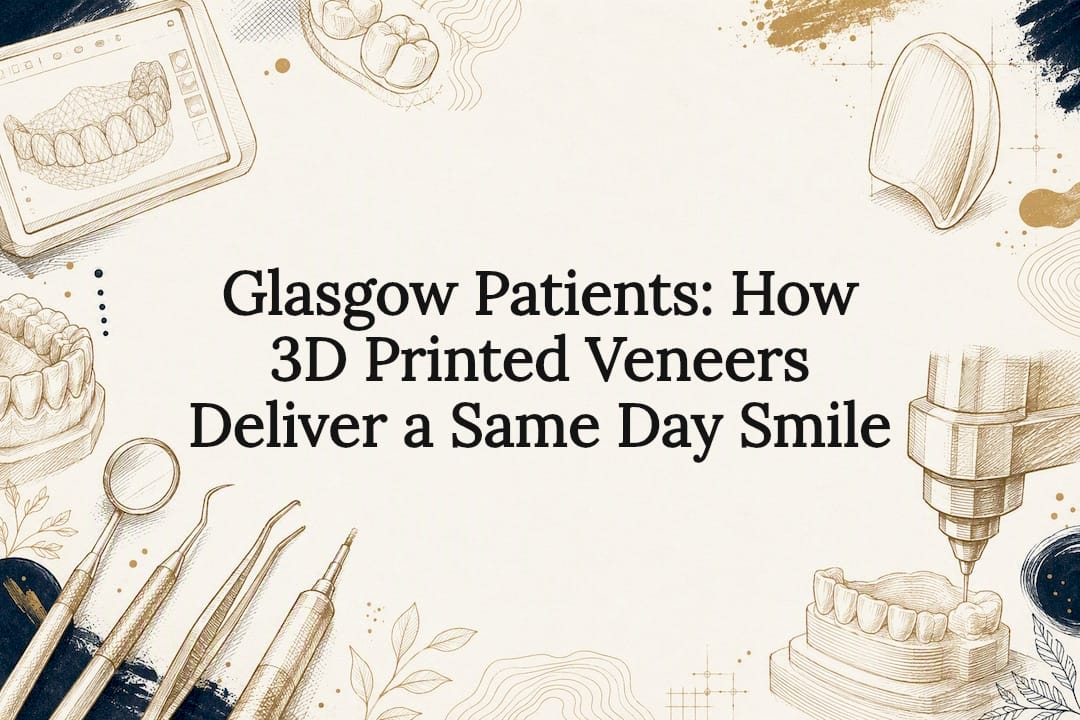
3D-printed veneers are digitally designed, additively manufactured shells that let many patients get a minimally invasive, same-day aesthetic improvement. They differ from traditional porcelain in one key respect: long-term colour stability and translucency still lag behind hand-layered ceramic. They suit patients who want conservative preparation and fast results, and suit them less if flawless, decades-long translucency is the priority.
TL;DR:
- Printed composite and hybrid ceramic veneers are generally more affordable than porcelain and suitable for short- to medium-term cosmetic improvements.
- Long-term colour stability and translucency still lag behind traditional porcelain, especially for patients prioritizing stain resistance and natural depth.
- The digital workflow allows same-day placement, with fit accuracy comparable to milled veneers, but the surface durability and resistance to staining remain areas for improvement.
- Printed veneers’ lifespan depends on materials used and patient habits, with resin options lasting several years and porcelain typically lasting longer.
- Selecting the appropriate material and understanding the limitations of resin-based veneers are essential for achieving satisfactory, durable results.
Table of Contents
- What 3D printing veneers actually means
- How the digital workflow moves from scan to smile
- How printed veneers compare with porcelain and lab composites
- What 3D printed veneers cost and how long they last
- What the clinical evidence actually shows
- Your appointments, step by step
- How to decide if this route suits you
- A clinician’s view on where 3D printing fits
- Book a digital smile assessment at TJ Smile Studio
- Sources
- FAQ
What 3D printing veneers actually means
3D-printed veneers are produced by an additive manufacturing process rather than being carved from a block of ceramic (milling) or hand-layered by a technician. A digital scan of the teeth feeds a design file into a printer, which builds the veneer layer by layer from resin or, in newer systems, a ceramic slurry. This is the core distinction behind digital dental veneers: subtractive milling removes material from a solid block, while additive manufacturing veneers grow the shape from nothing, which wastes less material and allows finer, more conservative shapes.
Not every printed veneer is meant to last a lifetime. Materials fall into a few practical categories:
- Trial or mock-up resins – used to preview a smile design chairside before committing to anything permanent.
- Definitive composite resin – hard-wearing enough for real-world use, often chosen for same-day treatment.
- Hybrid ceramic composites – blend resin flexibility with ceramic-like stiffness and wear resistance.
- Experimental printed ceramics (such as lithium disilicate via lithography-based manufacturing) – promising for ultra-thin, non-prep restorations, but still mostly confined to pilot studies without extensive clinical data.
The practical takeaway: printed composite and hybrid ceramic veneers are typically the ones patients actually wear, while printed ceramics remain an emerging option with limited long-term clinical data.
How the digital workflow moves from scan to smile
The process behind veneers 3D printing follows a fairly consistent sequence, whether it happens in one appointment or over several visits.
- Intraoral scanning and digital smile design – a handheld scanner captures the teeth and bite, and software maps out proposed shapes, proportions, and symmetry against facial landmarks.
- CAD refinement – the clinician adjusts tooth shape, length, and translucency zones digitally, then the file is nested and oriented for printing, with support structures generated to hold the shape during the build.
- Printing – resin printers use light-cured layers; ceramic systems use lithography-based manufacturing, which then requires sintering.
- Post-processing – washing away uncured resin, secondary light curing, and (for ceramics) a sintering firing cycle.
- Try-in and cementation – the veneer is checked for fit, shade, and margin before adhesive bonding.
Same-day chairside workflows compress this entire sequence into one visit using in-clinic printers, while lab-based workflows send the file externally and return the finished piece days later. Case reports on chairside replacement of composite veneers using MIDAS 3D printing technology describe acceptable marginal accuracy and good patient satisfaction with same-visit delivery.
Pro Tip: Ask whether your case uses a 3D-printed cementation guide. A 2026 case report on guided cementation with 3D-printed veneers found these guides speed up multi-unit placement and improve seating accuracy, which matters most when several veneers go in during one sitting.
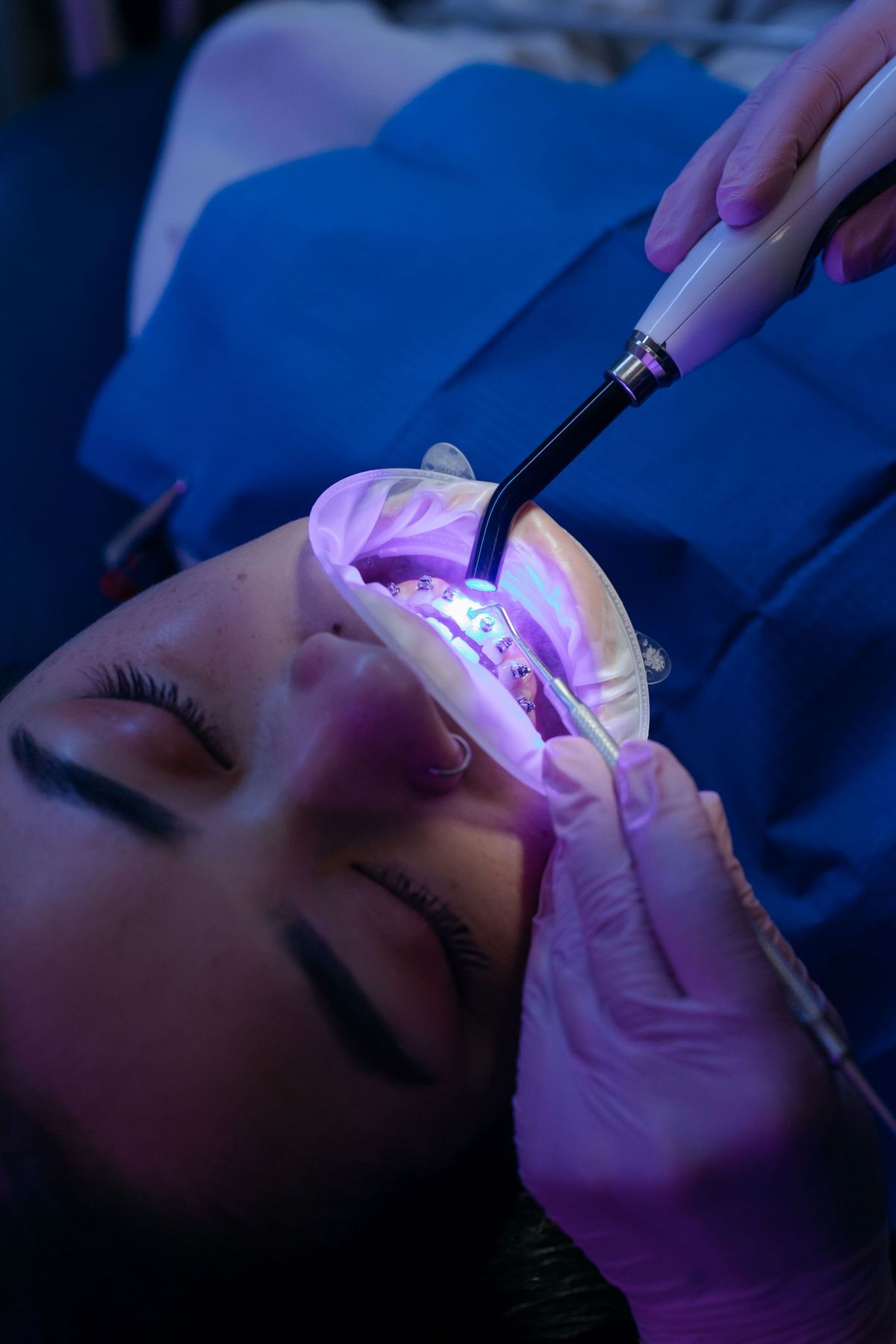
How printed veneers compare with porcelain and lab composites
Porcelain still tends to win on pure aesthetics. Its layered structure scatters light the way natural enamel does, giving a depth that resin, printed or otherwise, struggles to fully replicate. Some hybrid ceramic resins get close, but a trained eye can usually tell.
- Translucency: porcelain generally offers superior depth and light handling; hybrid resins are the closest printed alternative.
- Durability: ceramic veneers resist wear and fracture better over years of biting force; printed composites are more prone to surface wear.
- Repairability: this favours 3D-printed composite. A chipped resin veneer can often be polished or patched chairside, where a cracked porcelain veneer usually needs full replacement.
- Staining resistance: porcelain is largely stain-proof; printed resin composites are more porous and pick up pigment over time.
The staining point isn’t theoretical. An in vitro study on colour stability and surface roughness of 3D-printed versus prefabricated veneers found artificial ageing with coffee immersion produced a colour change of roughly ∆E 10.1, alongside a surface roughness reading around Ra 0.574 µm, both higher than some prefabricated resin systems. That’s a visible shift, not a marginal one, and it’s the clearest argument for choosing porcelain or milled ceramic when long-term shade stability outweighs speed and cost.
What 3D printed veneers cost and how long they last
Pricing depends heavily on material, number of teeth, and whether the workflow is same-day chairside or lab-fabricated. Printed composite veneers generally sit at the more accessible end of cosmetic veneer pricing compared with porcelain, since chairside production cuts out lab fees and multiple appointments.
- Per-tooth cost: composite and hybrid printed veneers are generally more affordable than porcelain due to lower material and lab costs.
- Lifespan: printed composite veneers typically last for a number of years with proper care, whereas porcelain veneers generally have longer durability.
- Factors affecting lifespan: consumption of staining substances, bruxism, and irregular maintenance can shorten the lifespan of resin-based veneers.
- Financing: same-day workflows may reduce overall treatment costs by minimizing appointments.
Clinics offering same-day smile treatments often price printed composite options more accessibly than multi-visit porcelain cases, precisely because the digital workflow removes lab turnaround time from the equation.
What the clinical evidence actually shows
The headline finding, and the one that should reassure sceptical patients, is that fit accuracy holds up. A 2024 systematic review and meta-analysis comparing marginal gaps of milled versus 3D-printed laminate veneers found no statistically significant difference in marginal adaptation between the two manufacturing methods (p = 0.62). In plain terms, a well-executed printed veneer seats against the tooth margin just as tightly as a milled one.
Marginal fit is not where 3D printing falls short. The gap, quite literally, is in surface durability over time: some printed materials show greater staining and roughness after artificial ageing than expected, even when they seated perfectly on day one.
A separate pilot study on lithography-based manufacturing of lithium disilicate veneers reported feasible marginal fit around 100 µm for ultra-thin printed ceramic veneers, hinting at a future where printed ceramics close the aesthetic gap with porcelain. That work remains early-stage, with limited clinical follow-up so far.
| Evidence area | Finding | Practical implication |
|---|---|---|
| Marginal fit (milled vs printed) | No significant difference (p = 0.62) | Fit accuracy is not a reason to avoid printed veneers |
| Colour stability after ageing | ∆E ≈ 10.1 after coffee immersion in some printed materials | Staining risk is real; material choice matters |
| Surface roughness after ageing | Ra ≈ 0.574 µm in tested printed samples | Polishing maintenance schedule matters more for resin |
| CAD/CAM trueness (2026 review) | Clinically acceptable across methods, milling sometimes more precise | Milling may still edge out printing for exacting precision cases |
A broader 2026 review of CAD/CAM methods and veneer trueness confirms both additive and subtractive approaches produce clinically acceptable results, though milling shows an edge in precision in some direct comparisons. The practical read: fit is rarely the deciding factor. Material selection and post-processing discipline are what separate a printed veneer that ages gracefully from one that doesn’t.
Your appointments, step by step
The patient experience for 3D printed dental restorations follows a predictable rhythm, whether it wraps up in one visit or several.
- Consultation and digital preview – your clinician scans your teeth, assesses bite and gum health, and shows you a proposed design on screen before anything is built.
- Try-in with a printed mock-up – you see and feel the proposed shape in your mouth, often using the exact file that could later become the definitive veneer.
- Approval and adjustment – shape, length, or shade tweaks happen digitally, then get reprinted or refined.
- Delivery – same-day chairside cases finish that day; lab-fabricated cases return within roughly a week.
- Aftercare – avoid heavily staining foods and drinks early on, skip abrasive whitening toothpaste, and keep to routine dental polishing visits.
How to decide if this route suits you
Printed veneers suit patients with healthy gums, adequate enamel, and realistic expectations about resin’s limits versus porcelain. They suit you less if you grind your teeth heavily or drink a lot of coffee, tea, or red wine without compromise.
- Ask what material will be used, and whether it’s definitive or a trial stage.
- Ask about expected lifespan and the maintenance schedule.
- Ask who finishes and polishes the restoration, and what warranty applies.
- Check for a named, GDC-registered clinician and published treatment evidence before booking.
Pro Tip: A printed veneer can double as a reversible trial smile. The same design file used for your mock-up can later produce the definitive restoration with matching contours, so nothing about the preview stage is wasted if you decide to proceed.
A clinician’s view on where 3D printing fits
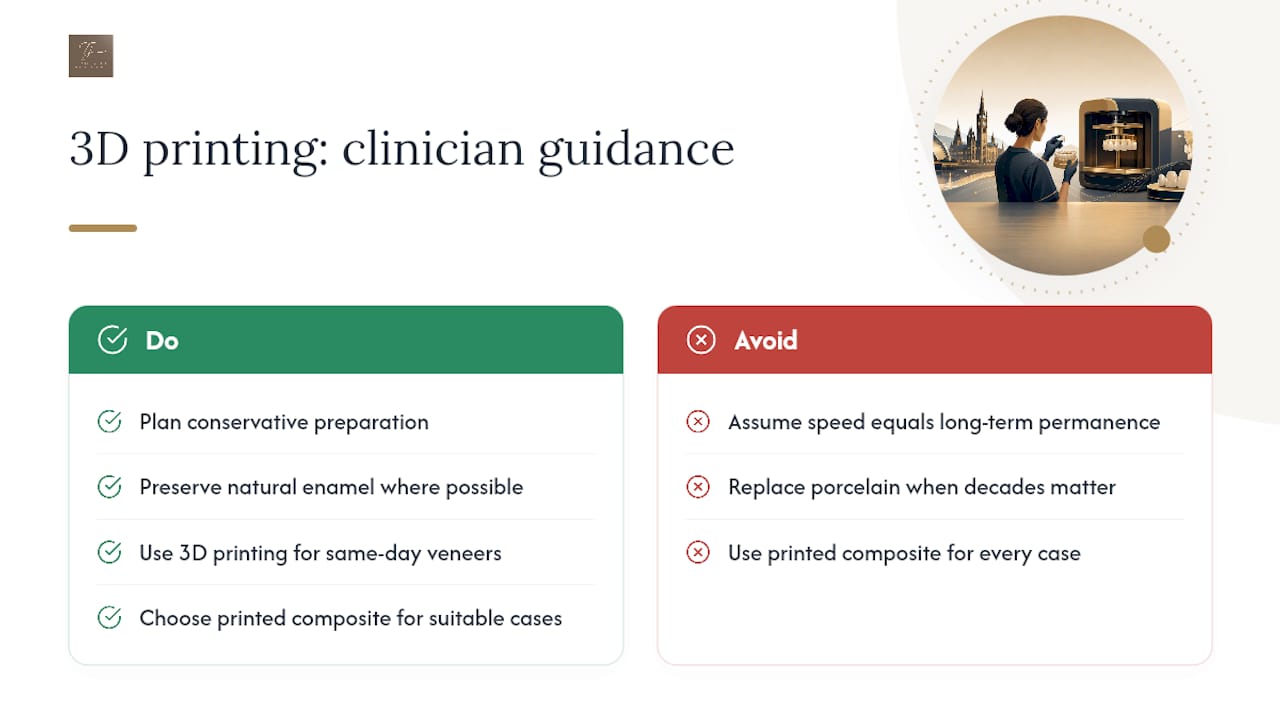
Digital design allows genuinely conservative preparation. In many cases, contouring can be planned to preserve more natural enamel than older lab-fabricated routes required, which is not a small thing when the whole point of cosmetic dentistry is protecting what’s already there. At TJ Smile Studio, Same-Day Hybrid Veneers and full digital smile makeovers both lean on this workflow.
The honest caveat, and one worth repeating to any patient dazzled by the “same-day” promise, is that speed and permanence are not the same thing. Printed composite is an excellent tool for the right case. It is not yet a universal replacement for porcelain where decades of stain-proof translucency matter most.
— Dr Tashfeen Jamil BDS, MFDS RCS Ed, AssocFCGDent - GDC 286427
Book a digital smile assessment at TJ Smile Studio
An advantage of a fully digital chairside workflow is that many patients can leave with a finished smile in a single visit, rather than weeks of temporary restorations and lab waits. If what you’ve read here has you weighing printed composite against porcelain, that decision is exactly what a consultation is for.
 Recommended dimensions: 1200x628px. Alt text: “Patient reviewing a digital smile design preview at TJ Smile Studio Glasgow.”
A first visit typically includes a digital scan, a smile design preview on screen, and a discussion of which material fits your case, whether that’s Same-Day Hybrid Veneers or a broader digital smile makeover. Flexible appointment options and financing are available for larger treatment packages. Book a consultation through TJ Smile Studio’s treatments page to see your own digital preview before committing to anything.
This article is general information, not a substitute for advice from a qualified doctor. Consult a qualified healthcare professional about your own circumstances before acting on anything here.
Sources
- Systematic review/meta-analysis on marginal gaps of milled versus 3D‑printed laminate veneers (2024)
- Color stability, gloss retention and surface roughness of 3D‑printed versus prefabricated veneers (2023)
- LCM 3D printing of lithium disilicate veneers: clinical feasibility (2022)
- Digital workflow and guided cementation with 3D-printed veneers: a case report (2026)
FAQ
How much do 3D-printed veneers cost?
Cost depends on material and case complexity, but printed composite and hybrid options generally cost less per tooth than porcelain because chairside production removes lab fees. TJ Smile Studio lists current treatment pricing on its veneers page.
How long do 3D-printed veneers last?
Printed composite veneers commonly last several years with good care, while porcelain veneers tend to last considerably longer; staining, grinding, and maintenance habits all affect the real-world figure.
Are 3D composite veneers good?
They’re a genuinely solid option for conservative, same-day cosmetic improvement, with fit accuracy shown to be clinically comparable to milled veneers in a 2024 meta-analysis. Their main trade-off against porcelain is a greater tendency to stain and roughen over time.
Can you 3D print fake teeth?
Yes. 3D printing produces temporary crowns, veneers, and mock-ups from resin, and emerging lithography-based ceramic techniques are being tested for more durable, ceramic printed restorations.
Recommended
This article is general information, not personal dental advice. What’s right for your teeth depends on a clinical examination — the condition of your enamel, gums, bite and any existing dental work — and no article can assess that. Outcomes vary between patients, and all treatment at TJ Smile Studio is subject to assessment and clinical suitability.
- Dr Tashfeen Jamil BDS, MFDS RCS Ed, AssocFCGDent, PGDip Restorative and Aesthetic Dentistry — GDC registration 286427
This article is general information, not personal dental advice. What's right for your teeth depends on a clinical examination — the condition of your enamel, gums, bite and any existing dental work — and no article can assess that. Outcomes vary between patients, and all treatment at TJ Smile Studio is subject to assessment and clinical suitability.
Clinically reviewed by Dr Tashfeen Jamil BDS, MFDS RCS Ed, AssocFCGDent, PGDip Restorative and Aesthetic Dentistry — GDC registration 286427, Principal Dentist at TJ Smile Studio, 1 Spiersbridge Way, Thornliebank, Glasgow G46 8NG.
If you have dental pain, swelling or an injury, call the practice on 07728 808510. Out of hours in Scotland, call NHS 24 on 111.